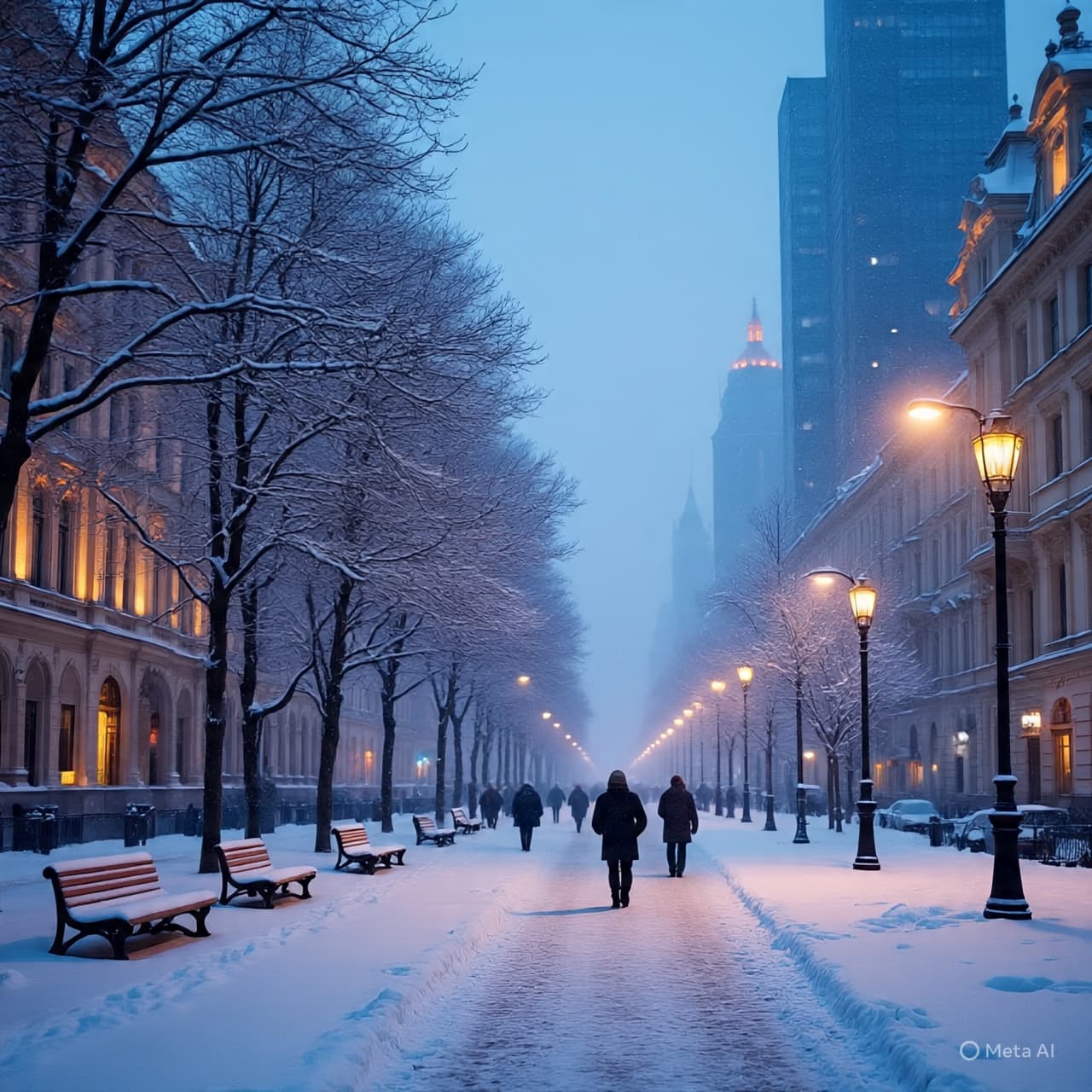
Winter arrives differently in a country under strain. In Ukraine, it does not drift in quietly or settle like a seasonal habit. It presses down. It fills the edges of daily life with a cold that feels heavier than the snow, heavier even than the smoke that rises from damaged infrastructure across the country. This year, the cold is expected to be the hardest in recent memory — a winter shaped as much by conflict as by climate.
Across towns and cities, the familiar rhythm of preparation has taken on a sharper urgency. Generators hum through the night. Firewood is stacked with more care than ever. Windows are sealed, insulated, taped — anything to keep the warmth from slipping away. These are tasks that once belonged to routine life, but now they feel like strategy. Survival. Continuity.
Energy workers, often unseen in calmer times, have become central figures in this winter’s narrative. They climb frozen towers, repair lines under shell-dented skies, and attempt to keep electricity flowing across a grid strained to its limits. Each repair is both a technical achievement and a quiet act of defiance — a way of telling the cold it will not win so easily.
Communities have adapted with a kind of collective resilience that carries both pride and fatigue. Public warming centers — simple rooms with hot tea, blankets, and charging stations — become gathering points where strangers sit shoulder to shoulder, sharing both silence and stories. Schools shift schedules around power availability. Families learn to navigate the small rituals of darkness: candles, careful timing, the warming of one room instead of many.
Yet beneath these acts of endurance lies a more complicated emotional landscape. Winter is traditionally a season of reflection, but here the reflection lands differently. Each cold night becomes a reminder of vulnerability, of the delicate balance between infrastructure and uncertainty. And for many, the season brings memories of winters past — both the harsh ones endured and the quieter ones lost.
Still, determination threads through the cold. There is a sense, almost palpable, that winter may test the nation but will not define it. People speak in practical terms — of supplies, repairs, backup plans — but beneath that practicality is a deeper sentiment: a refusal to let the season become another force of intimidation.
This winter will not be easy. It may be the hardest the country has faced in years. But in the steady work, the shared warmth, and the resolve that fills even the coldest rooms, there is something unmistakable. It is the quiet strength of a population that has learned not only how to endure, but how to turn endurance into identity.
The frost will thicken. The nights will lengthen. But so will the resolve of those who face them.
Published by Banx Network. This article is part of the Banx decentralized media programme, powered by the BXE token on the XRP Ledger.