
Key Highlights
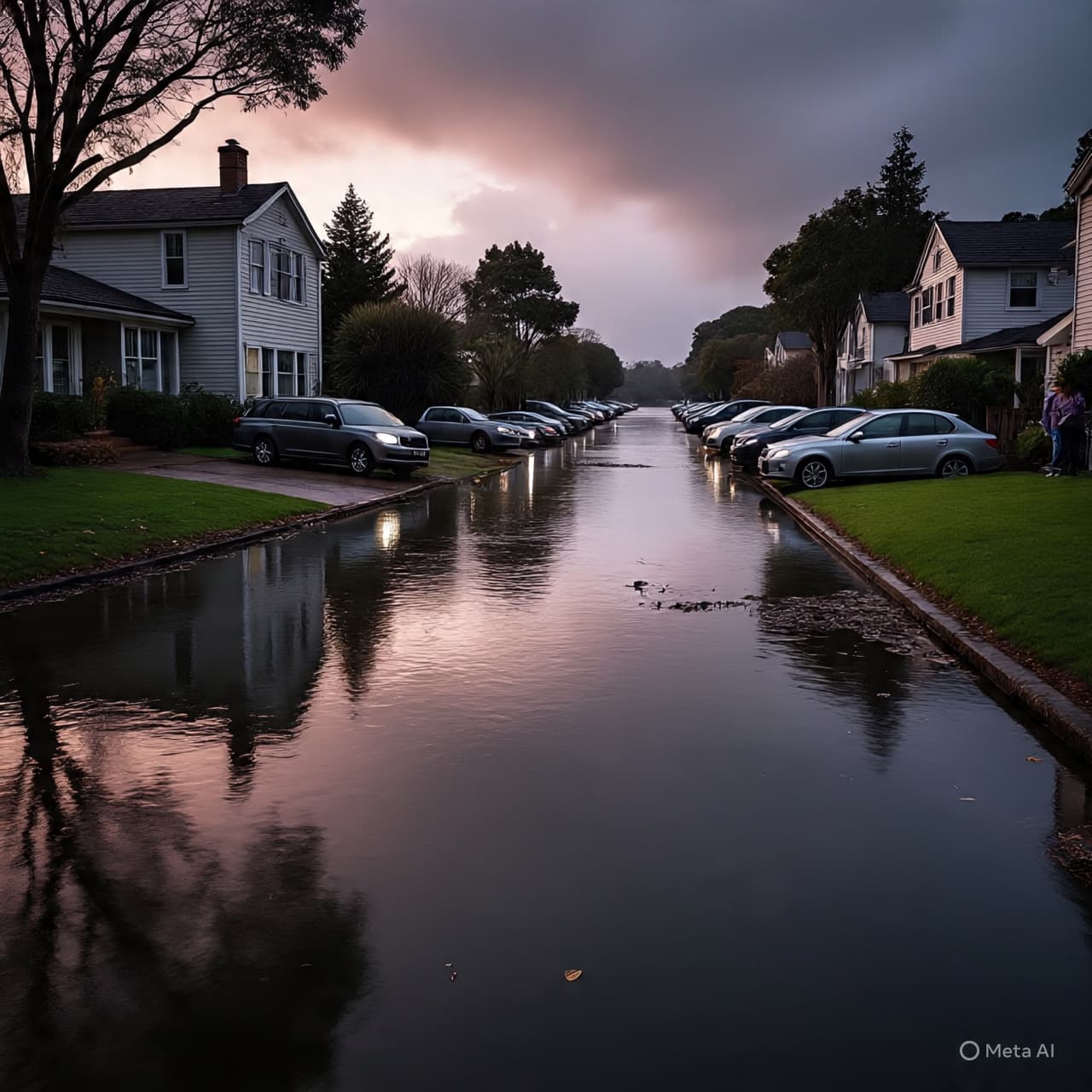
- Sydney's inner suburbs experienced significant flooding due to heavy rainfall.
- Emergency services issued over forty alerts during the storm.
- Community resilience was evident as neighbors checked on each other post-flooding.
The sky over Sydney has long held a complicated relationship with the earth beneath it, shifting from brilliant sapphire to a heavy, bruised indigo without much warning. On this particular day, the air grew thick and still, a silent precursor to the unraveling of the clouds that had gathered with a quiet, brooding intensity. The atmosphere seemed to decide it could no longer carry the weight of the Pacific’s breath, releasing it in a sudden, overwhelming torrent.
Water, in its most restless form, does not merely fall; it seeks, flows, and reclaims. The familiar cartography of the suburbs—the cul-de-sacs, manicured lawns, and low-lying intersections—was swiftly rewritten by the rising tide. Gutters, designed for the predictable, hummed and then choked, surrendering their purpose to the sheer volume of the gray, rushing currents. In the driveway of a quiet home, a car became an island; a park bench transformed into a distant pier in a lake that did not exist an hour prior. This chaos served as a reminder that the structures we build are often guests on a landscape that remembers its ancient floodplains.
The State Emergency Service, garbed in the vivid orange of caution, moved through the gray veil of rain like flickering beacons of human resolve. Their sirens, muffled by the sheer density of the downpour, carried a different frequency of urgency than the usual city noise. Across forty distinct alerts, the digital pulse of the city warned of invisible dangers lurking beneath the shimmering surfaces: the hidden dip in the road, the electrical hum of a submerged substation, the frantic pulse of a storm drain. These warnings echoed an old wisdom, advising the restless to stay still while the earth absorbed what it had been given.
To stand by a window in the western suburbs was to witness a slow-motion transformation of the mundane into the maritime. Fences that once marked boundaries now served as markers for the depth of the inundation, their wooden slats shivering against the pressure of the flow. There is a profound humility in watching the rain erase the familiar, a quiet realization that for all our engineering, we are often at the mercy of a singular, atmospheric exhale. The rhythm of the city slowed to a crawl, the frantic pace of the morning replaced by the steady, patient observation of the rising and falling of the tide at the front door.
As the afternoon light faded into a murky, waterlogged dusk, the immediate violence of the storm began to temper into a persistent, weary drizzle. The alerts remained active, flickering on screens in darkened kitchens where the power had surrendered to the damp. It was a time for waiting, for listening to the gurgle of receding water and the distant splash of a tire through a remaining pool. The suburbs, though battered by the sudden weight of the sky, began the quiet process of emerging from the wet, the residents looking out at streets that were once again becoming solid ground.
In the aftermath, the collective breath of the city seemed to sync with the slow drainage of the land, a shared moment of relief and exhaustion. Neighbors checked on each other across the narrow canals of their streets, their voices carrying through the humid air with a renewed sense of proximity. The rain had washed away the veneer of the everyday, leaving behind a raw, saturated reality that required a collective effort to navigate. It was not just the water that had risen, but a shared understanding of the fragility that comes with living beneath a sky that can, at any moment, open its heart entirely.
The movement of the clouds toward the horizon signaled a temporary truce, though the air remained heavy with the scent of wet earth and asphalt. Emergency workers continued their rounds, their task shifting from rescue to recovery as the true extent of the inundation became visible in the fading light. There is a stillness that follows such a surge, a heavy, damp silence that settles over the landscape like a blanket. It is in this quiet that the work of restoring order begins, a slow and methodical retracing of the lines that the water had so effortlessly blurred.
Even as the last of the alerts cleared and the streets began to dry, the memory of the storm lingered in the air, a reminder of nature's power and the resilience of community in the face of adversity.
Published by Banx Network. This article is part of the Banx decentralized media programme, powered by the BXE token on the XRP Ledger.



