
Key Highlights
- Record e-waste collection:Kigali's 'KUSANYA' campaign has successfully gathered hundreds of tons of electronic waste.
- Environmental stewardship:The initiative promotes responsible recycling and recovery of hazardous materials.
- National strategy:The campaign aligns with Rwanda's 2025–2031 National E-Waste Management Strategy.
Kigali is a city that hums with the digital pulse of a continent, a landscape where the sleek lines of the latest smartphones and the glow of computer monitors are the tools of a modern renaissance. Yet, in the shadow of this rapid advancement, there exists a quiet accumulation of the things we leave behind—the silent ghosts of circuits and screens that have fulfilled their purpose. To witness the record collection of e-waste in the capital is to observe a nation learning to manage the weight of its own digital footprint.
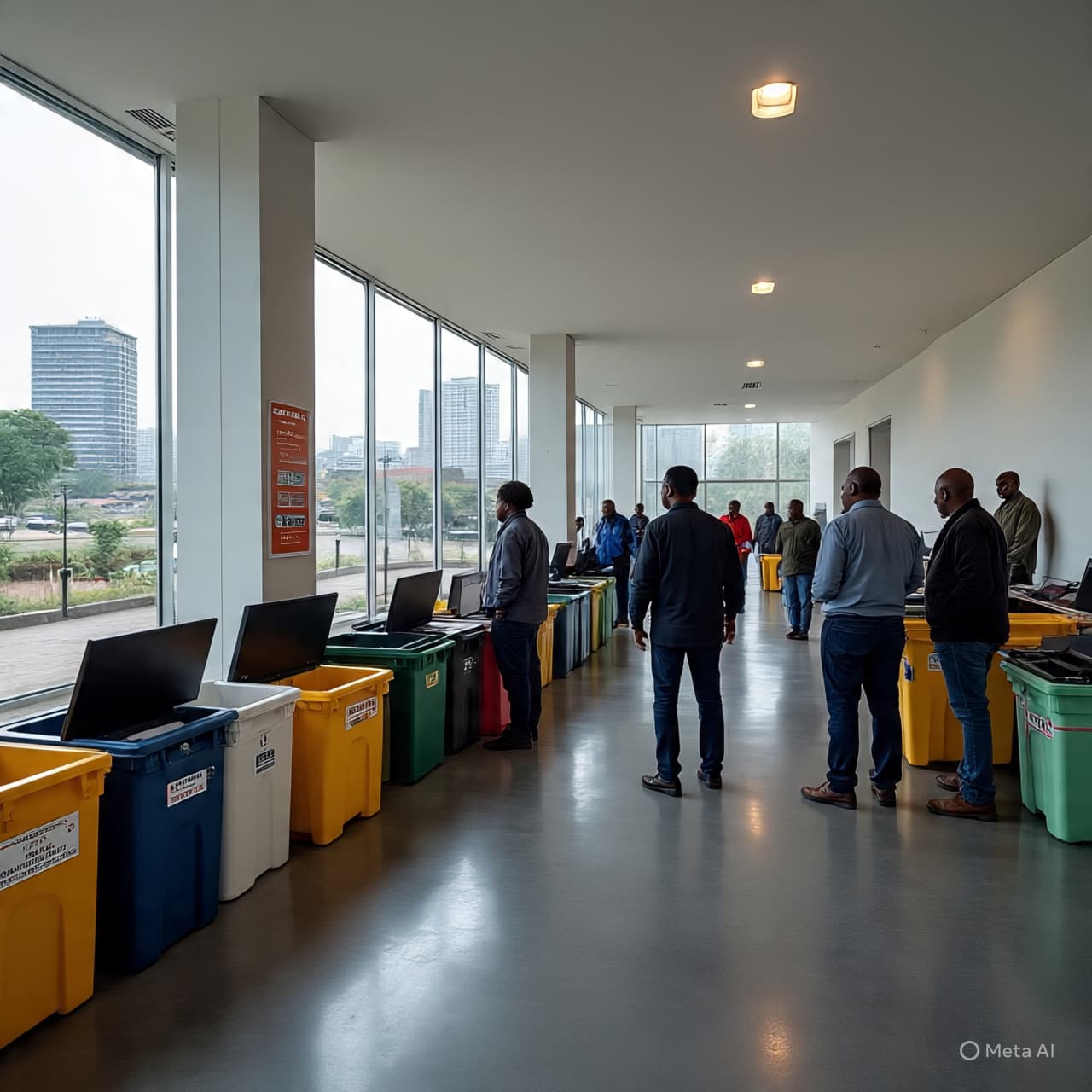
The success of the "KUSANYA" e-waste awareness campaign has led to a record tonnage of discarded electronics being gathered from across the city. This is more than a mere cleanup effort; it is a profound reimagining of the lifecycle of our most complex tools. There is a sense of deep responsibility in this movement, a realization that the materials that powered our yesterday should not become the poison of our tomorrow.
E-waste management is a study in the careful dismantling of the past to secure the integrity of the future. At the Enviroserve Rwanda Green Park, the dialogue is one of precision and recovery, ensuring that the heavy metals and rare earths within the devices are recaptured rather than released into the soil. It is a story of a society that understands that a circular economy is the only way to sustain the rapid pace of technological change.
One can imagine the mountains of old keyboards and tangled cables being sorted with methodical care, each piece a fragment of the city’s evolving story. This work is a quiet but essential service, a requirement of an urban environment that refuses to let its progress lead to environmental degradation. The record collection totals are not just numbers; they are a metric of a public that has embraced the idea of environmental stewardship.
The presence of such a robust recycling infrastructure acts as a steadying force for the nation’s technological ambitions, providing a safe harbor for the end-of-life phase of every device. It fosters a culture of accountability among consumers and retailers alike, encouraging a more thoughtful relationship with the electronics that define our age. Rwanda is being recognized as a regional leader, a place where the "Green ICT" program turns a potential problem into a source of new materials and jobs.
There is a reflective quality to the way the city has responded to the call to "Kusanya," a Kinyarwanda word for "collect" that has become a mantra for a cleaner future. It fosters a sense of communal pride, a belief that through small, individual actions, a massive and hazardous tide can be turned. The electronic waste is no longer a burden to be hidden; it has become a resource to be managed with a sense of vision and care.
As the processed materials are prepared for their next life in the industrial cycle, the significance of the record collection settles into the quiet of the Green Park. It is a landscape of profound transformation, where the toxic is made safe and the discarded is made valuable once again. The journey toward a "Zero Waste Rwanda" continues, guided by a sense of balance and a commitment to the health of the land and its people.
The Ministry of ICT and Innovation has reported a record collection of electronic waste in Kigali following the launch of the nationwide "KUSANYA" campaign. This initiative, managed in partnership with Enviroserve Rwanda, has seen the successful recovery of hundreds of tons of hazardous materials, including lead and mercury, from household and institutional electronics. Officials stated that the program is a key pillar of Rwanda’s 2025–2031 National E-Waste Management Strategy, aimed at fostering a sustainable circular economy.
Published by Banx Network. This article is part of the Banx decentralized media programme, powered by the BXE token on the XRP Ledger.



