
Key Highlights
- Event:The Full Buck Moon coincides with the Southern Delta Aquariid meteor shower.
- Viewing Time:Best observed in the early morning hours before dawn.
- Cultural Significance:The Buck Moon has historical ties to Native American traditions.
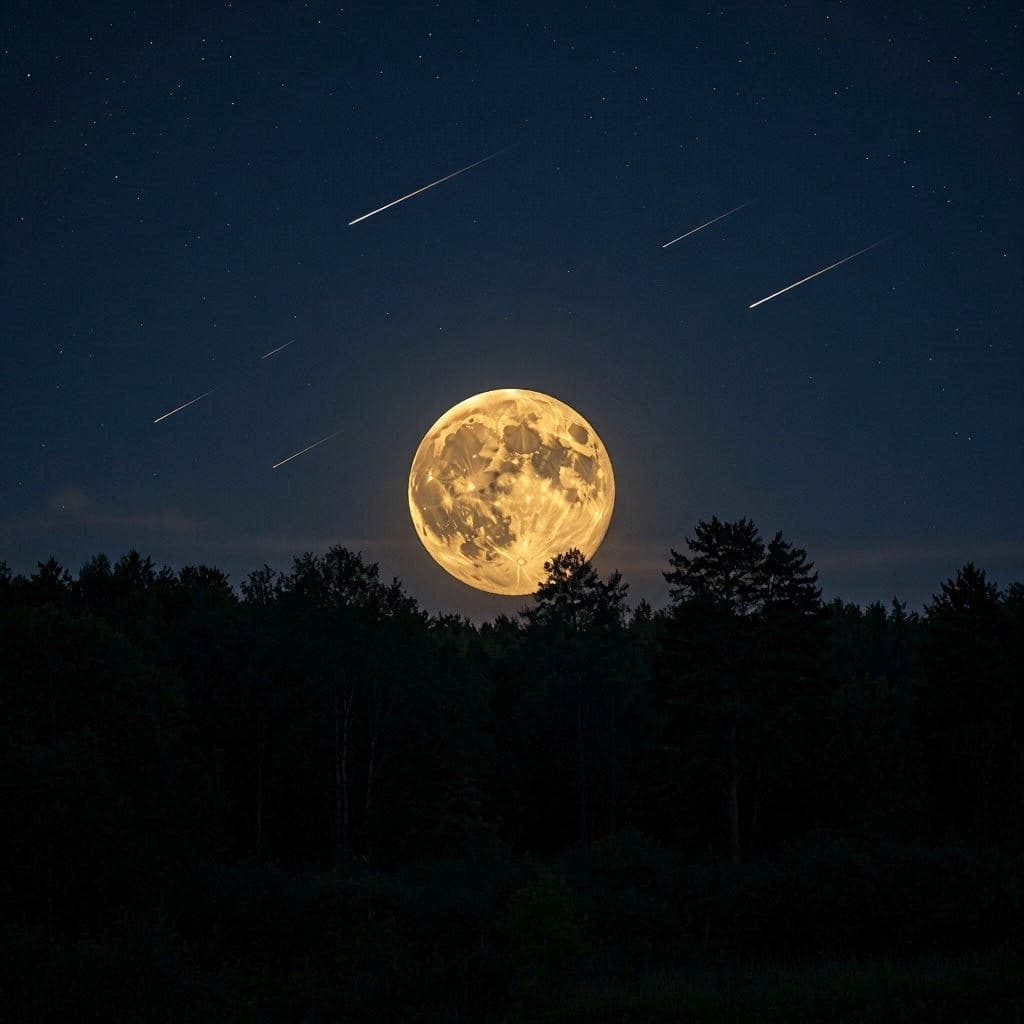
This week, stargazers are in for a treat as the Full Buck Moon rises alongside the Southern Delta Aquariid meteor shower, creating a spectacular celestial event. The Full Buck Moon, named for the time of year when male deer begin to grow their antlers, will illuminate the night sky, while the meteor shower offers a chance to witness shooting stars. This convergence invites everyone to step outside and reconnect with the universe.
The Full Buck Moon is particularly striking this month, as it coincides with the peak of the Southern Delta Aquariids, a reliable meteor shower known for its slow-moving meteors. While the brightness of the moon may obscure some of the fainter meteors, the brighter fireballs will still be visible, providing a stunning display against the night sky. Astronomers recommend viewing the event in the early morning hours, when the moon is lower in the sky and the radiant point of the meteor shower is more prominent.
The Southern Delta Aquariids are known for their long, slow trails, making them easier to spot than faster meteor showers. Each meteor is a tiny particle of dust or rock that burns up upon entering Earth's atmosphere, creating a brief but beautiful streak of light. This phenomenon serves as a reminder of the dynamic nature of our solar system and the wonders that lie beyond our planet.
In addition to the meteor shower, the Full Buck Moon itself is a fascinating subject for observation. Its surface, marked by craters and maria, tells a story of billions of years of geological history. Observing the moon through binoculars or a small telescope can reveal intricate details along the terminator, the line that separates day from night on the lunar surface. This week presents an excellent opportunity for families and amateur astronomers to engage in outdoor education, turning a simple evening into a lesson in astronomy.
Setting up a blanket in a backyard or visiting a local park can enhance the experience. Identifying constellations such as Aquarius and Capricornus, from which the meteors appear to radiate, adds an interactive element to the stargazing experience. While light pollution can be a challenge for urban dwellers, even from suburban areas, the brightest meteors and the moon's brilliance can be enjoyed.
Community groups often organize star parties, providing guidance and equipment for newcomers to navigate the night sky. These gatherings foster a sense of community and shared appreciation for the natural world, making stargazing a collective experience.
The cultural significance of the Buck Moon also invites reflection on traditional knowledge and the changing seasons. Many indigenous cultures have historically used lunar cycles to guide agricultural and hunting practices, highlighting a deep connection between human life and celestial patterns. Acknowledging these roots enriches the modern experience of stargazing and fosters a greater appreciation for the cosmos.
As the week progresses, the moon will wane, and the meteor activity will taper off, but the memory of this celestial display will linger. It serves as a gentle reminder to maintain a habit of observation and to find joy in the predictable yet ever-changing theater of the heavens. The appearance of the Full Buck Moon alongside the Southern Delta Aquariids is a gift of the summer sky, encouraging us to look up, breathe deeply, and find peace in the timeless dance of celestial bodies.
Published by Banx Network. This article is part of the Banx decentralized media programme, powered by the BXE token on the XRP Ledger.



