The bustling transport corridors of Kigali function as the vital, high-capacity arteries of the capital, where heavy cargo trucks move continuously to connect urban distribution centers with the wider national markets. Along these primary asphalt pathways, the flow of goods is regular and methodical, protected by an assumption of public order and the strict protocols of commercial transport. Drivers navigate the steep hills and winding descents of the city with a practiced focus, aware that the safety of their heavy vehicles depends on constant alertness and compliance with traffic laws. It is an environment built upon a foundation of structured trade, where the cargo is viewed as secure within the flow of daily commerce.
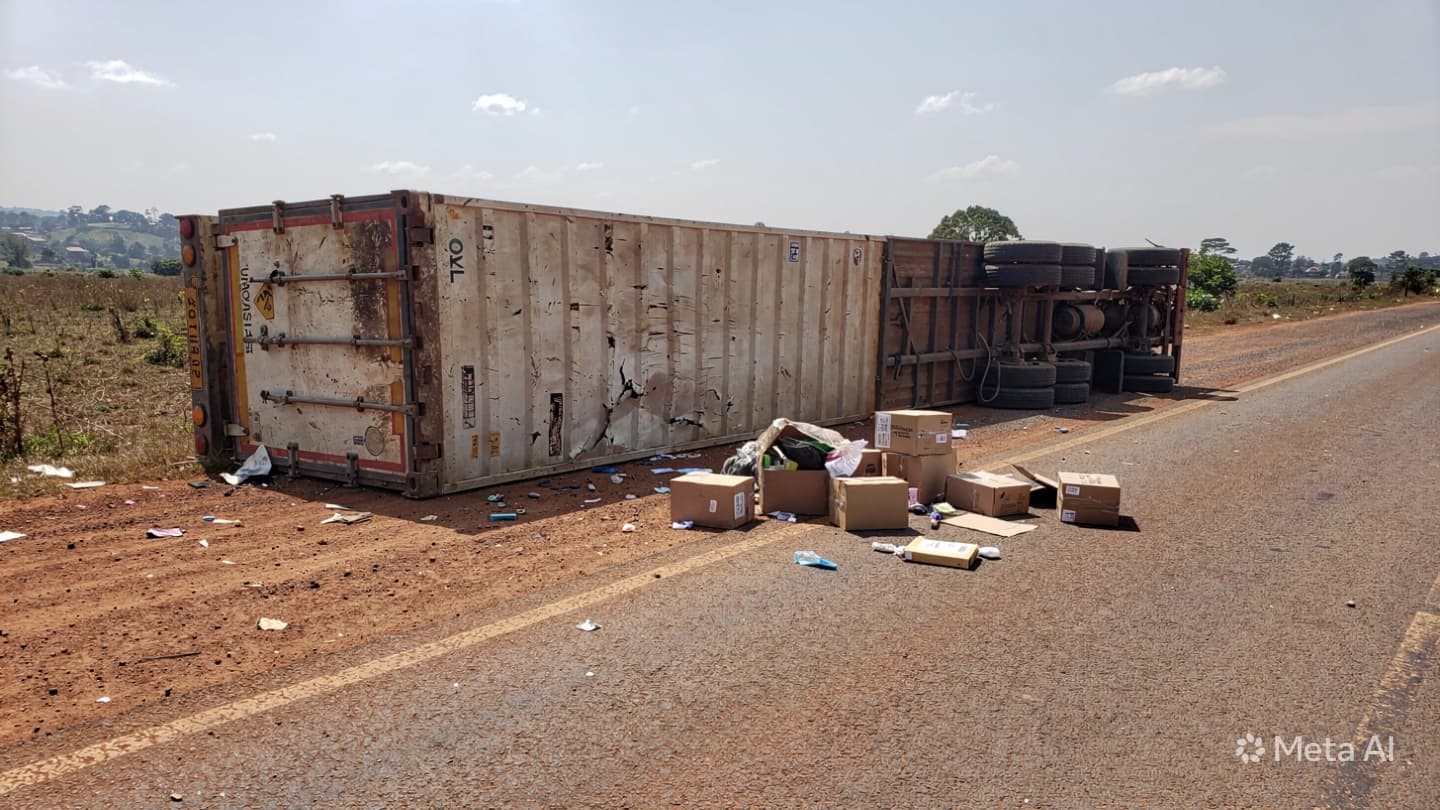
Yet, this orderly system can be instantly disrupted when a mechanical failure or a sudden collision transforms a moving transport into a site of severe physical trauma and material vulnerability. On a recent morning, a serious road accident occurred along a major sector of the highway, leaving a large commercial vehicle overturned across the lanes, its cargo spilled onto the shoulder of the road. The transition from a routine delivery to a scene of chaotic devastation happens with a sudden, metallic violence that completely halts the traffic flow of the entire district. In the confusion that followed the crash, the primary focus of public safety was compromised as individuals from the surrounding area gathered not to assist the injured, but to exploit the exposed cargo.
The looting of a damaged transport vehicle carries a specific, sobering weight, transforming a site of human misfortune into an unregulated marketplace of opportunistic extraction. In the minutes following the collision, dozens of onlookers swarmed over the overturned trailer, systematically removing valuable commercial goods from the fractured containers before emergency services could secure the perimeter. There is a strange, frantic atmosphere that accompanies such incidents; the traditional laws of property are temporarily ignored in favor of an immediate, uncoordinated harvesting of the spilled merchandise. For the injured driver waiting for medical attention, the scene was one of profound disorder as the cargo vanished into the crowd.
National Police units arrived on the scene in force shortly after the initial accident reports, their sirens echoing through the valley as officers moved quickly to establish a secure perimeter around the wreckage. Law enforcement personnel acted with immediate, decisive authority, halting the illegal removal of goods and apprehending ten suspects who were caught in the act of looting the cargo. The intervention was a swift reassertion of public order, demonstrating that the protections of the law remain absolute even in the midst of a severe transportation emergency. The suspects were detained on the spot, their hands still holding the stolen items as investigators began documenting the secondary crime scene.
The psychological and economic impact of such opportunistic behavior ripples quietly through the local logistics industry, prompting transport companies to demand increased security presence along high-risk routes. In an urban environment where communities live close to major transit lines, an incident of this nature highlights the constant tension between public order and sudden economic temptation. The actions of the few who choose to exploit a tragedy are viewed as a serious challenge to the social fabric, requiring a firm administrative response to preserve the integrity of the capital’s commercial networks. The cordoned-off highway stood as a silent monument to the incident, a stark reminder of the fragile nature of public compliance.
As the morning advanced under a clearing sky, the emergency response split into two distinct, necessary operations—paramedics treating the victims of the initial crash, and detectives processing the arrested individuals. Heavy tow trucks arrived to begin the arduous process of righting the overturned trailer and clearing the remaining cargo from the asphalt to allow for a resumption of traffic. The local administration issued a strong public statement condemning the looting, reinforcing that the exploitation of accident scenes is a serious offense that will be met with immediate judicial consequences. The neighborhood returned to a watchful, quiet standstill as the wreckage was slowly cleared from the lanes.
By afternoon, the highway had been thoroughly swept and reopened to public transit, though the remnants of the collision remained visible in the oil-stained pavement and bent guardrails along the shoulder. The ten suspects were transported to the local precinct to face formal charges, their swift apprehension serving as a clear warning against future opportunism along the city's transport networks. The transport company began the process of calculating the material loss, though the successful preservation of the remaining cargo offered some relief to the operators. The hum of commerce returned to the route, its steady rhythm a sign of the capital’s continuous movement.
The roads of Kigali will continue to carry the heavy trade of the nation, the trucks will climb the hills with their loads, and the police will maintain their continuous patrols along the asphalt. But the memory of the morning the accident scene turned into a site of looting will remain a sober chapter in the ongoing effort to ensure the security of transit. For now, the highway runs true beneath the sun, its order maintained by those who enforce the laws of the road.
In straight news terms, the Rwanda National Police have arrested ten suspects caught looting commercial cargo at the scene of a serious road accident in Kigali early Thursday morning. The incident occurred after a large transport truck overturned on a major highway, prompting several individuals to illegally extract spilled goods before emergency services arrived. Law enforcement personnel quickly secured the perimeter, apprehended the looters in the act, and coordinated medical attention for the vehicle's driver, who remains in stable condition.
Published by Banx Network. This article is part of the Banx decentralized media programme, powered by the BXE token on the XRP Ledger.
.jpg&w=3840&q=75 "Blake Lively Awarded $400,000 in Legal Fees After Justin Baldoni Lawsuit Dismissed")