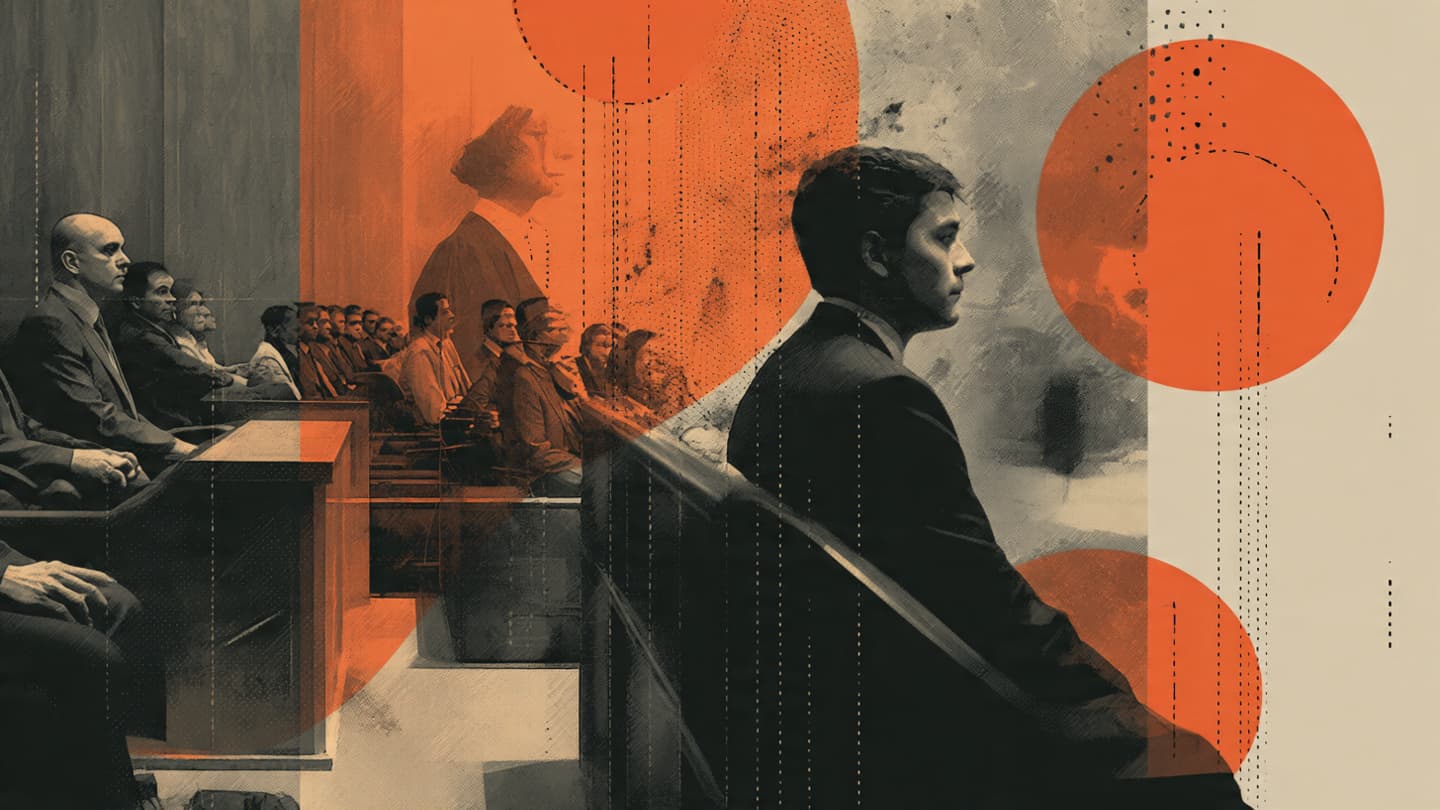
In the dense glow of modern screens, where light spills across faces more often than sunlight through windows, public life has taken on a new kind of stage. Voices once confined to private rooms now travel instantly, amplified through streams that move across cities and borders in real time. In this digital current, visibility becomes both currency and exposure—each moment preserved, each gesture subject to interpretation far beyond its origin.
Within this landscape, a case has emerged involving a livestreamer known for racist content, who now faces an attempted murder charge, with bond set at $1.25 million, according to court proceedings. The individual’s online presence, previously marked by controversial and inflammatory material, has become part of a broader legal narrative unfolding in real time through the judicial system of the United States.
The transition from digital performance to courtroom proceedings reflects a collision between two systems that increasingly overlap: the fast-moving architecture of online platforms and the structured, procedural tempo of law. What begins as content—streamed, commented upon, and shared—can, in certain circumstances, extend into real-world consequences that are then interpreted through legal frameworks designed long before the rise of live broadcasting culture.
Authorities have not only focused on the alleged violent incident but also on the broader context surrounding the individual’s public behavior online. In recent years, livestreaming platforms have become spaces where personality, provocation, and audience engagement often blend into a continuous performance. Within that environment, boundaries between entertainment, rhetoric, and real-world action can become difficult to delineate, especially when content is designed to provoke reaction in real time.
Court proceedings, in contrast, move at a different rhythm—structured, evidentiary, and anchored in documentation rather than immediacy. The setting of bond at $1.25 million marks a procedural stage in the legal process, indicating both the seriousness of the charges and the conditions under which pretrial release might be considered. Each step in this process unfolds within established legal standards, separate from the rapid cycles of online attention that may surround the case.
Observers of digital culture note that cases like this often prompt broader reflection on the relationship between online influence and accountability. Livestreaming, by its nature, reduces the distance between action and audience, creating a continuous feedback loop in which behavior is immediately witnessed, reacted to, and archived. Yet the legal system evaluates actions through a different lens—one that prioritizes evidence, intent, and statutory definitions over audience interpretation.
In the background of such cases lies a broader societal question about how digital spaces are governed and how conduct in those spaces translates into real-world consequences. The growth of influencer-driven platforms has expanded the reach of individuals who might once have remained within limited circles, while also increasing scrutiny when those same individuals are involved in legal controversies.
As the case proceeds through the judicial system of the United States, attention will likely remain focused not only on the specific charges but also on the broader intersection of online behavior and public accountability. The courtroom, in this sense, becomes a space where digital narratives are translated into legal language, and where the speed of online circulation is replaced by the measured pace of legal review.
For now, the proceedings remain ongoing, with the accused held under conditions defined by the court’s bond decision. Beyond the immediate facts of the case, however, the situation reflects a wider and increasingly familiar pattern: the convergence of digital visibility and legal consequence in an era where public life is constantly recorded, shared, and examined.
AI Image Disclaimer Visuals are AI-generated and intended as conceptual representations of legal and digital media themes, not real photographs.
Sources Reuters, Associated Press, BBC News, The Guardian, CNN
Published by Banx Network. This article is part of the Banx decentralized media programme, powered by the BXE token on the XRP Ledger.