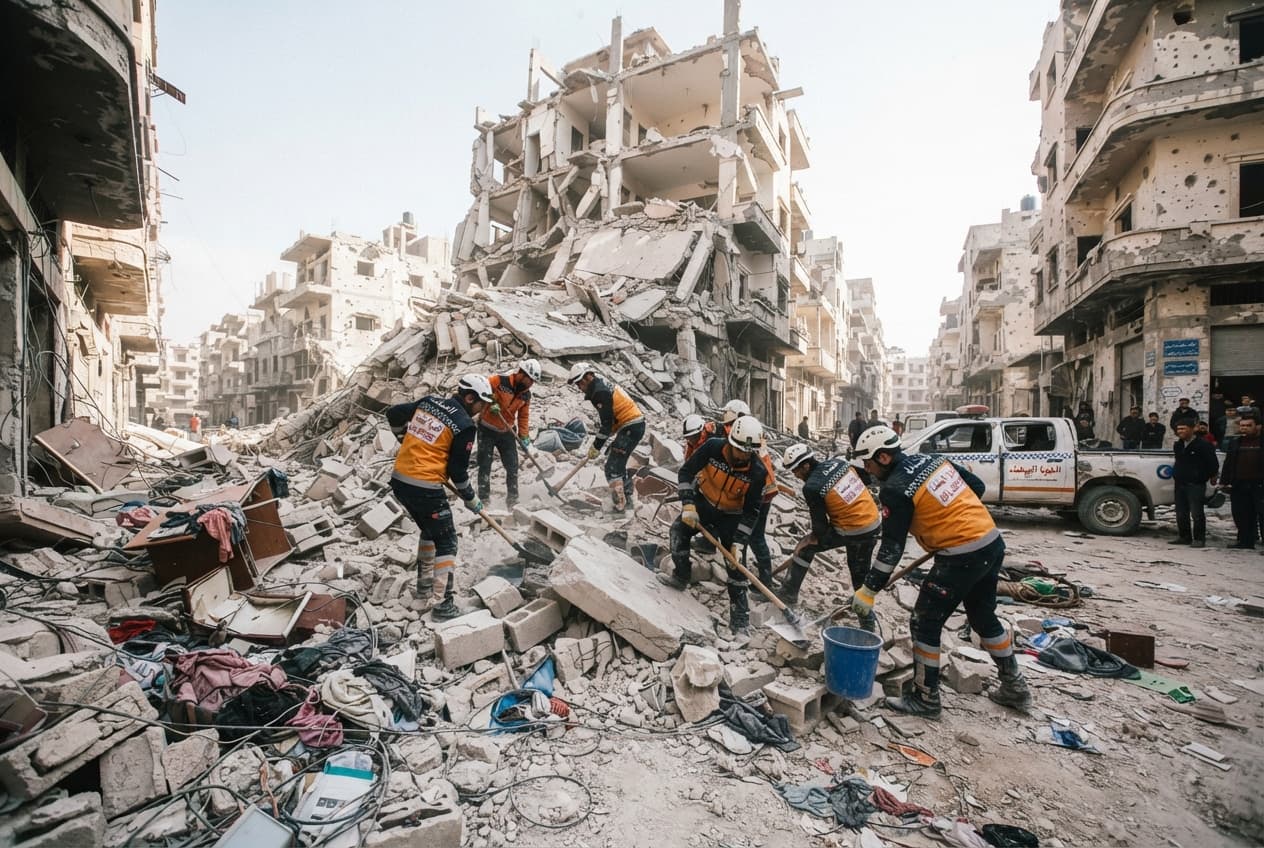
War, in its most dismal form, casts ripples that stretch far beyond the battlegrounds. It disrupts not only the lives of those directly involved but sends tremors through economies, policies, and the daily lives of civilians who may never set foot on foreign soil. For Americans, this impact can be felt not just in the form of rising gas prices or military expenses, but in the subtler, more pervasive shifts that happen behind the scenes. Like a pebble dropped in a pond, the reverberations of conflict can go unnoticed until the consequences have already rippled across the entire economy. The question remains: how much further will these ripples reach, and how much worse will they get?
As tensions escalate in far-off regions, the economic impact on American households deepens, spreading across industries, families, and even communities that seem far removed from the theaters of war. It's easy to assume that conflict remains an issue confined to distant borders, but in the globalized world of today, no economy operates in isolation.
Energy prices have already surged, but the story doesn’t end there. Inflation, too, has crept higher, influenced by supply chain disruptions, military spending, and international trade bottlenecks. For the average American family, this manifests in everything from rising grocery bills to higher rents, all compounded by a sense of uncertainty that looms over financial markets. The subtle shift is perhaps the most dangerous, as it chips away at the middle class and complicates the already volatile economic landscape.
What’s often overlooked is the long-term mental toll this economic strain places on society. When markets falter, consumer confidence plummets. This uncertainty doesn’t just affect Wall Street; it trickles down to Main Street, affecting the small business owner, the farmer, and even the everyday worker.
Historically, wars have seen economies pivot and adapt, sometimes even thriving on the backs of military spending. But with global tensions and complex geopolitical scenarios, what’s different this time is the interconnectedness of today’s markets. As other nations face their own battles, Americans feel the squeeze through their own economic structure, which has become increasingly dependent on international stability.
Even though the war’s immediate effects may not be felt by everyone on the same level, the growing pressure is undeniably pulling at the seams of American economic stability. Whether it’s in the form of unemployment, rising debt, or a stagnant wage growth, the impact is real and ongoing. In this quiet economic war, there are no visible fronts, no clear battlegrounds—but there are certainly casualties.
In the end, the question of how much worse the economic impact of war could get is one that hangs like a cloud over the horizon, one that no immediate answer can dispel. As markets adjust, some segments of the economy will inevitably feel the strain more acutely than others. For those whose livelihoods depend on global trade, the ripple effect may prove to be even more disastrous than anticipated. What’s clear, however, is that the pain is already being felt—and its eventual reach will likely extend beyond expectations. As Americans wait for a clearer path forward, the uncertainty lingers, reminding us that in times of war, the economic landscape is rarely ever still.
AI Image Disclaimer: "Images in this article are AI-generated illustrations, meant for concept only." "Visuals are created with AI tools and are not real photographs." "Illustrations were produced with AI and serve as conceptual depictions." "Graphics are AI-generated and intended for representation, not reality." Sources: The New York Times The Washington Post The Wall Street Journal BBC News Reuters
Published by Banx Network. This article is part of the Banx decentralized media programme, powered by the BXE token on the XRP Ledger.