
Key Highlights
- U.S. President Trump advocates for military action against drug cartels.
- Latin American leaders express mixed reactions to Trump's proposal.
- Ongoing cartel violence raises concerns about security and governance.
In the long history of diplomacy across the Americas, discussions about security often reflect a dual tone. On one hand, there is the language of partnership—countries speaking about cooperation, shared borders, and common threats. On the other, there is a quiet recognition that the challenges facing the region rarely stay confined within one nation’s boundaries.
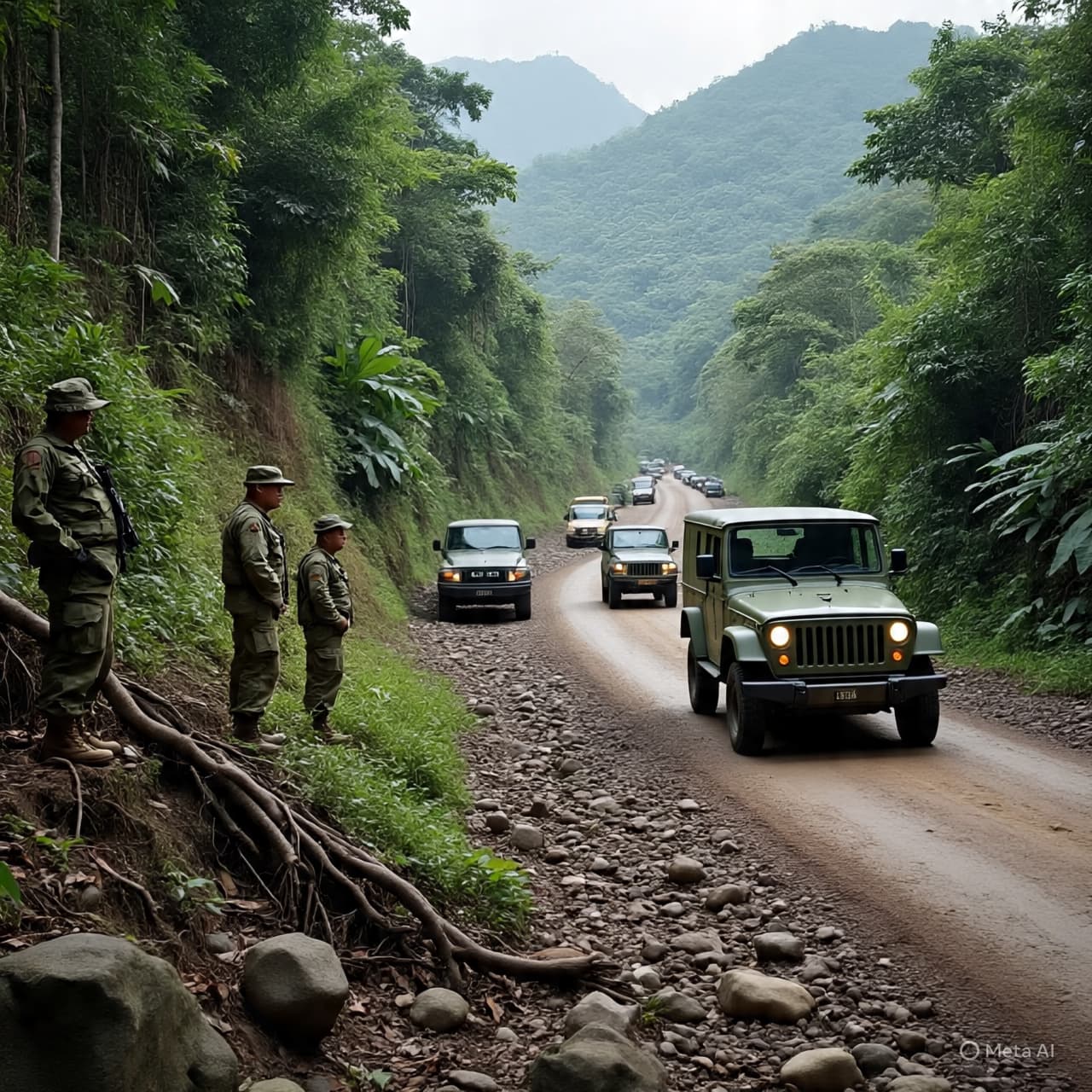
This balance has once again entered public debate as discussions intensify over how to confront the powerful criminal networks operating across Latin America. Recently, U.S. President Donald Trump has encouraged several Latin American leaders to consider stronger military action against drug cartels, suggesting that regional armed forces could play a larger role alongside the United States in combating organized crime.
The comments come amid growing concern in Washington about the influence and reach of transnational criminal groups involved in narcotics trafficking, human smuggling, and weapons distribution. These networks operate across multiple borders, often taking advantage of weak institutions and remote regions where law enforcement capacity remains limited. For years, the United States has supported regional partners through intelligence sharing, training programs, and financial assistance aimed at strengthening police and security forces. Trump’s latest remarks suggest a possible shift toward a more openly militarized strategy.
According to officials familiar with the discussions, the president has encouraged leaders in parts of Latin America to consider deploying their military forces more aggressively against cartel operations. Supporters argue that this approach treats large criminal organizations not simply as law-enforcement problems but as security threats that require stronger national responses. This proposal reflects a broader debate that has unfolded across the region for decades.
In countries such as Mexico, Colombia, and parts of Central America, governments have periodically turned to the military when police forces were overwhelmed by the scale and firepower of organized crime groups. These operations have sometimes disrupted cartel networks, but they have also raised concerns among human rights organizations and political leaders about the risks of prolonged military involvement in civilian security matters.
Latin American leaders responding to Trump’s suggestion have expressed varying views. Some officials acknowledge that the scale of cartel violence has forced governments to rethink traditional approaches. Drug trafficking organizations today possess sophisticated weapons, financial networks, and logistical systems that rival those of formal institutions in some areas. Others, however, have urged caution, noting that the use of military forces in domestic policing roles can carry legal and political complications.
Analysts say the debate reflects the complexity of confronting criminal networks that operate both locally and globally. Cartels move narcotics across continents, launder billions of dollars through international financial systems, and exploit gaps in governance across borders. Because of this transnational nature, cooperation between governments has long been seen as essential.
In recent years, the United States has expanded security partnerships with several Latin American countries, supporting joint operations and intelligence exchanges designed to track cartel leadership structures and trafficking routes. Trump’s remarks appear to build on that framework while emphasizing a stronger security posture.
The discussion comes at a moment when cartel violence remains a significant concern across the Western Hemisphere. In parts of Mexico and Central America, clashes between rival criminal groups and government forces have continued to affect local communities and economic stability. Yet many policymakers stress that long-term solutions likely require more than military pressure alone. Economic development, judicial reform, and anti-corruption efforts are often cited as equally important elements in addressing the underlying conditions that allow organized crime to flourish.
As these conversations unfold, governments across the region are weighing how to balance immediate security concerns with broader political and social considerations. For now, officials say discussions between Washington and Latin American capitals continue through diplomatic channels.
Published by Banx Network. This article is part of the Banx decentralized media programme, powered by the BXE token on the XRP Ledger.



