There is a particular tension that fills a legislative chamber when the money runs short and the needs run deep. The House of Assembly in Newfoundland and Labrador returned for its fall sitting on Monday, and the air was thick with a question that has no easy answer: how much can a government help its people when its own finances are stretched thin?
Finance Minister Craig Pardy has been candid about the province's approach. Higher-than-budgeted oil revenues will be split according to an 80-20 plan—80 percent directed toward the province's debt load, 20 percent toward cost-of-living measures . The government has already announced a 15 percent reduction on electricity bills for the first 2,000 kWh used each month, a doubling of the maximum home heating supplement, and a cut to the provincial tax on gasoline and diesel . But opposition members were quick to point out the limits: caps on the power rebate, a tax break that does not begin until January .
Liberal Leader John Hogan posed the question directly during question period: "Why does the finance minister think he should only give 20 percent back to Newfoundlanders and Labradorians when they clearly need much more help?" . Pardy's answer returned, again and again, to the debt. The province will pay $1.2 billion in interest this year alone. "We know what $1.2 billion can provide in affordability," he said .
The political arithmetic is not new, but its consequences are felt in households across the province. NDP Leader Jim Dinn dismissed the announced measures as "half measures" that could have been introduced long before now. He accused the Progressive Conservatives of taking "a page from the same playbook" the Liberals once used to explain why they could not do more . Dinn argued that investing in housing and health would ultimately yield a greater return than cautious debt management, pointing to statistics that suggest spending in these areas pays off .
Deputy Premier Barry Petten offered a different framing, describing the government's approach as one of fiscal discipline after years of what he characterized as profligate spending by the previous Liberal government. He cited the cancellation of a planned $14-billion health-care infrastructure project as evidence that the PCs were making decisions with money in mind .
The session also promises debates on major files, including the Churchill Falls power agreement, which is heading toward final terms. The Liberals plan to introduce a private member's motion on Wednesday related to that agreement . Both Government House Leader Lloyd Parrott and Petten committed to improved decorum in the House, acknowledging that behavior in the previous session had been unacceptable on both sides .
There is no villain in this story, only competing pressures and a province caught between the need to help its people now and the need to secure its finances for the future. The debt is real. The cost of living is real. The question that will define this session is whether the government can find a way to address both without sacrificing one for the other.
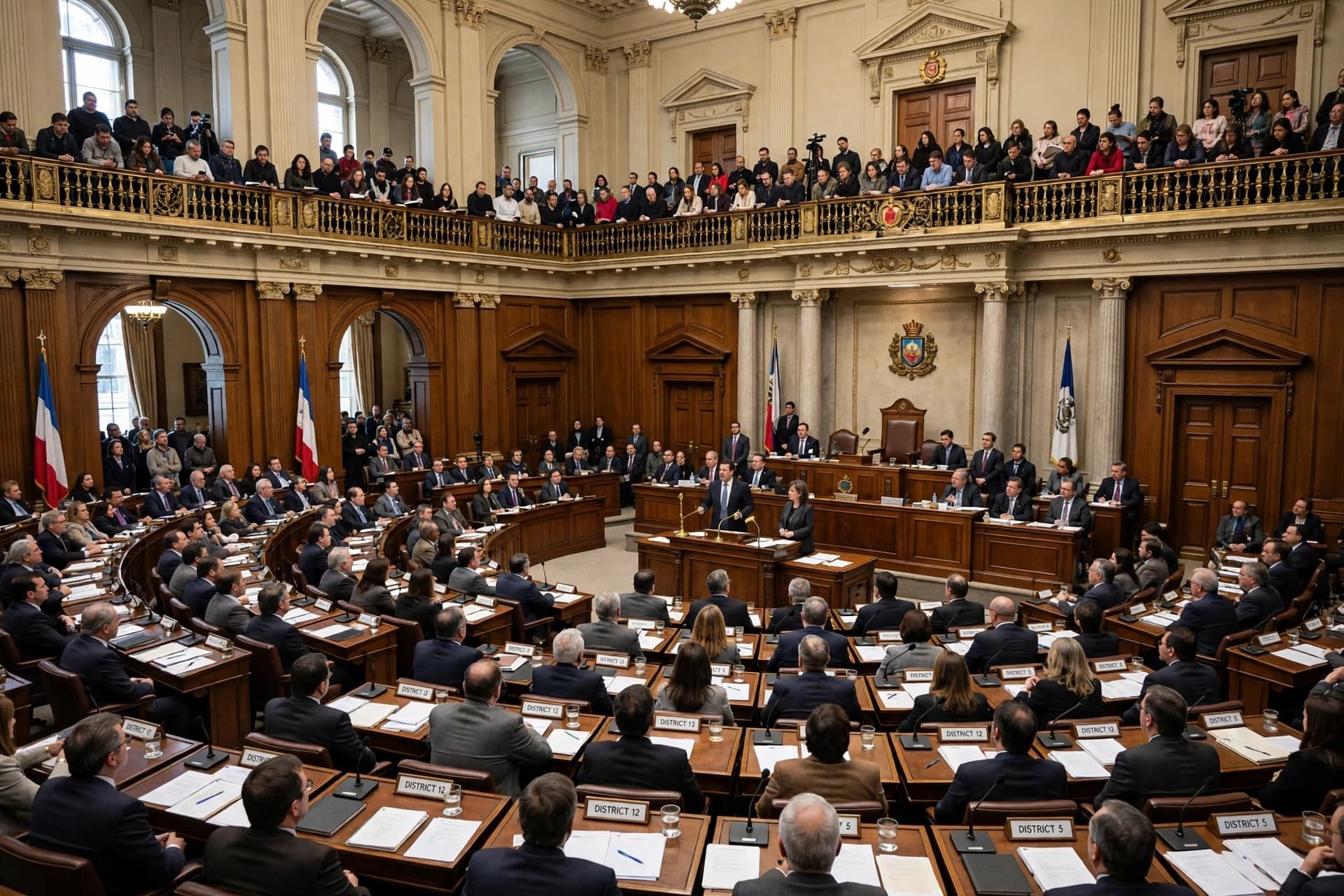
Image note: This article's visual is an AI-generated illustration and does not depict actual members or proceedings of the House of Assembly.
Sources: CBC News
Published by Banx Network. This article is part of the Banx decentralized media programme, powered by the BXE token on the XRP Ledger.