There is a quiet harmony in the way telescopes around the world gaze at the same sky. Some listen in radio waves, others capture infrared warmth, while still others trace the faint shimmer of visible light. Each instrument offers its own dialect of the cosmos. Yet, like scattered pages of a single manuscript, their observations do not always align easily. To read the universe fully, someone must learn to translate between them.
Chinese researchers have now developed an artificial intelligence model designed to process stellar data collected from different types of telescopes, allowing scientists to integrate observations across multiple wavelengths more efficiently. The model aims to bridge variations in resolution, sensitivity, and data format that often complicate collaborative astronomical research.
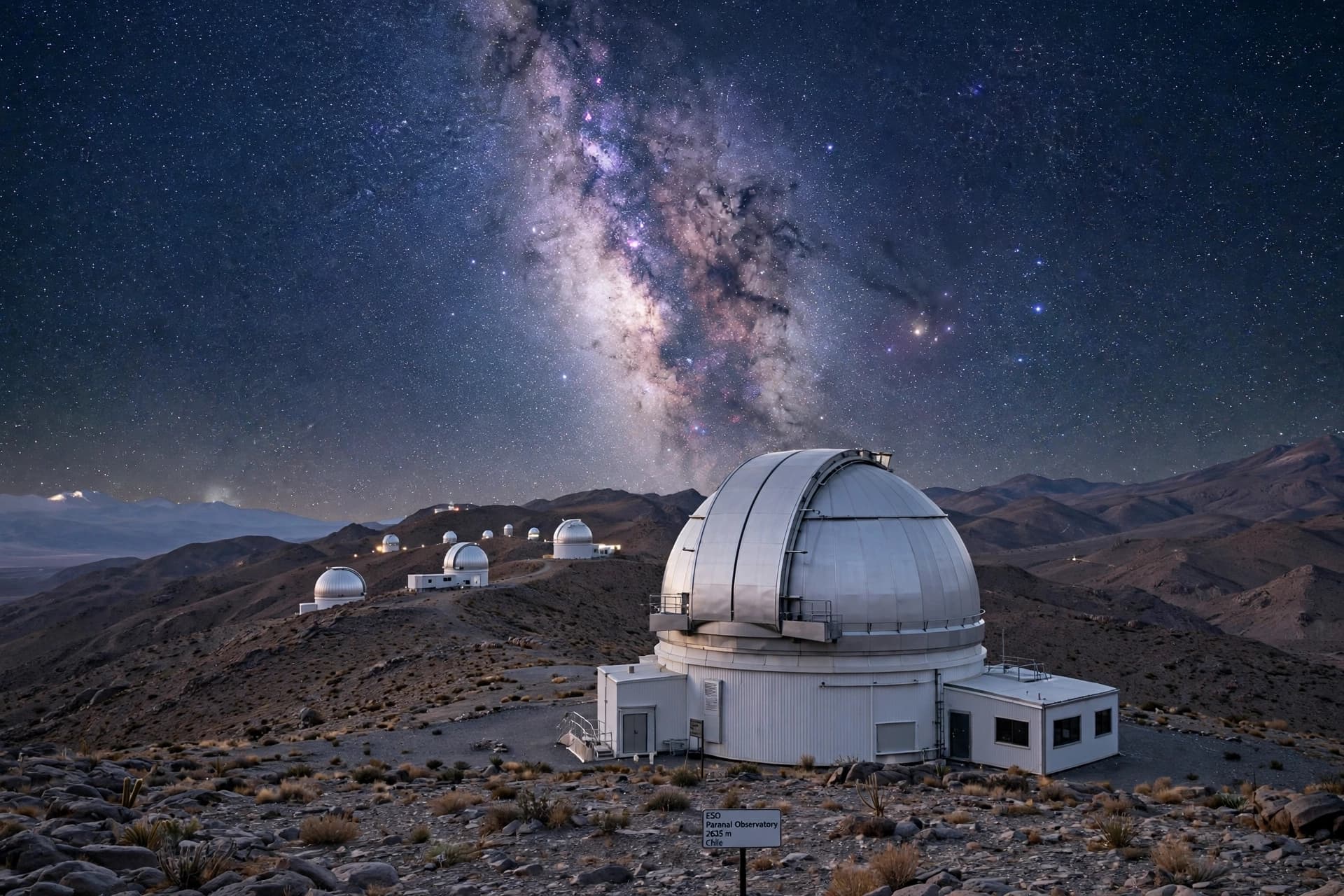
Modern astronomy relies on a global network of observatories. A radio telescope may detect cold molecular gas clouds where stars are forming, while an optical telescope reveals the luminous glow of mature stars. Infrared instruments, meanwhile, peer through cosmic dust to uncover hidden structures. Although these datasets describe the same celestial objects, they differ significantly in scale and structure. Combining them traditionally requires extensive calibration and manual alignment.
The newly developed AI system applies deep learning techniques to recognize patterns across datasets gathered by different telescopes. By training the model on overlapping observations, researchers teach it to identify correlations between radio, infrared, and optical signatures of the same stellar sources. The AI can then standardize and cross-reference new data more rapidly than conventional methods.
According to project scientists, the system is particularly valuable for large sky surveys that generate enormous volumes of information. With next-generation observatories producing terabytes of data daily, manual processing becomes increasingly impractical. Artificial intelligence offers a way to streamline classification, reduce processing time, and highlight anomalies that may warrant closer human inspection.
The model does not replace astronomers; rather, it assists them. Researchers emphasize that AI functions as a tool to filter and organize data, enabling scientists to focus on interpretation and theoretical analysis. In some early tests, the system demonstrated improved efficiency in identifying stellar clusters and tracking variations in brightness across multiple datasets.
Such integration is essential for understanding stellar evolution. A star’s life cycle unfolds across diverse physical processes — from gas cloud collapse to nuclear fusion and eventual transformation. Each stage emits different forms of radiation. By harmonizing data from multiple telescopes, scientists can construct more comprehensive models of how stars form, age, and influence their surroundings.
There is something fitting in using artificial intelligence — a product of human ingenuity — to decode the layered language of the cosmos. Telescopes extend our sight; algorithms extend our capacity to understand what we see. Together, they form a partnership between observation and interpretation.
The research team plans to refine the AI model further and apply it to broader astronomical surveys. As global collaborations in space science continue to expand, tools capable of integrating diverse datasets may become increasingly central to discovery. The sky remains vast, but with each advancement, its patterns grow a little clearer.
AI Image Disclaimer Illustrations were produced with AI and serve as conceptual depictions.
Source Check — Credible Media Coverage Found:
Xinhua News Agency South China Morning Post China Daily Nature News Space.com
Published by Banx Network. This article is part of the Banx decentralized media programme, powered by the BXE token on the XRP Ledger.