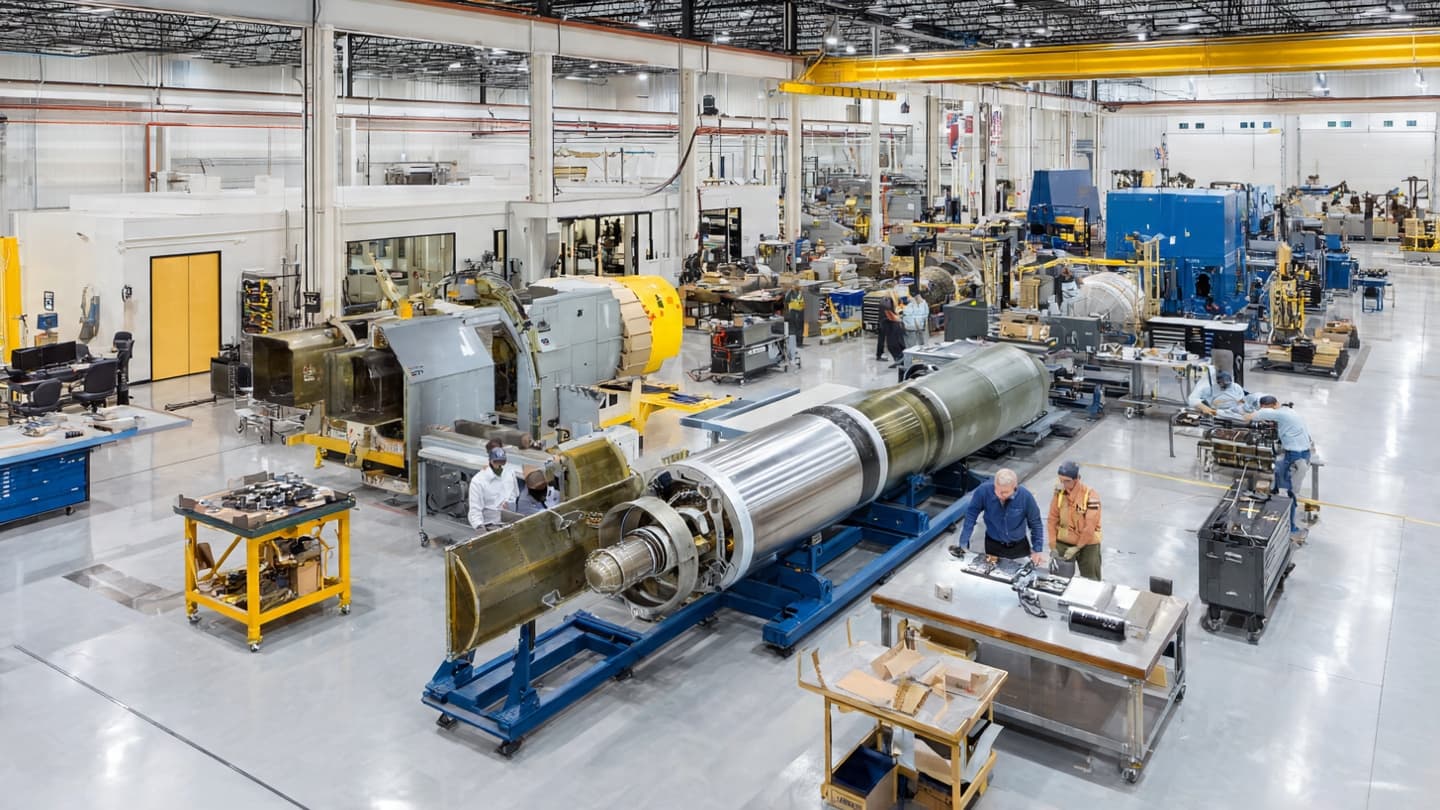
Long before dawn reaches the factory floor, machines begin their steady rhythm. Steel is shaped with precision, circuits are assembled with careful attention, and engineers move quietly between workstations where small adjustments can influence systems designed to operate thousands of miles away. In places where advanced technology is built, progress often arrives not through dramatic moments, but through countless careful decisions aimed at making complex ideas more practical.
That spirit of refinement was reflected as Lockheed Martin announced the development of a lower-cost interceptor for the Patriot air defense system. The company said the new design is intended to provide a more affordable option for intercepting aerial threats while increasing production capacity to meet growing international demand. The initiative comes as many governments continue strengthening their air and missile defense capabilities in response to evolving security environments.
The Patriot system has become one of the world's most widely deployed air defense platforms, serving numerous allied nations. Designed to intercept aircraft, cruise missiles, and certain ballistic missile threats, it has gained renewed attention in recent years as conflicts have highlighted the importance of layered air defense. As demand for interceptors has increased, manufacturers have also sought ways to expand production while reducing costs.
According to company officials, the newly announced interceptor is expected to use a simplified design and modern manufacturing techniques that allow faster production without compromising its intended operational role. Lower manufacturing costs could enable defense customers to purchase larger inventories, supporting sustained readiness while easing pressure on defense budgets. Company representatives emphasized that affordability has become an increasingly important consideration as governments seek to replenish missile stockpiles.
The announcement also reflects broader changes within the global defense industry. Manufacturers are investing in advanced production technologies, automation, and digital engineering to accelerate delivery schedules. Rather than focusing solely on technical performance, many companies are placing greater emphasis on scalability, supply chain resilience, and cost efficiency as military procurement priorities continue evolving.
Beyond industrial facilities, these developments influence a wider network of suppliers, researchers, and skilled workers. Thousands of engineers, technicians, software developers, and manufacturing specialists contribute to programs that extend across multiple countries. Innovation in defense manufacturing often generates advances in materials science, precision engineering, and industrial processes that reach beyond military applications.
Analysts note that international demand for air defense systems has grown steadily as nations reassess their security needs. Recent conflicts have demonstrated the increasing importance of defending critical infrastructure, civilian population centers, and military installations against a wide range of airborne threats. Affordable interceptor production may therefore become an important factor in maintaining long-term defensive capacity for allied nations.
While the new interceptor will continue progressing through development and testing before wider deployment, its announcement highlights how technological advancement increasingly depends on balancing performance with practicality. Modern engineering is often measured not only by what systems can accomplish, but also by how efficiently they can be produced, maintained, and supplied over many years.
As another day concludes across laboratories and manufacturing plants, the quiet work of innovation continues behind closed doors. Drawings become prototypes, prototypes become tested systems, and ideas gradually take their place within larger networks of technology and industry. In that careful progression lies a reminder that the future is often shaped not only by breakthrough inventions, but also by thoughtful improvements that make complex capabilities more accessible and sustainable.
AI Image Disclaimer These illustrations are AI-generated visual interpretations intended to accompany the article and are not authentic photographs of the reported developments.
Sources Reuters Lockheed Martin U.S. Department of Defense Defense News Jane's Defence Weekly
Published by Banx Network. This article is part of the Banx decentralized media programme, powered by the BXE token on the XRP Ledger.