There are moments in history when the air feels heavier, when decisions made in quiet rooms seem to echo far beyond their walls. Across Africa, as 2026 unfolds, such a moment appears to be taking shape. It is not marked by a single summit or a single crisis, but by a gradual accumulation of strain, hope, and expectation placed upon multilateral institutions tasked with holding many fragile threads together. Like a river at the start of the dry season, the flow continues, but its course is increasingly exposed.
From Addis Ababa to regional capitals, the language of cooperation remains steady, even as the challenges it seeks to address grow more complex. Armed conflicts linger in parts of the Sahel, the Horn of Africa, and Central Africa, while political transitions and contested elections test regional norms. In response, African-led mediation has remained a central instrument, often preferred for its familiarity with local contexts and its promise of ownership. Yet mediation today is less a single act than a long conversation, requiring patience from all sides and endurance from those tasked with guiding it.
Leadership within Africa’s multilateral bodies faces a delicate balancing act. On one hand lies the principle of sovereignty, deeply rooted in the continent’s post-colonial identity. On the other stands the rising expectation that regional organizations will act decisively when instability threatens to spill across borders. This tension is not new, but in 2026 it feels sharper, as citizens, civil society groups, and international partners alike look to African institutions for clarity and resolve.
The African Union and regional blocs continue to convene, dispatch envoys, and issue communiqués that emphasize dialogue and restraint. These efforts often unfold away from public view, shaped by negotiation rather than spectacle. Success, when it comes, is measured quietly: a ceasefire holding for a few more weeks, an election proceeding without violence, a humanitarian corridor reopening just in time. Failures, too, tend to arrive softly, through talks that stall or agreements that fray under pressure.
Economic and environmental pressures add further weight to this multilateral reckoning. Debt burdens, climate shocks, and uneven recovery from global disruptions have made cooperation not merely aspirational but necessary. Shared challenges increasingly demand shared responses, even as resources remain limited and political will varies from one capital to the next. In this landscape, leadership is often less about command and more about coordination, less about certainty and more about steady presence.
For many Africans, these high-level processes feel distant, yet their outcomes shape everyday realities. Mediation that prevents renewed fighting preserves livelihoods. Regional cooperation that eases trade barriers affects food prices and employment. Multilateral decisions, though abstract in form, ripple outward into homes, markets, and communities.
As 2026 progresses, Africa’s multilateral system stands not at a breaking point, but at a point of reflection. The tools exist, the experience is deep, and the commitment to collective solutions endures. What remains under quiet examination is how these elements will be adapted to a changing political and social terrain.
Officials and institutions continue their work, engaging partners and refining approaches to mediation and leadership. The year ahead is expected to bring further diplomatic initiatives, leadership transitions within key bodies, and renewed efforts to address ongoing conflicts through African-led frameworks. The story, for now, remains one of careful persistence rather than dramatic rupture.
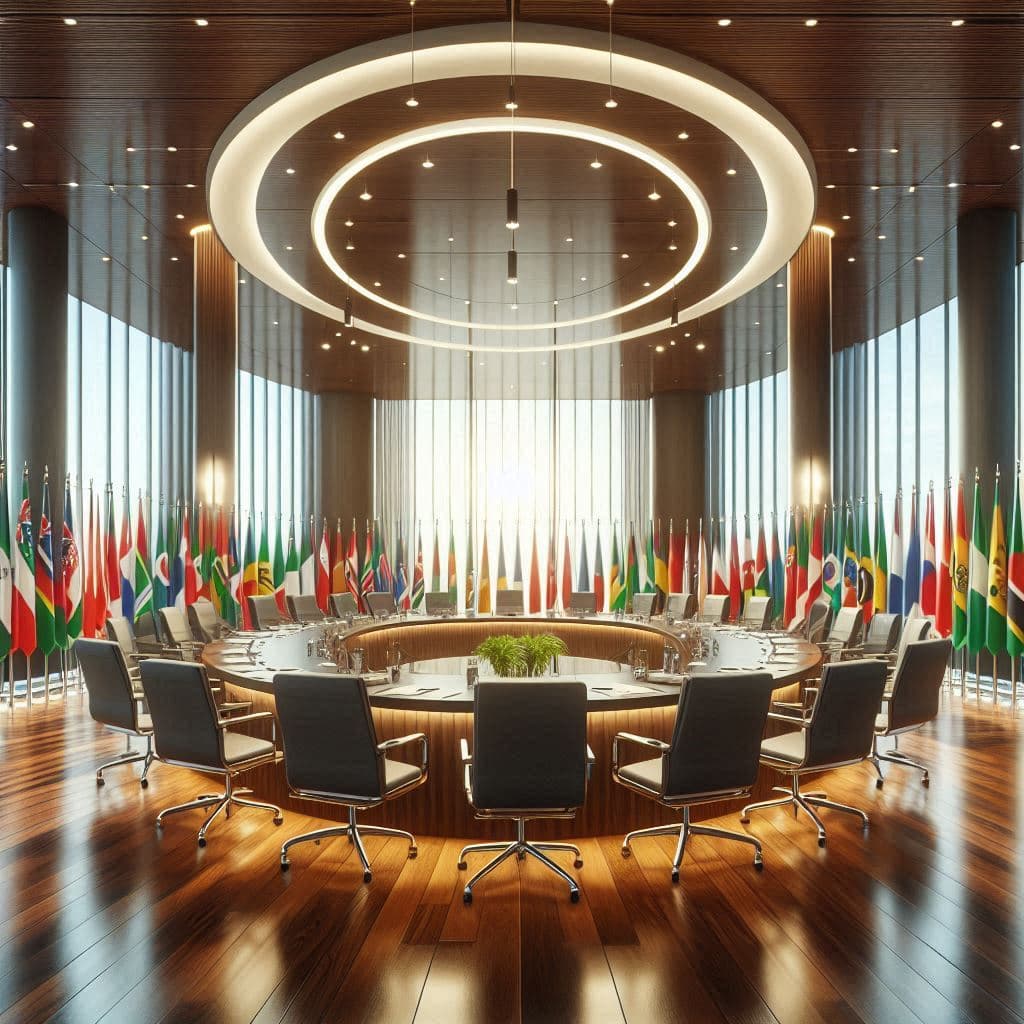
AI Image Disclaimer “Images in this article are AI-generated illustrations, meant for concept only.”
Sources (Media Names Only) Reuters Al Jazeera African Union International Crisis Group Foreign Affairs
Published by Banx Network. This article is part of the Banx decentralized media programme, powered by the BXE token on the XRP Ledger.