In nature’s long, winding story, some behaviours seem surprising — even unsettling — to human eyes. One of those is cannibalism, when animals eat others of their own kind. For most species, it’s rare, a last-resort reaction to hunger or extreme conditions. But in snakes, scientists are finding that cannibalism isn’t an oddity — it appears to be evolving or recurring in many lineages, and researchers are asking what ecological and evolutionary forces are driving that pattern.
For many people, the idea of a snake eating another snake of its own species feels dramatic. But for snakes themselves, such behaviour likely isn’t about cruelty or revenge; it is about survival and reproductive success in a world where food availability and competition can be unpredictable.
Snakes are diverse and adaptable predators. They range from forest floors to deserts, grasslands and islands, and their diets vary widely — rodents, lizards, birds, fish and even other snakes. In environments where food resources fluctuate widely from season to season or year to year, selection pressures can favour individuals that are flexible about what they eat. If a snake can digest multiple kinds of prey — including members of its own species — then in lean times that flexibility can provide a survival advantage.
Studies of snake populations suggest that cannibalism often shows up when competition for resources is high. For example, in isolated habitats like islands or fragmented ecosystems, the number of potential prey species may be limited. A juvenile snake struggling to find food might succeed by feeding on smaller members of its own species, and over generations, natural selection can reinforce this behaviour. In this way, cannibalism isn’t a random oddity — it becomes part of a suite of strategies that help populations persist under pressure.
Scientists have also noted that cannibalism may be linked to population density. In areas where many snakes live close together, encounters between individuals become more frequent simply by chance. When a hungry predator meets a small, vulnerable relative, the energy payoff can outweigh the cost of seeking out more distant prey. That doesn’t mean every snake in such a population will behave this way, but it increases the odds that cannibalistic behaviour will be seen more often.
In some species, cannibalism appears to be sex- or life-stage dependent. Adult males may rarely eat other adults of the same species, but they might consume juveniles, which are easier to catch and swallow. Female snakes protecting their nests sometimes eat young that wander too close, again reflecting a hard-wired impulse toward efficiency in risky conditions.
Researchers also consider the idea that cannibalism can influence the evolutionary trajectory of a species. If growing up means both avoiding predators and avoiding becoming someone else’s meal, then traits like camouflage, speed, or avoidance of certain environments can be selected for over time. In that sense, cannibalism shapes not only feeding habits but also the broader life history strategies of snakes.
Importantly, scientists emphasize that observing cannibalism in nature does not mean that every population or every species engages in it frequently. It tends to be contextual — influenced by habitat, prey availability, climate conditions and even behavioural traditions passed across generations. Some snake communities show little evidence of cannibalism, while others display it as one of several regular feeding behaviours.
For people who watch wildlife documentaries or encounter snakes in nature, this research offers a window into how complex and varied animal behaviour can be. Cannibalism is not a moral failure for snakes; it is a biological response shaped by evolutionary pressures — a testament to the fact that life in the wild is governed by the unrelenting calculations of energy and survival.
As scientists continue to study these patterns across habitats and species, they gain insight not only into the lives of snakes but into the broader ways animals adapt to changing environments. Observing such a striking behaviour reminds us that nature operates on principles of survival, adaptability and continual negotiation with the world around it — principles that shape every living lineage, from the smallest insect to the slithering serpent.
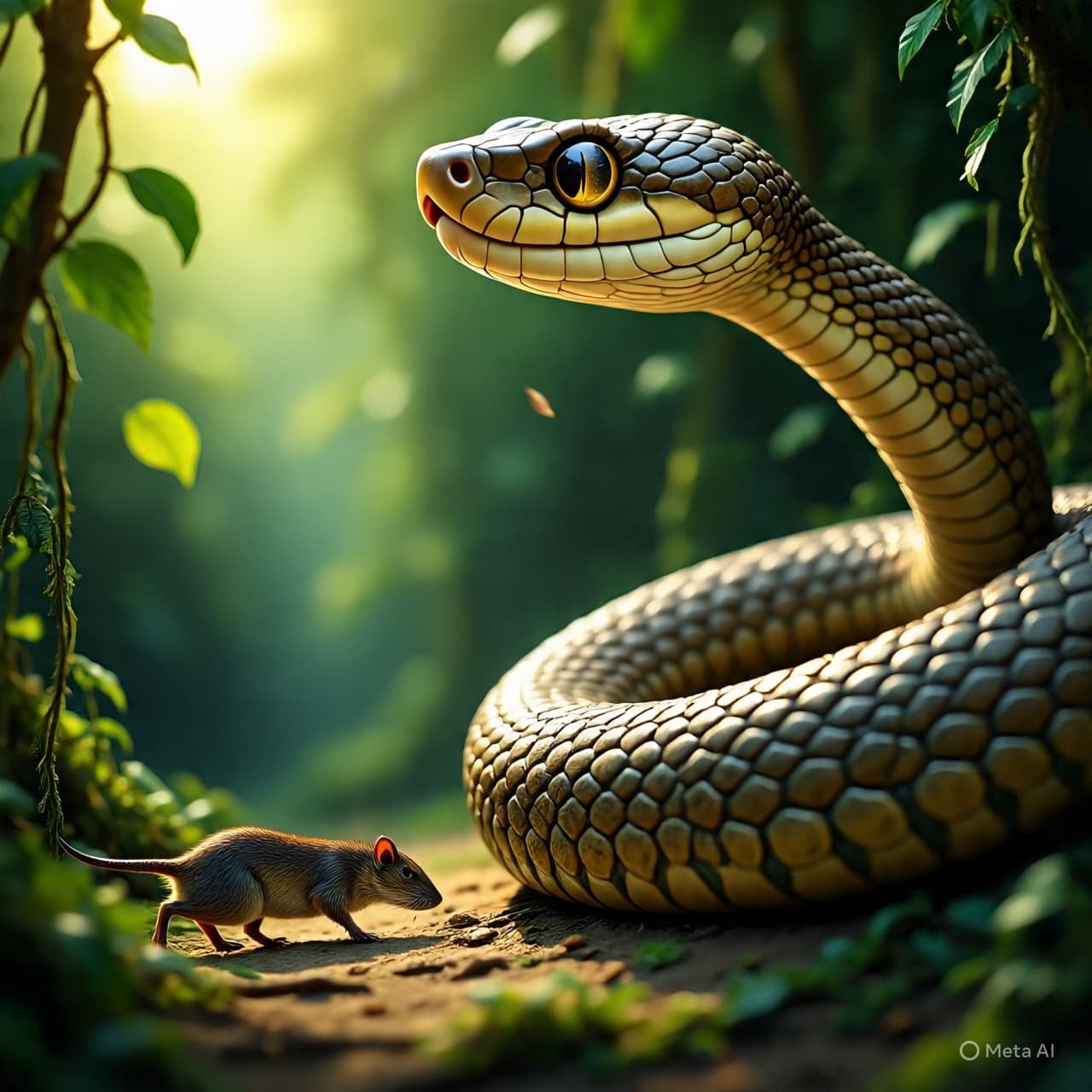
AI Image Disclaimer Visuals are AI-generated and intended for conceptual visualization, not real photographs.
Sources
• Reporting from wildlife and biological research outlets on documented cases of cannibalism in snake populations.
• Commentary by herpetologists and ecologists on the ecological and evolutionary context of this behaviour
Published by Banx Network. This article is part of the Banx decentralized media programme, powered by the BXE token on the XRP Ledger.