When sunlight filters through the glass doors of a quiet laboratory, it can feel as if the day itself pauses to watch discovery unfold. In rooms lined with instruments and beakers, researchers chase patterns unseen by the naked eye — patterns in molecules, in reactions, in possibilities. It is within this gentle crucible of curiosity that scientists have now crafted a material with the quiet promise of protection: a silica nanocomposite that, like a vigilant guardian, can produce biocides only when they are needed.
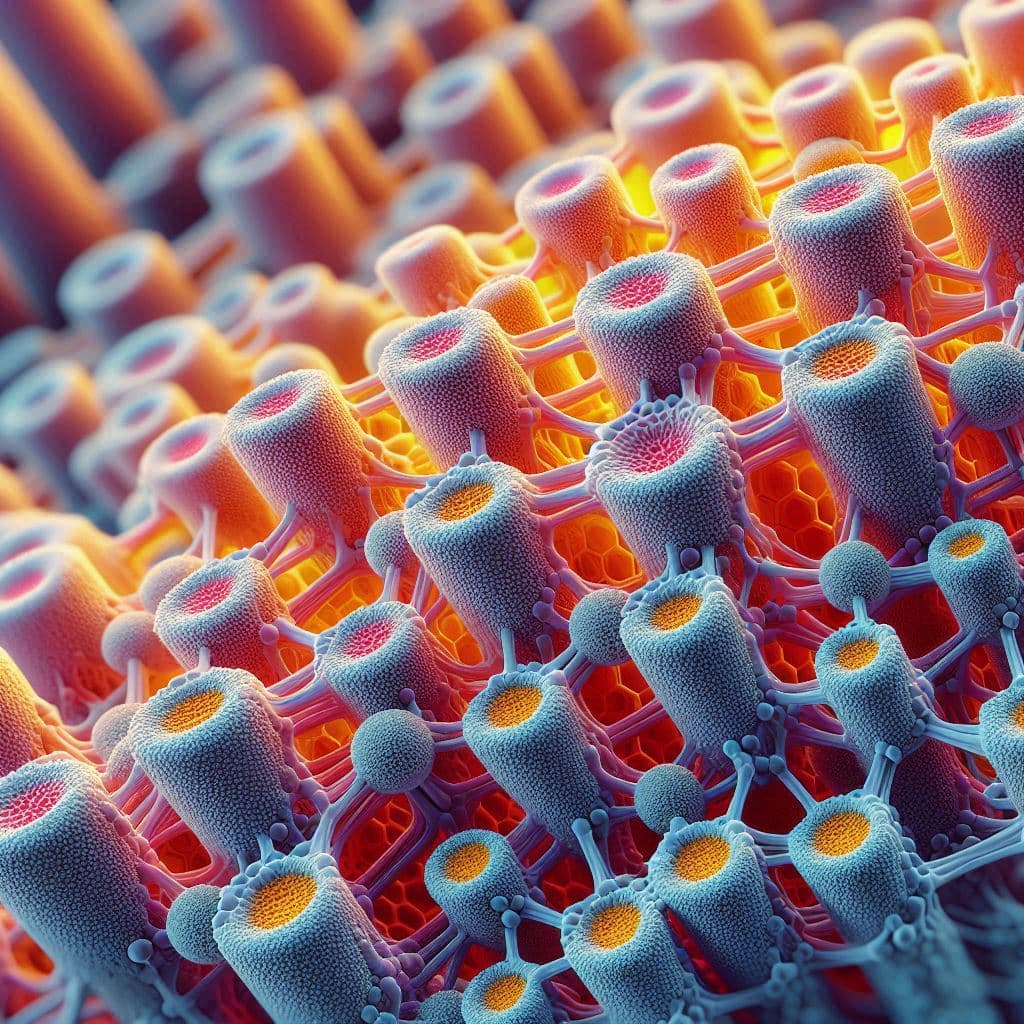
This new material, developed by researchers at the Institute of Nuclear Physics of the Polish Academy of Sciences in Cracow, is called B-STING — Biocidal Silica-Templated Immobilized Nano-Groups. Imagine a honeycomb, its walls arranged in precise, cylindrical channels only eight nanometers across. Within these tiny passageways, individual copper atoms rest like meticulous sentinels. When water and oxygen from the air drift through, those atoms gently catalyze the formation of reactive oxygen species — molecules able to neutralize bacteria, fungi, and even viruses — without any external prompt such as light or heat.
Unlike traditional antimicrobial coatings that rely on large clusters of metal nanoparticles, B-STING’s architecture ensures each copper atom has direct access to its surroundings. In this way, it acts not as a passive surface but as a responsive nanofactory, producing biocidal compounds only in response to subtle changes in its chemical environment. It senses shifts caused by microorganisms — like dips in pH or the appearance of sulfur compounds — and gently increases its output of reactive oxygen species accordingly.
The research team has already shown that coatings made with this material can kill a range of harmful microbes, and surprisingly, tests on human fibroblast cells found it does not harm them. This dual effect — lethality to pathogens but safety for human cells — suggests a nuanced balance, almost like a vigilant caretaker who acts when needed but rests when all is calm.
Because the silica framework is durable, transparent, and mechanically robust, B-STING coatings can be applied to many surfaces: glass, metals, polymers, and even complex-shaped objects. These coatings remain ready without constant activation, producing biocidal agents on demand and adapting their output based on local conditions.
Looking forward, researchers note that if further studies confirm its safety inside the body, the material might one day find use in medical therapies, including coatings for implants or dental applications. For now, though, its most immediate promise is as a durable, ready-on-demand antimicrobial surface for environments where cleanliness matters most.
In a world where microorganisms constantly evolve and where antibiotic resistance challenges public health, materials like this silica nanocomposite offer a new approach — not by replacing biological defenses, but by quietly supporting them with precision and responsiveness.
AI Image Disclaimer
“Images in this article are AI-generated illustrations, meant for concept only.”
---
Sources
Phys.org
Published by Banx Network. This article is part of the Banx decentralized media programme, powered by the BXE token on the XRP Ledger.