
Key Highlights
- Shift in Power:The IRGC is reportedly taking control of key state functions in Iran.
- Political Deadlock:The civilian government faces increasing challenges amid military influence.
- Impact on Citizens:Daily life in Tehran is affected as new authority patterns emerge.
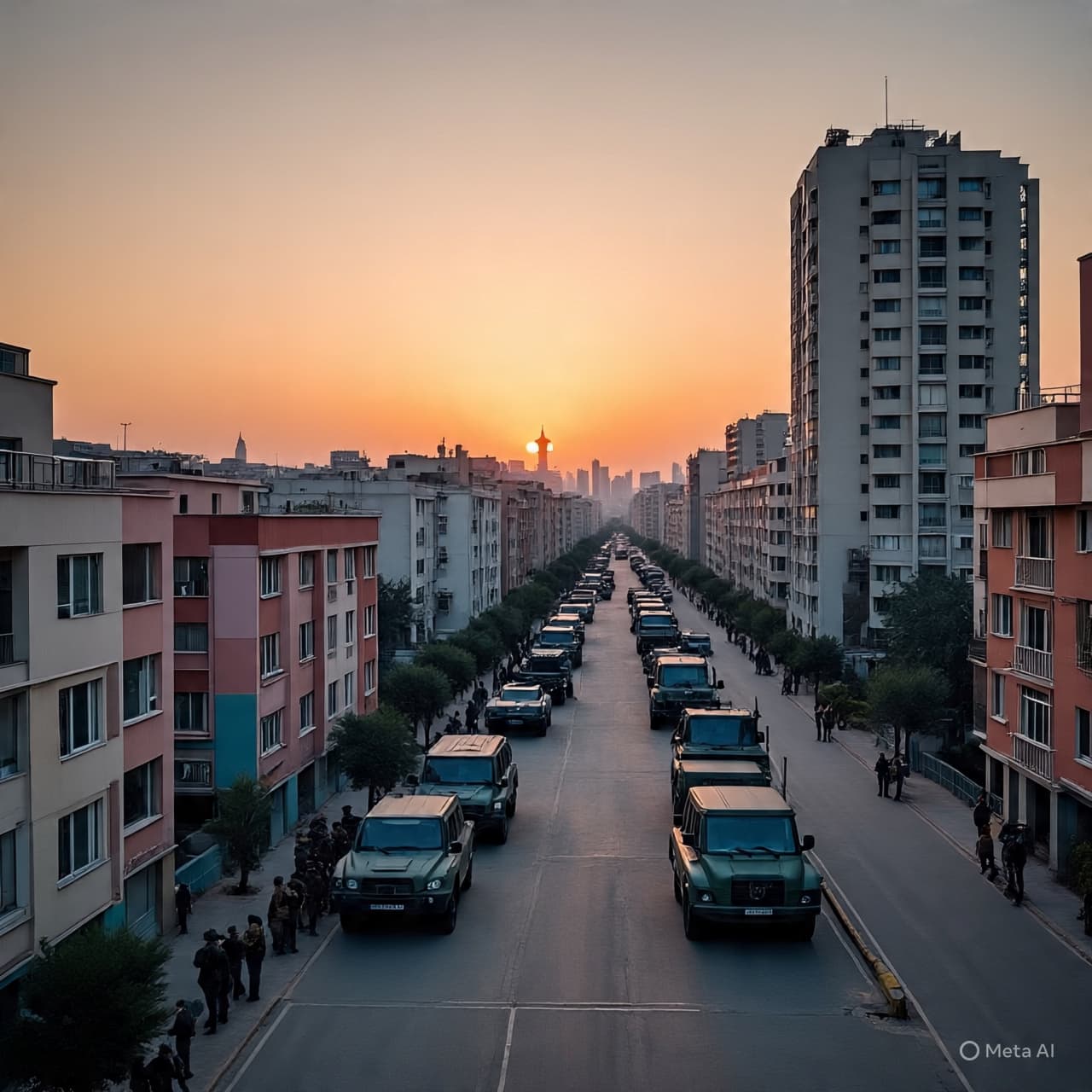
In Tehran, mornings often bring a serene beauty as sunlight spills over Azadi Square, yet beneath this calm exterior, a significant shift in governance is unfolding. Recent weeks have seen the Islamic Revolutionary Guard Corps (IRGC) extend its reach, stepping into roles traditionally held by the civilian government. This change comes at a time when the political landscape is fraught with tension, marked by military activity and a growing sense of uncertainty among the populace.
The IRGC, a powerful entity in Iran's political and military framework, has reportedly begun to assume control over essential state functions, effectively sidelining the civilian government led by President Masoud Pezeshkian. This shift is not merely a change in leadership but represents a deeper entrenchment of military influence in the governance of the country. As the IRGC takes on a more prominent role, the mechanisms of presidential governance appear increasingly muted, leading to a political deadlock that affects various ministries and state operations.
This transformation is set against a backdrop of prolonged conflict with foreign powers and the recent death of the country’s Supreme Leader, which has created a vacuum at the top of Iran's political hierarchy. The IRGC, originally established to safeguard the ideals of the revolution, has now expanded its role, intertwining military command with political authority. This evolution raises questions about the future of governance in Iran and the implications for its citizens.
For the people of Tehran, the shift in power may not be immediately visible in headlines but is felt in the fabric of daily life. As the IRGC consolidates its control, familiar institutions are losing their influence, leading to a palpable sense of uncertainty among citizens. Conversations in bustling bazaars and cafes reflect this unease, as the dynamics of authority shift and reshape public life.
Internationally, analysts and diplomats are closely monitoring these developments. The subtle yet significant change in governance dynamics could alter Iran's interactions with neighboring countries and the global community. As the sun sets over Tehran, casting long shadows across Azadi Square, the implications of this power shift remain to be fully understood, leaving many to ponder the future of Iran's political landscape.
Published by Banx Network. This article is part of the Banx decentralized media programme, powered by the BXE token on the XRP Ledger.



