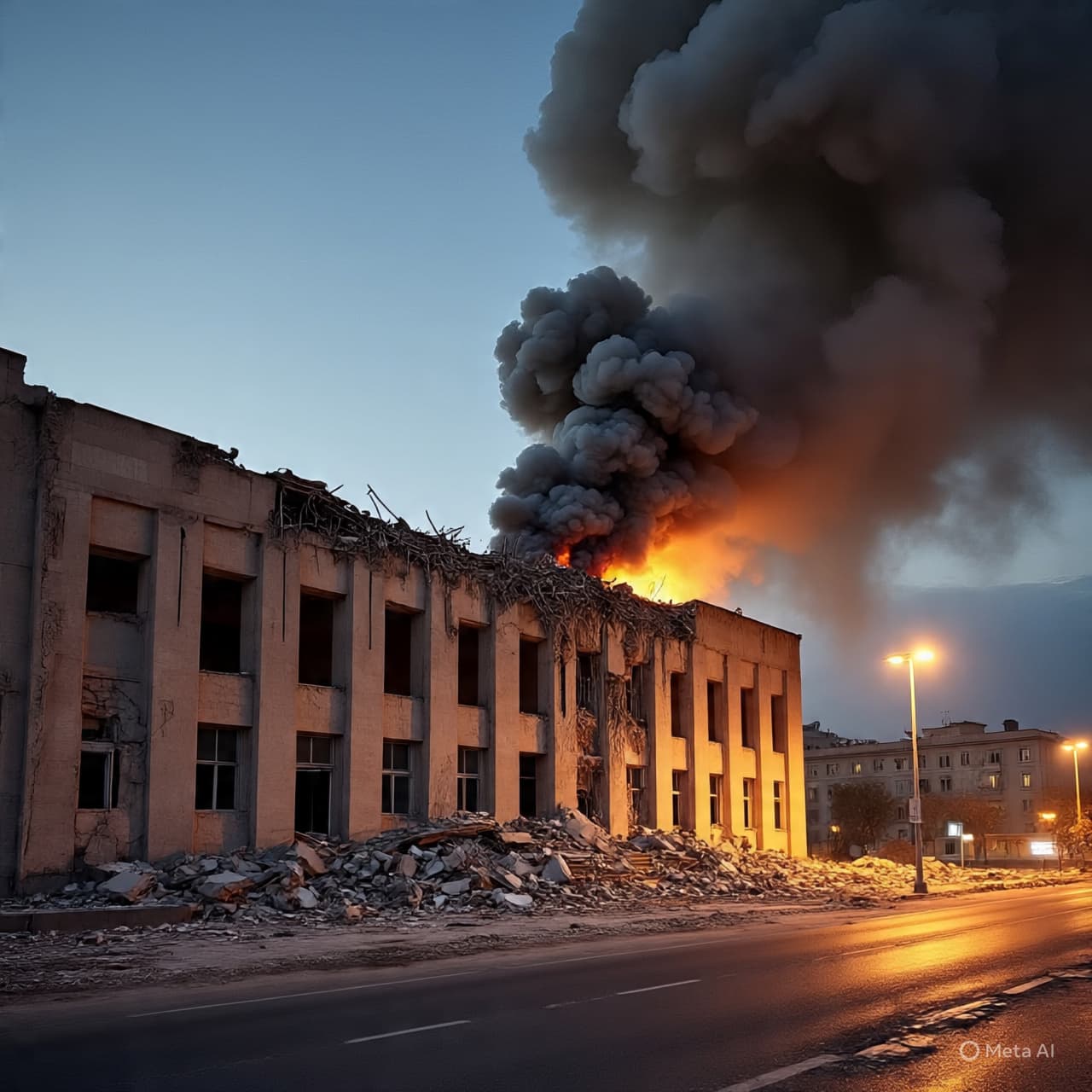
In the long corridors of power, history often moves not with thunder, but with a tremor beneath polished marble floors. Institutions that once felt immovable can suddenly seem fragile, like glass reflecting a sky darkened by distant smoke. In recent days, that tremor has echoed through Tehran, where a building tied to the body responsible for selecting the successor to Supreme Leader Ali Khamenei became a reported target of joint U.S.-Israeli military action. The reported strike, attributed to coordination between the United States Department of Defense and Israeli forces under Prime Minister Benjamin Netanyahu, was said to have hit a facility linked to the Assembly of Experts — the clerical body constitutionally tasked with appointing and overseeing Iran’s supreme leader. While official confirmations remain carefully worded, multiple international outlets have described the location as symbolically significant rather than purely military in nature. For Iran, the Assembly of Experts represents continuity — a quiet chamber where succession is not merely administrative, but existential. Targeting a building associated with such an institution sends a message that extends beyond brick and mortar. It touches the architecture of governance itself. Yet Washington has framed the broader campaign as aimed at strategic deterrence, citing regional security concerns and long-standing tensions over Iran’s military posture and alliances. Israel, for its part, has consistently argued that preventing Iran from strengthening its regional influence is a matter of national survival. Tehran, in turn, has described the strike as a violation of sovereignty and a dangerous expansion of hostilities. The rhetoric on all sides has been firm, though not yet volcanic. Still, symbolism matters. When a site connected to leadership succession is drawn into the geometry of conflict, it invites speculation about intent. Was the message tactical, strategic, or psychological? Analysts suggest the move could be designed to apply pressure at a sensitive moment, as questions about Iran’s long-term political future quietly circulate beneath the surface. There has been no immediate confirmation regarding casualties at the specific site, and Iranian authorities have emphasized continuity of governance. Yet the broader atmosphere remains tense. Diplomatic channels, though strained, have not entirely closed. Regional actors are watching closely, aware that escalation in one corner of the Middle East can ripple outward like concentric circles on water. In moments like these, geopolitics resembles a chessboard placed atop shifting sand. Each move is deliberate, yet the ground itself is unstable. The targeting of a building associated with succession planning may not alter leadership overnight, but it underscores how deeply intertwined symbolism and strategy have become in modern conflict. For now, statements replace missiles, and caution tempers response. Whether this episode becomes a footnote or a turning point will depend less on the strike itself than on what follows — restraint or retaliation, dialogue or distance. The marble corridors remain standing. The questions within them linger.
AI Image Disclaimer
Illustrations were produced with AI and serve as conceptual depictions.
SOURCE CHECK
Credible mainstream / niche media covering this development: Reuters Associated Press Al Jazeera The New York Times BBC
Published by Banx Network. This article is part of the Banx decentralized media programme, powered by the BXE token on the XRP Ledger.