
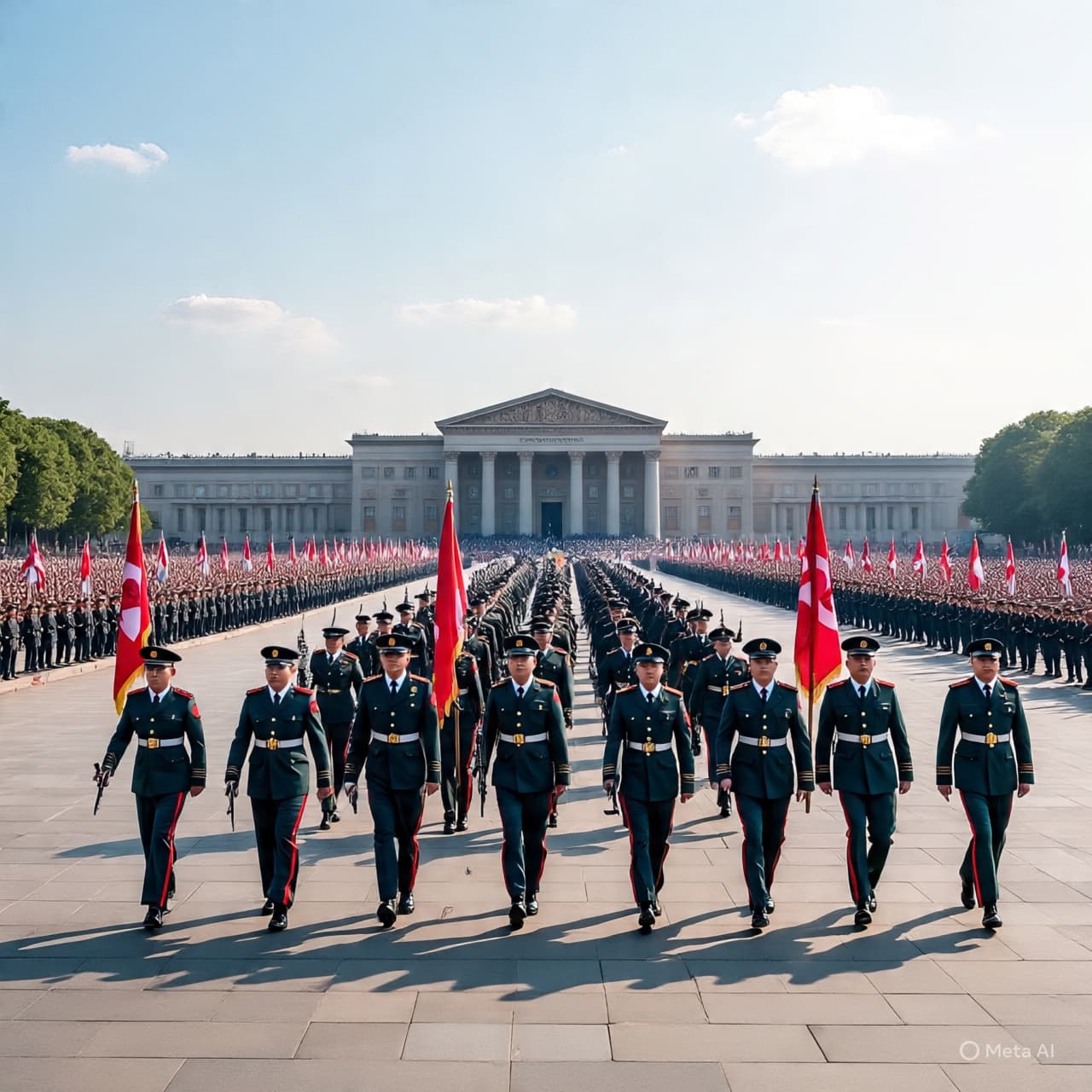
Key Highlights
- Kim Jong Un showcases military strength amid global diplomatic shifts.
- Recent displays signal North Korea's strategic positioning.
- The timing coincides with Donald Trump's anticipated China visit.
In the realm of international politics, gestures often convey layered meanings. A parade, a photograph, or a carefully timed appearance can carry implications that extend far beyond their immediate context. In North Korea, Kim Jong Un has recently engaged in this form of communication with deliberate clarity, showcasing both military capabilities and diplomatic ties at a pivotal moment.
As the world focuses on former U.S. President Donald Trump's upcoming trip to China, Kim's recent public appearances and military demonstrations serve as a reminder of North Korea's presence on the global stage. These actions are not mere spectacles; they are strategic moves designed to influence perceptions and assert North Korea's relevance in ongoing diplomatic discussions.
The timing of these displays is particularly noteworthy. They coincide with a potential shift in global diplomacy, as Trump's visit to China could recalibrate relationships in the region. By showcasing military advancements alongside visible diplomatic engagements, Kim appears to be crafting a dual narrative that emphasizes both strength and connection. This approach suggests that North Korea is not isolated but rather actively engaged in the geopolitical landscape.
Historically, North Korea has utilized public demonstrations of military prowess as a means of signaling resilience and deterrence. The recent unveiling of advanced weaponry, coupled with appearances alongside foreign representatives, underscores a commitment to national defense while simultaneously reinforcing diplomatic ties. This duality is crucial in understanding Kim's strategy, as it reflects a desire to project strength while also fostering alliances.
China's role in this dynamic cannot be overlooked. As a key regional power with longstanding ties to North Korea, Beijing's relationship with Pyongyang is both strategic and complex. Kim's recent displays may also serve as a signal to China, reinforcing alignment while asserting North Korea's independence. This nuanced communication is essential in a region where geopolitical alignments are closely monitored.
For the United States, these developments highlight the interconnected nature of diplomacy in East Asia. Engagement with China inevitably intersects with considerations involving North Korea. The simultaneous presence of military signaling and diplomatic movements illustrates the intricate environment in which these interactions occur. Observers note that while such displays are not uncommon, their significance is amplified during periods of heightened diplomatic activity.
As preparations for Trump's China trip continue, the region enters a phase of careful observation. Each movement—whether diplomatic or symbolic—contributes to a larger narrative that is still unfolding. Analysts suggest that developments will gradually emerge, with particular attention on how these parallel signals interact and influence the broader geopolitical landscape.
In conclusion, while there is no immediate indication of escalation, the current atmosphere underscores the importance of signaling and perception in international relations. Kim Jong Un's strategic positioning, marked by military displays and diplomatic gestures, reflects a calculated approach to navigating the complexities of global diplomacy.
Published by Banx Network. This article is part of the Banx decentralized media programme, powered by the BXE token on the XRP Ledger.



