
Key Highlights
- Nationwide Movement:The 'No Kings' demonstrations are occurring in cities across the U.S.
- Symbolic Resistance:Participants express concerns over political authority and governance.
- Civic Engagement:The protests reflect a broader dialogue on democracy and accountability.
The streets of America are once again alive with the voices of citizens, echoing a sentiment that resonates deeply within the fabric of the nation. The 'No Kings' demonstrations have emerged as a significant form of protest, manifesting in cities from coast to coast. This movement, characterized by its quiet yet powerful message, serves as a reminder of the foundational principles of democracy—principles that advocate for power to be held among the people rather than above them.
At the heart of these demonstrations lies a critique of the current political landscape, particularly the leadership style of former President Donald Trump. However, organizers emphasize that the movement is not merely a rejection of governance but a reflection on the nature of power itself. Participants are not just voicing discontent; they are engaging in a broader conversation about how authority is exercised and perceived in contemporary society.
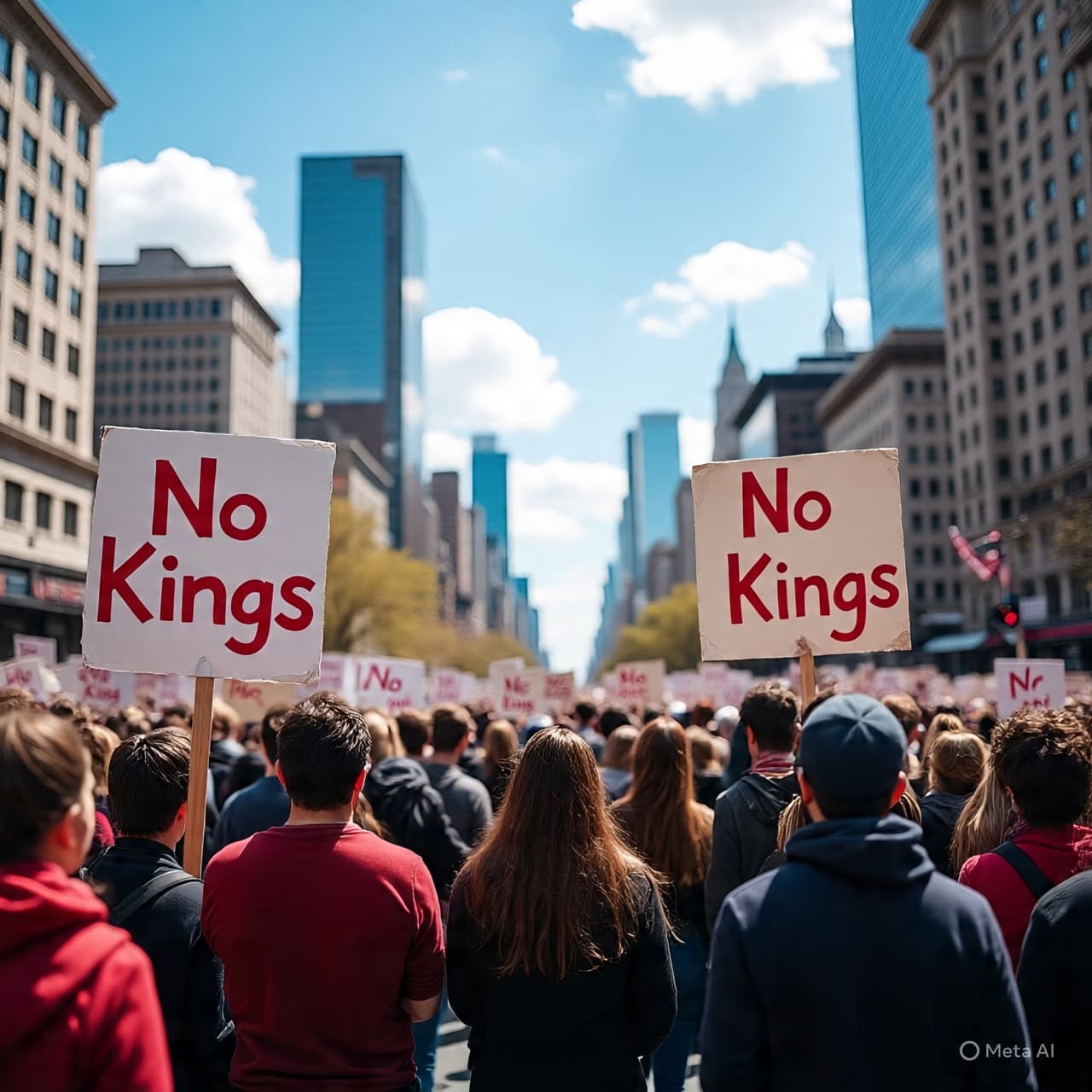
Visuals from these gatherings tell a compelling story. Protesters carry signs that invoke the Constitution and historical struggles for democracy, creating a tapestry of civic expression that is both personal and collective. The tone of the protests varies, with some gatherings being small and intimate, while others draw larger crowds united by a shared unease regarding the concentration of power. This diversity of expression highlights the movement's organic nature, driven by a common sentiment rather than a centralized organization.
The phrase 'No Kings' serves as a metaphorical boundary, symbolizing a commitment to democratic ideals that many believe should remain steadfast, regardless of who occupies positions of power. This movement is part of a larger pattern of civic engagement in the United States, where public demonstrations act as both a release and a reflection of societal values. Each protest, much like waves against a shore, contributes to an ongoing dialogue about identity, leadership, and accountability in a democratic society.
For many participants, the demonstrations are deeply personal, shaped by their interpretations of recent political events. Others view them as symbolic gestures—small acts of defiance meant to reaffirm core values rather than to instigate immediate change. This duality underscores the complexity of the protests, which are less about targeting a single figure and more about grappling with the fundamental question of what it means to protect a republic during divisive times.
Authorities have generally taken a hands-off approach, allowing these gatherings to proceed while monitoring them for public safety. This delicate balance between expression and regulation reflects the ongoing negotiation of rights in public spaces, a dynamic that plays out in real time on city streets across the nation.
Ultimately, the 'No Kings' demonstrations do not present a singular, definitive message. Instead, they resonate through the public sphere like a persistent refrain—soft yet impactful, open to interpretation. Whether these protests will evolve into a larger movement or remain fleeting echoes of discontent is uncertain. However, they serve as a poignant reminder that in a democracy, even the quietest voices can find their place in the broader chorus of civic expression.
Published by Banx Network. This article is part of the Banx decentralized media programme, powered by the BXE token on the XRP Ledger.



