
Key Highlights
- Nationwide protests have emerged in response to political tensions.
- The phrase 'No Kings' symbolizes a historical rejection of monarchy.
- Demonstrators span generations, emphasizing civic engagement.
In recent weeks, cities across the United States have witnessed a surge of protests, marked by the resonant phrase 'No Kings.' This slogan has transcended its origins to become a rallying cry for those questioning the balance of power in contemporary leadership. As demonstrators gather in urban centers from Washington, D.C., to Los Angeles, they are not merely opposing former President Donald Trump; they are engaging in a broader discourse about authority and democratic norms.
The historical significance of 'No Kings' is deeply rooted in the American ethos, reflecting the nation's foundational rejection of monarchy. Today, this phrase serves as a lens through which many Americans interpret the current political landscape. Protesters are voicing concerns not only about individual leaders but also about the systems that govern them, highlighting the importance of institutional resilience and accountability.
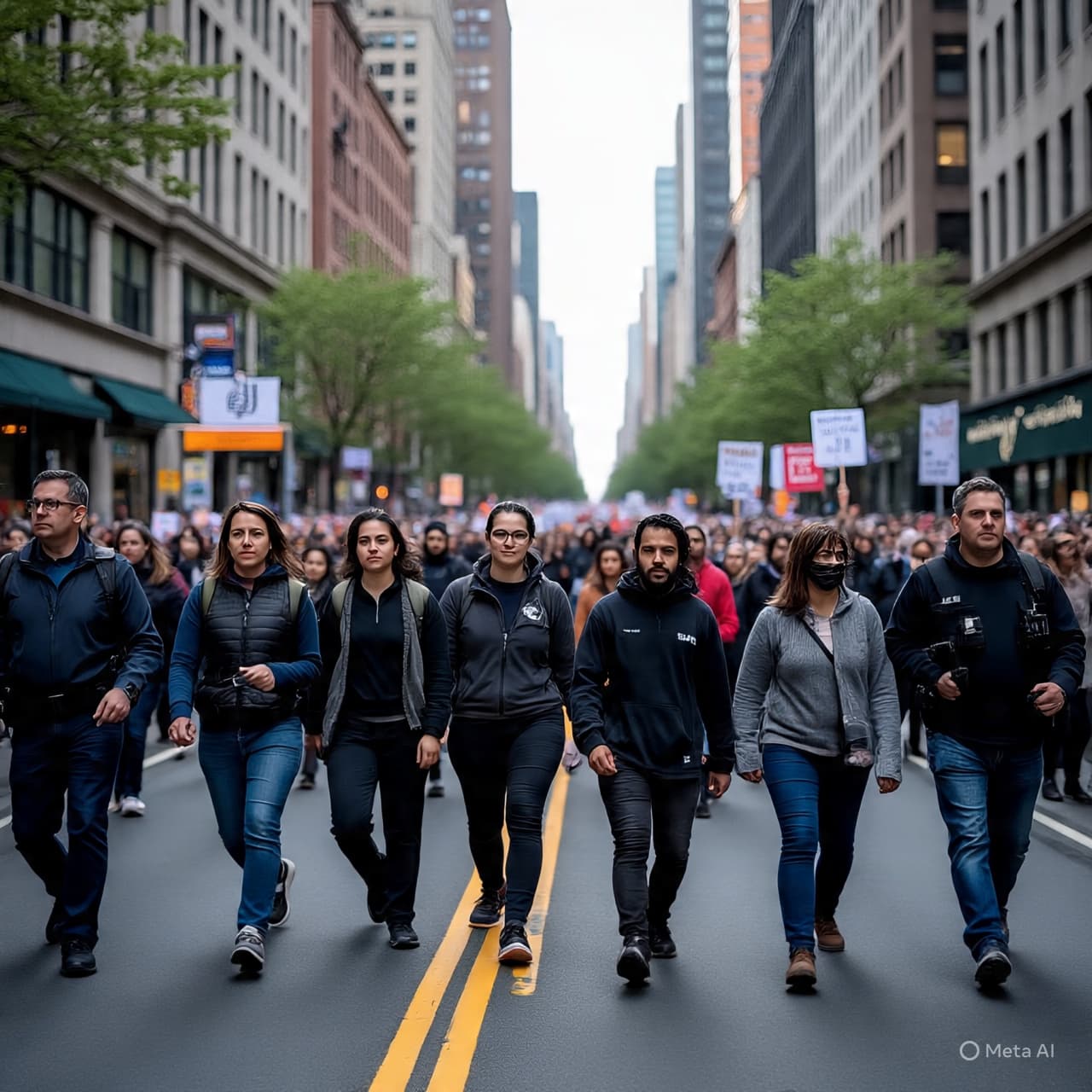
The protests have largely remained peaceful, characterized by organized marches and speeches that resonate with a diverse crowd. Older activists, who have participated in past movements, stand shoulder to shoulder with younger individuals experiencing their first significant civic engagement. This intergenerational collaboration creates a living timeline of activism, where the lessons of history inform present actions.
Local authorities have taken steps to maintain order during these demonstrations, balancing the right to protest with public safety concerns. Officials have encouraged respect and calm, recognizing the importance of allowing citizens to express their views while ensuring that gatherings do not escalate into chaos. This delicate equilibrium transforms public spaces into arenas of expression, where the voices of the many can be heard.
What is particularly striking about these protests is their introspective tone. Participants often frame their involvement as a form of civic duty rather than mere defiance. This perspective fosters an ongoing dialogue about the nation's identity, extending beyond the immediate context of political events and into the broader narrative of American democracy.
As these protests continue, the implications for the future of American governance remain uncertain. Public reactions vary widely, reflecting the diverse opinions that characterize the nation. While some view the demonstrations as vital expressions of democratic engagement, others perceive them as symptomatic of a more polarized society.
As the crowds disperse each evening, the echoes of their chants linger in the air—not as a conclusion, but as an invitation to continue questioning leadership, authority, and the fundamental belief that no voice, regardless of its power, should stand alone above the rest.
Published by Banx Network. This article is part of the Banx decentralized media programme, powered by the BXE token on the XRP Ledger.



