
Key Highlights
- Severe storms in Spain caused extensive flooding, transforming streets into rivers.
- Emergency services responded to submerged neighborhoods, aiding residents.
- Meteorologists attribute the flooding to intense rainfall and climate change.
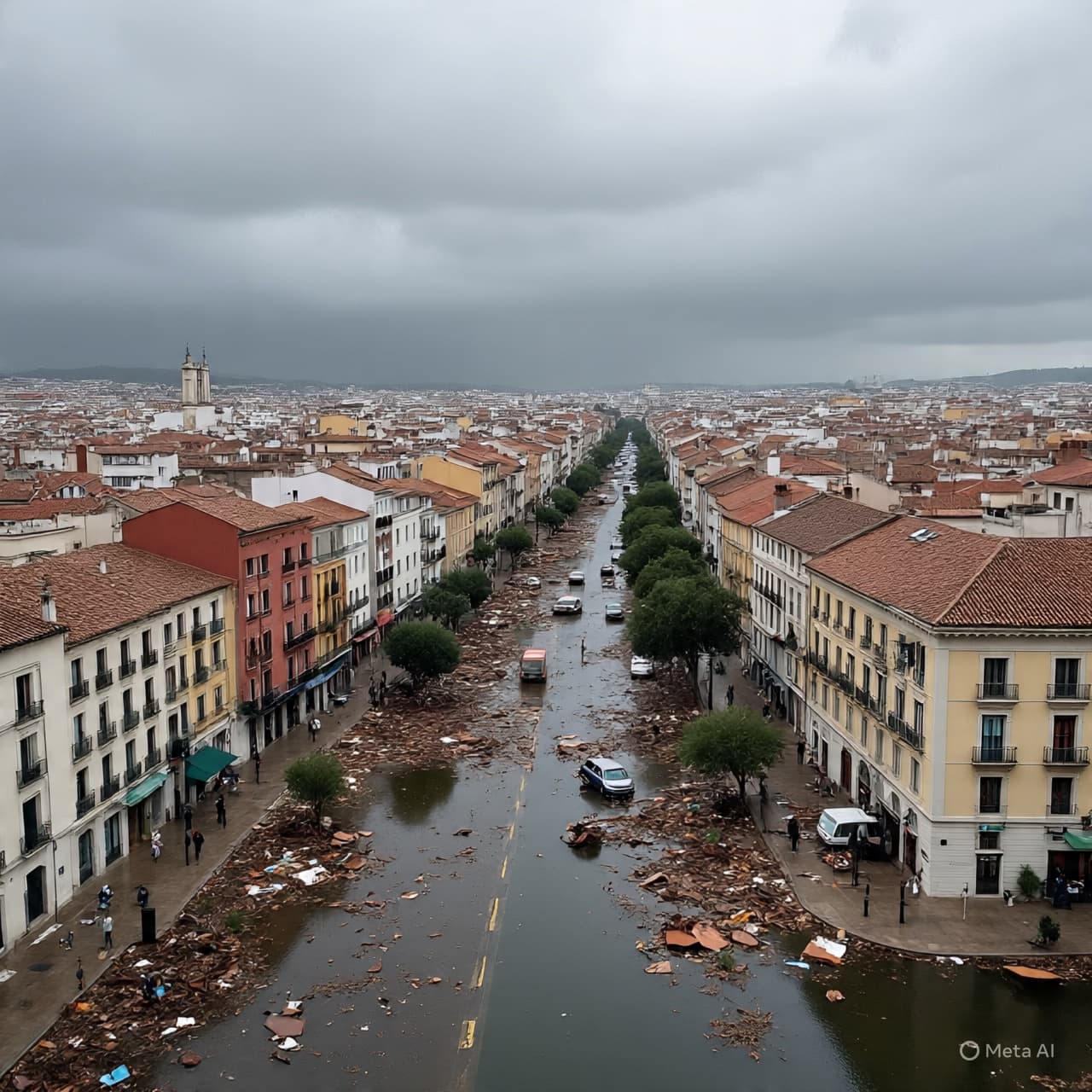
Recent storms have dramatically altered the landscape of several cities in Spain, turning familiar streets into rivers and prompting emergency responses across affected neighborhoods. Aerial footage captured after the storms reveals a striking transformation, where roads fade into channels and public squares become shallow lakes, showcasing the power of nature to reshape urban environments.
The storms, characterized by persistent rainfall rather than violent downpours, lingered over various regions, releasing water at a rate that overwhelmed drainage systems. As floodwaters rose, they infiltrated ground floors and garages, displacing vehicles and creating hazardous conditions. Emergency crews navigated through submerged streets, relying on their experience and knowledge of the area, as traditional maps became less reliable in the face of rapidly changing conditions.
From an aerial perspective, the extent of the flooding became evident. What appeared to be isolated pools at street level revealed a more extensive network of water flow, as it sought the lowest points in the urban landscape. Major transportation routes, including rail lines and highways, were closed in sections, causing significant disruptions to travel and daily routines. Schools and municipal buildings were forced to shut their doors, not merely as a precaution but in response to the reality of the flooding.
Meteorologists have pointed to a combination of factors contributing to the severity of the storms, including intense rainfall and already saturated ground conditions. Climate change has made such weather events more intense and unpredictable, leading to concerns about future occurrences. The storms did not impact all areas equally; some neighborhoods faced the brunt of the flooding while others remained relatively unscathed, leading to a disparity in experiences among residents.
In the flooded areas, community members rallied together, engaging in immediate recovery efforts. Pumps were deployed, sandbags were stacked, and neighbors checked on one another, fostering a sense of solidarity amid the chaos. The floodwaters carried debris, leaving behind a trail of remnants from everyday life, a stark reminder of the storm's impact.
As the skies cleared in some regions, attention shifted towards recovery and damage assessment. Roads began to reopen, basements dried out, and the process of accounting for losses commenced. Although the storms had passed, their effects lingered, etched into the landscape and the memories of those affected.
For a brief moment, Spain was viewed from a different perspective—waterlogged and suspended between the aftermath of the storm and the return to normalcy. The rain eventually moved on, but the images of cities transformed into rivers may become a more common sight in the future, raising questions about urban resilience in the face of climate change.
Published by Banx Network. This article is part of the Banx decentralized media programme, powered by the BXE token on the XRP Ledger.



