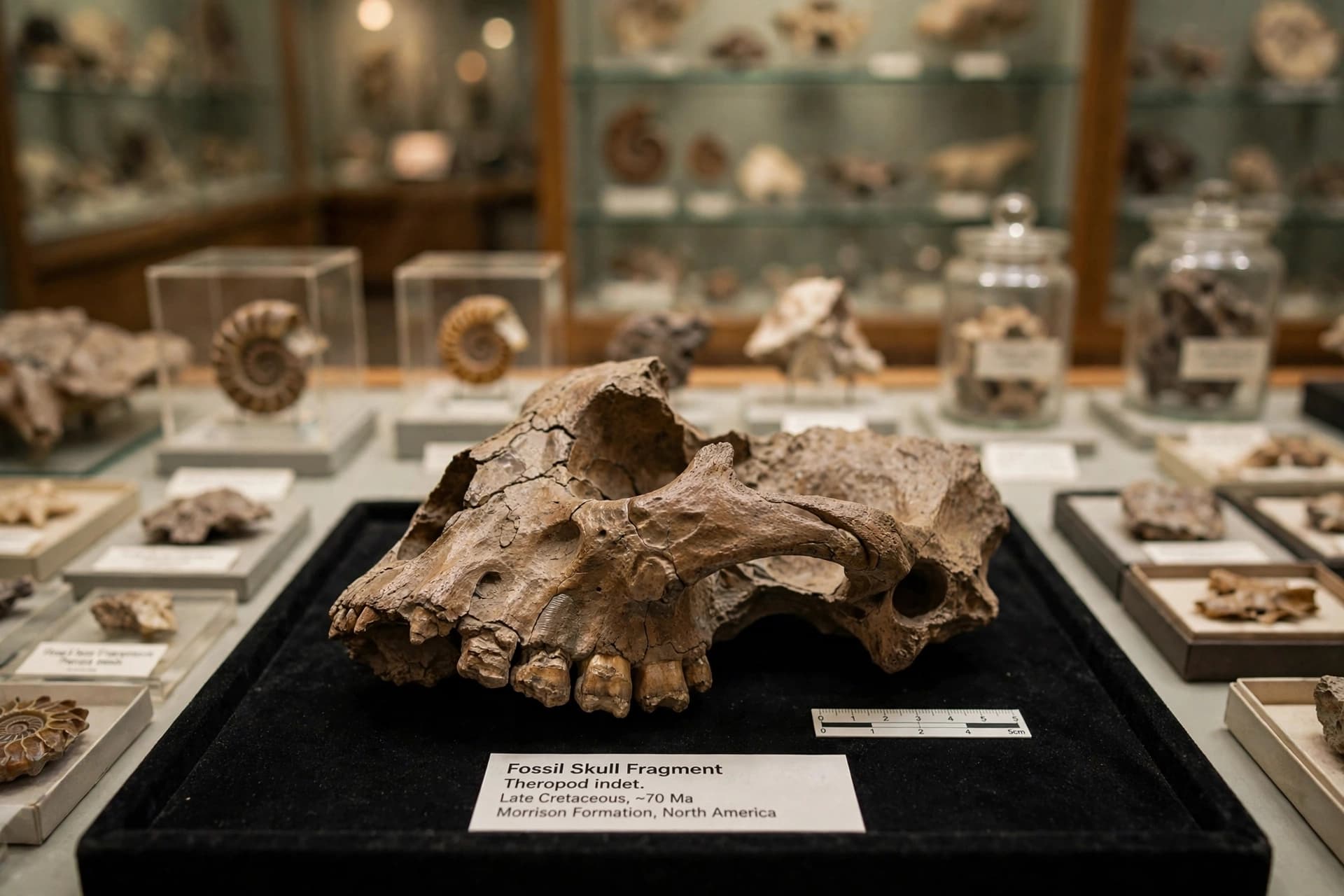
There are moments in paleontology when the earth seems to exhale a secret it has kept for nearly two hundred million years. A stone split open, a brush clears dust, and suddenly time folds in on itself. Bones once carried by ancient seas reappear beneath modern light. In such quiet revelations, history is not rewritten loudly—it shifts gently, like a tide adjusting the shoreline.
That is how scientists have described the recent discovery of a 190-million-year-old marine reptile fossil informally nicknamed the “Sword Dragon.” Unearthed from Early Jurassic rock layers, the remarkably preserved specimen is reshaping assumptions about the evolution of ichthyosaurs—sleek, dolphin-like reptiles that once ruled prehistoric oceans.
The fossil, reported by outlets including BBC News and Reuters and discussed in scientific circles surrounding journals such as Nature, belongs to a lineage of ichthyosaurs that appears more specialized—and more formidable—than previously believed for its time. Researchers note that its elongated snout and blade-like teeth suggest a highly adapted marine predator, equipped for swift hunting in ancient seas.
Ichthyosaurs first emerged during the Triassic period, recovering from the planet’s greatest mass extinction. By the Early Jurassic, they had diversified widely. Yet this new specimen indicates that certain advanced anatomical features evolved earlier than many paleontologists had anticipated. The “Sword Dragon” nickname reflects the creature’s pronounced jaw structure—long, narrow, and edged with conical teeth suited for grasping slippery prey.
What makes the discovery particularly compelling is its state of preservation. Portions of the skull, vertebrae, and fin elements remain intact, allowing researchers to examine muscle attachment points and jaw mechanics in unusual detail. Such clarity helps scientists reconstruct not only appearance but behavior—how it swam, hunted, and interacted within its marine ecosystem.
The fossil suggests a dynamic evolutionary landscape in Early Jurassic oceans. Rather than gradual and predictable transitions, ichthyosaur evolution may have included bursts of rapid adaptation. If highly specialized predators already existed 190 million years ago, it implies ecological competition and niche partitioning were more complex than once modeled.
There is also a broader narrative at play. Marine reptiles of this era occupied a world recovering from upheaval. Climate shifts, volcanic activity, and ocean chemistry changes shaped survival pathways. The presence of such a refined predator indicates that marine ecosystems had rebounded robustly, supporting diverse and stratified food webs.
Researchers emphasize that this single specimen does not overturn decades of ichthyosaur research. Instead, it refines timelines and fills anatomical gaps. Paleontology often advances not through dramatic reversals but through careful layering of evidence—bone by bone, stratum by stratum.
Still, discoveries like this gently challenge long-held assumptions. Evolution rarely follows straight lines. It branches, experiments, and occasionally accelerates in response to environmental pressures. The “Sword Dragon” fossil offers a snapshot of one such evolutionary experiment—an elegant hunter shaped by Jurassic seas.
In closing, scientists involved in the study report that further comparative analysis is underway to determine the precise taxonomic placement of the fossil. Additional fieldwork in the same rock formation may yield more specimens that clarify how widespread this lineage was. For now, the 190-million-year-old marine reptile stands as a reminder that Earth’s archives continue to expand our understanding of prehistoric life, one careful excavation at a time.
AI Image Disclaimer Illustrations were produced with AI and serve as conceptual depictions.
Sources
BBC News Reuters CNN National Geographic Nature
Published by Banx Network. This article is part of the Banx decentralized media programme, powered by the BXE token on the XRP Ledger.