

Key Highlights
- Earthquake Impact:A 7.1 magnitude earthquake struck Kumamoto on July 28, 2026, causing significant damage to the castle.
- Historical Significance:Kumamoto Castle has stood for over 400 years, symbolizing resilience and architectural prowess.
- Community Response:Local volunteers and officials are mobilizing to support restoration efforts, reflecting a strong bond with their heritage.
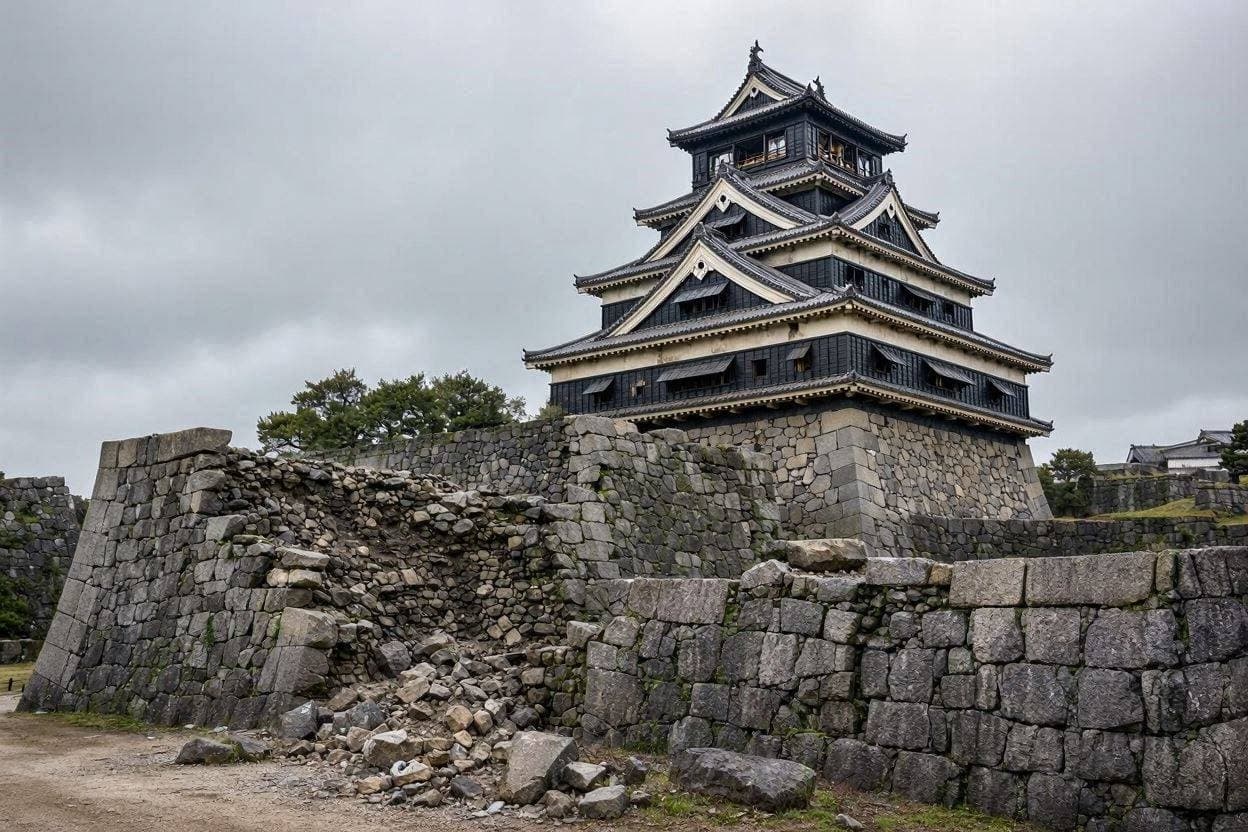
Kumamoto Castle, a historic fortress located in the heart of Kyushu, Japan, has long been a symbol of resilience and architectural mastery. Built in the early 17th century, the castle's formidable stone walls were designed to withstand the sieges of samurai warriors and have endured wars, storms, and the passage of time. However, on July 28, 2026, a powerful 7.1 magnitude earthquake struck the region, causing significant damage to this iconic structure. The earthquake's epicenter was located in Kumamoto Prefecture, an area known for its seismic activity, and while no casualties were reported at the castle site, the structural damage was extensive, with parts of the stone walls collapsing.
The earthquake's impact was particularly poignant, as it marked a setback for Kumamoto Castle, which had already suffered heavy damage from a series of earthquakes in 2016. Those earlier quakes had initiated a decade-long restoration project, and just as repairs were nearing completion, this latest seismic event has once again challenged the integrity of the historic site. Engineers and historians are currently assessing the extent of the damage, determining the best course for restoration while grappling with the irony that even the most formidable fortifications can be vulnerable to nature's unpredictable forces.
Kumamoto Castle is not only a celebrated landmark but also a crucial part of the local identity. Its design, characterized by steep slopes and complex layouts, was intended to confuse attackers and withstand military assaults. The castle's storied past includes a famous siege during the Meiji Restoration, showcasing its historical significance. However, modern seismic events present a new kind of adversary, testing the limits of ancient engineering in unprecedented ways.
Restoration efforts will require careful planning and significant resources. Experts are employing advanced technology to analyze the stability of the remaining structures, ensuring that any repairs maintain the historical integrity of the site. The goal is not merely to rebuild but to reinforce the castle against future earthquakes, blending traditional methods with modern engineering techniques. This approach aims to preserve the castle's cultural heritage while adapting to the realities of living in a seismically active region.
For the local community, the damage to Kumamoto Castle is a source of sadness but also determination. The castle is more than just a tourist attraction; it embodies local pride and endurance. Volunteers and officials are working together to support the restoration, demonstrating a strong bond between the people and their heritage. This collective effort reflects a deep respect for history and a commitment to preserving it for future generations.
The incident also highlights the broader issue of disaster preparedness for cultural sites across Japan. Many castles and temples are located in earthquake-prone areas, necessitating continuous monitoring and maintenance. Lessons learned from Kumamoto can inform strategies for protecting other historic landmarks, ensuring that they survive the tests of time and nature. As Kumamoto Castle embarks on its journey toward recovery, it stands as a testament to the resilience of both stone and spirit. The earthquake may have caused damage, but it has not diminished the castle's significance. With care and dedication, this historic landmark will continue to inspire awe, bridging the past and the future.
Published by Banx Network. This article is part of the Banx decentralized media programme, powered by the BXE token on the XRP Ledger.




