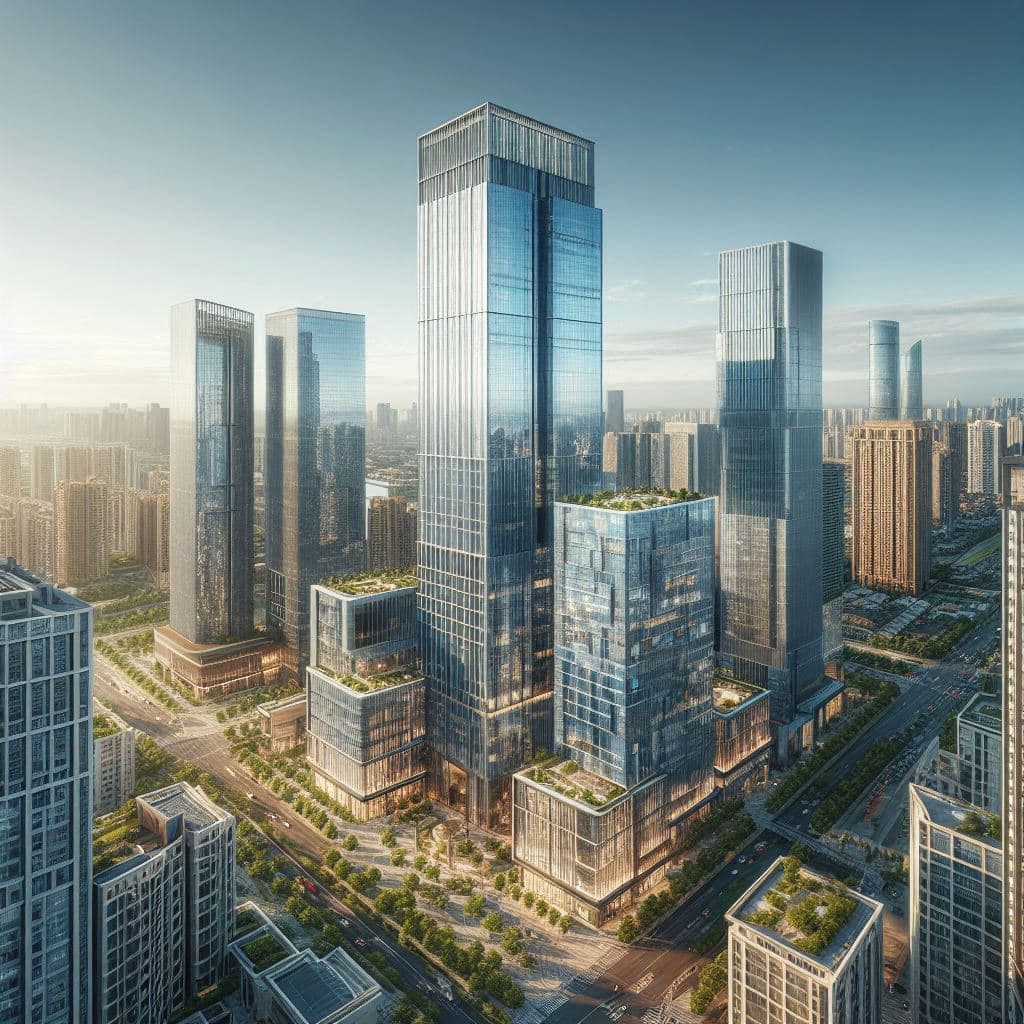
There are buildings that simply rise, and then there are buildings that linger in the imagination long after they are seen. They stand not only as shelters of glass and stone, but as quiet testaments to ambition, patience, and the human desire to leave a mark that time must acknowledge. In the world’s great cities, some structures shimmer with a different weight altogether — not because they touch the sky, but because of the extraordinary cost required to bring them into being.
Across continents, the most expensive buildings ever constructed share a common story shaped by vision and complexity. At the top of this rarefied list stands the Abraj Al Bait Clock Tower complex in Mecca, a vast structure built beside Islam’s holiest site. Its cost reflects not just engineering challenges, but cultural and religious significance, intricate logistics, and the need to harmonize modern construction with sacred surroundings. Here, price becomes inseparable from purpose.
In Singapore, Marina Bay Sands reshaped the city’s skyline with three towers joined by a sky-spanning park. Its high cost grew from architectural daring, advanced engineering, and the use of premium materials designed to endure tropical conditions. The building’s value lies not only in concrete and steel, but in the way it transformed an entire waterfront into a global destination.
New York’s One World Trade Center tells a different story, where cost is shaped by memory and resilience. Built with heightened security standards, advanced safety systems, and symbolic design elements, its price reflects the careful balance between strength, remembrance, and modern office needs. Every detail was measured, reinforced, and reconsidered, adding layers of expense rooted in meaning rather than extravagance.
Europe’s Palace of Versailles, though centuries old, remains one of the most expensive structures ever created when adjusted for inflation. Its cost was drawn from lavish materials, artisan craftsmanship, and decades of expansion meant to project power and permanence. Gold, marble, and hand-crafted detail transformed the palace into a physical expression of authority, where expense was itself a political language.
In Las Vegas, the Cosmopolitan Hotel and Casino embodies modern luxury through technology, entertainment infrastructure, and constant reinvention. High costs emerged from complex interiors, integrated digital systems, and the need to deliver spectacle at every turn. Here, expense serves experience, designed to keep pace with a city that never rests.
Together, these buildings reveal that cost is rarely about height alone. It is shaped by location, symbolism, materials, engineering difficulty, and the stories societies choose to tell through architecture. As cities continue to grow and ambitions stretch further, these landmarks quietly remind us that the most expensive structures are often built as much with ideas as with stone
AI Image Disclaimer (rotated wording) Graphics are AI-generated and intended for representation, not reality.
Sources (per Source Check rules) Bloomberg Forbes Architectural Digest The Wall Street Journal Financial Times
Published by Banx Network. This article is part of the Banx decentralized media programme, powered by the BXE token on the XRP Ledger.