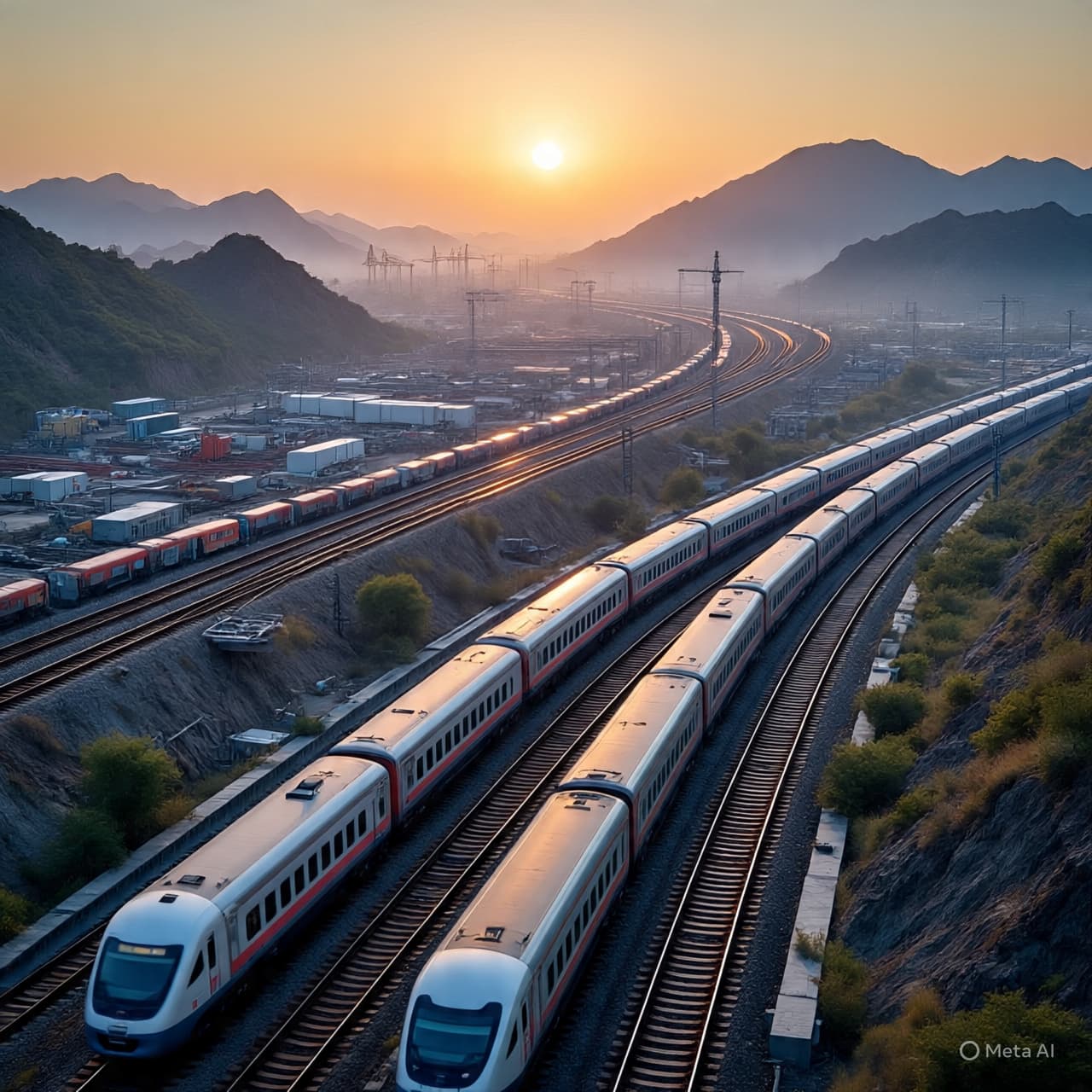
There are countries where the railways feel like relics—ghosts of an industrial age. Then there is China, where the tracks stretch like arteries across a living continent, pulsing with the weight of a modern economy. In the first ten months of 2025, China’s national railway system transported 3.378 billion tonnes of cargo, the highest volume ever recorded. Numbers of that scale rarely speak; they resonate, like a vibration in the ground before a passing train.
Part of the story is the quiet endurance of rail logistics. While supply chains elsewhere bend under global uncertainty, China’s freight networks have leaned into their scale and reliability. The increase—3% year-on-year—may sound modest, but it carries the unmistakable tone of a system that is not merely surviving but expanding its role in a world recalibrating its flows of goods, energy, and raw materials.
Rail cargo, in this context, becomes a mirror. It reflects shifting industrial demand, changes in energy sourcing, the rise of inland manufacturing hubs, and the continued push toward stabilizing domestic supply routes even as global trade experiences uneven currents. When trains are full, factories are working; when they are on time, confidence tends to follow.
And so this record reveals more than freight statistics. It suggests an economy seeking resilience through predictability. It highlights a logistics network increasingly central to Asia’s broader trade dynamics. It shows how physical infrastructure, often overlooked in the era of digital narratives, can still be the backbone of national momentum.
Published by Banx Network. This article is part of the Banx decentralized media programme, powered by the BXE token on the XRP Ledger.