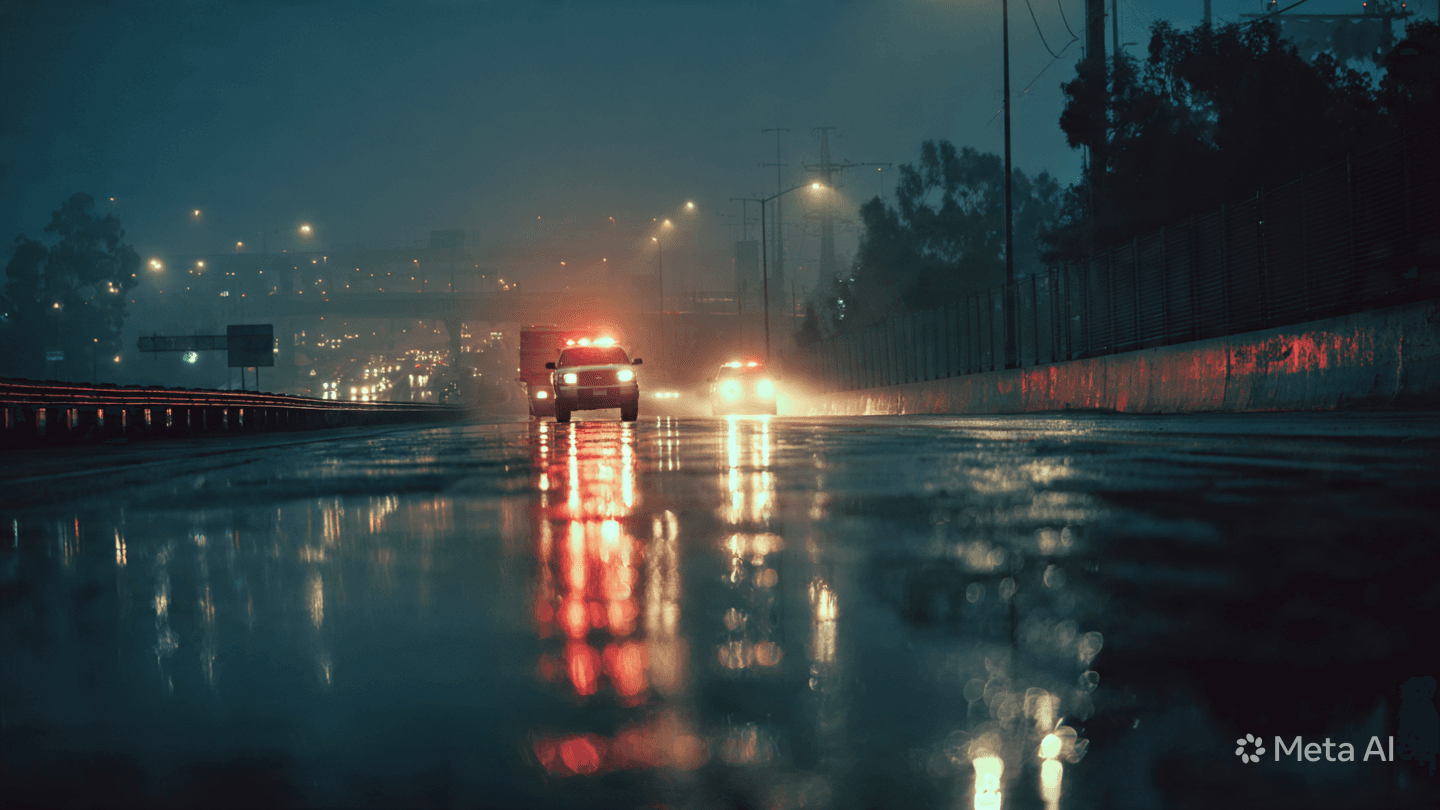
The expressway is a vein of modern life, a place where motion is constant and the rhythm of the city is distilled into the steady hum of tires against asphalt. We move along these corridors with a tacit agreement of order, trusting in the flow to carry us toward our destinations. Yet, there are moments when this order is abruptly dismantled, when the silence of a normal journey is shattered by the sudden, violent intersection of steel and glass, leaving behind a scene that forces every witness to pause and reflect.
In the aftermath of the recent collision, the expressway became a place of profound stillness, a stark contrast to the momentum that usually defines it. The wreckage, scattered across the lanes, served as a heavy reminder of how quickly the predictable can give way to the chaotic. First responders navigated the debris with a calm, practiced precision, their movements illuminated by the rhythmic flashing of emergency lights that cast long, uneasy shadows against the pavement.
For those who were involved, the event marks a sharp, indelible fracture in the timeline of their lives. The physical toll of the injuries sustained is immediate and clear, but there is also a secondary, more intangible impact—a lingering shock that settles in the air long after the last vehicle has been towed away. It is a shared, silent acknowledgment of the vulnerability that accompanies our reliance on these high-speed arterial roads.
Authorities are now engaged in the patient, meticulous work of reconstructing the event. Their investigation seeks to peel back the layers of the incident, looking beyond the surface-level impact to understand the sequence of failures that led to the collision. It is an editorial process of sorts, gathering disparate pieces of testimony and evidence to draft a narrative that explains how a routine morning commute descended into crisis.
This inquiry is not merely about assigning fault, but about the human desire to impose meaning on tragedy. By understanding the mechanical and human factors involved, the community hopes to reconcile with the disruption, searching for a way to restore a sense of safety to the roads we travel every day. The road itself remains, eventually reopened and flowing once more, but the memory of the event lingers in the minds of those who pass by the site.
The broader context of expressway safety is often debated, yet it is during these quiet moments of investigation that the true weight of the issue becomes apparent. We build these vast networks to bridge distances, to bring people together, and to facilitate the pulse of commerce. When they fail, it is a reminder that our connection to one another through these spaces is fragile, reliant on a collective vigilance that is all too easy to let lapse in the monotony of the drive.
As the investigation proceeds, the focus remains on the recovery of those injured and the careful documentation of the facts. The investigators work with a distance that is necessary for accuracy, yet they are acutely aware of the human narrative at the center of their inquiry. They move through the scene with a focus on detail, ensuring that the lessons learned from this incident are cataloged with the seriousness that such a loss of order demands.
The collision involved multiple vehicles and resulted in several injuries, necessitating an immediate and thorough investigation by local authorities. Officials are currently analyzing scene evidence and witness statements to clarify the circumstances surrounding the incident. Updates on the investigation and the condition of the injured are expected as the review continues.
Published by Banx Network. This article is part of the Banx decentralized media programme, powered by the BXE token on the XRP Ledger.


.jpg&w=3840&q=75 "Russia Turns Black Sea Into World’s Deadliest Shipping Route as More Than 570 Ships Are Hit")