
Key Highlights
- Recent U.S. warship transit through the Malacca Strait raises regional concerns.
- Indonesia's Navy confirms the passage was legal under international law.
- Increased naval activity reflects shifting global power dynamics.
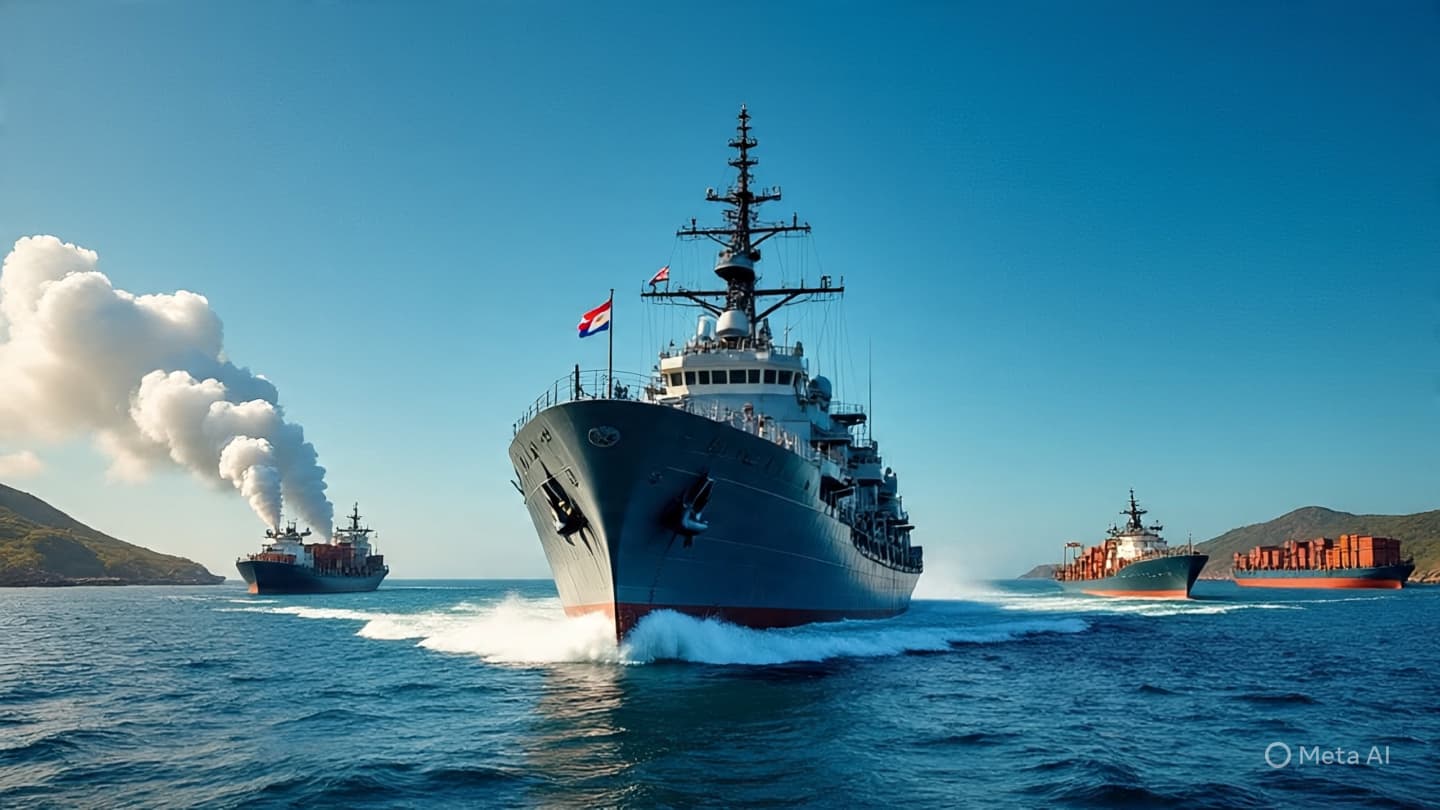
The Malacca Strait, a narrow yet crucial waterway, serves as a vital artery for global trade and military navigation. Recently, the passage of a United States warship through these waters has reignited discussions about international maritime law and regional security. The Indonesian Navy (TNI AL) has responded to this event, clarifying that such transits are not uncommon and are conducted in accordance with international regulations.
Under the United Nations Convention on the Law of the Sea (UNCLOS), the concept of transit passage allows vessels, including military ships, to navigate through straits used for international navigation without interference, provided they do not pose a threat to the peace or security of coastal states. TNI AL officials emphasized that the recent U.S. warship transit adhered to these legal frameworks, indicating that it did not infringe upon Indonesia's sovereignty.
The presence of a U.S. warship in the Malacca Strait, however, is rarely perceived as a routine occurrence. The United States maintains a significant naval presence globally, often serving dual roles of deterrence and reassurance. In the sensitive geopolitical landscape of Southeast Asia, such military movements are interpreted through both legal and strategic lenses, raising questions about the implications for regional stability.
For Indonesia, balancing international maritime obligations with national sovereignty is a delicate task. Positioned at a critical juncture of global shipping routes, Indonesia must navigate the complexities of international law while ensuring its territorial integrity. The Malacca Strait, shared with Malaysia and Singapore, is not just a passageway; it is a strategic lifeline for the global economy, making its security paramount.
Observers have noted that the uptick in naval activity in the Indo-Pacific region reflects broader shifts in global power dynamics. While the recent transit did not lead to direct confrontation, it contributes to an evolving narrative of military presence and influence in the region. Each naval movement, whether routine or exceptional, adds layers to the intricate tapestry of international relations.
Despite the heightened activity, Indonesia remains committed to maintaining stability in the region. The TNI AL continues to monitor maritime traffic closely, engage in coordination with neighboring countries, and keep diplomatic channels open. The overarching message from Indonesian officials is one of vigilance without alarm, emphasizing that security does not necessitate panic.
In conclusion, while the passage of a single warship may appear to be a fleeting event, its implications resonate deeply within the context of the Malacca Strait. This vital waterway serves as a reminder of the region's enduring strategic significance, where even routine movements can ripple outward, influencing perceptions and policies across Southeast Asia.
Published by Banx Network. This article is part of the Banx decentralized media programme, powered by the BXE token on the XRP Ledger.



