In the gentle currents of a shallow pond or the vast, invisible tides of the ocean, tiny ciliated organisms perform a quiet ballet, brushing nutrients toward themselves as they cling to a surface or glide through their watery world. Like different dancers responding to the same rhythm, some stay, anchored and sweeping with cilia-driven currents; others swim, propelling their fragile bodies in search of richer flows. A recent scientific exploration suggests that, in this microscopic theater of life, both strategies are not merely survival tactics but hydrodynamically comparable ways of encountering the nourishment essential to their existence.
At the heart of this inquiry lies a question as delicate as the organisms themselves: do motile (swimming) ciliates and sessile (attached) ciliates differ significantly in how effectively they capture nutrients from their surroundings? Classic intuition once favored the swimmer — thinking that motion through space would naturally draw in food faster — yet nature's subtleties often defy simple assumptions. Scientists have turned to fluid dynamics, modeling the flows each strategy produces to explore how effectively nutrients are brought to the cell surface.
By combining mathematical models that capture how cilia generate microflows with a thorough survey of biological data on ciliate shapes and motions, researchers found that the differences in feeding rates between these two lifestyles are surprisingly subtle. When examined across the range of conditions typically experienced by real ciliates, the predicted nutrient uptake for sessile and motile organisms can differ only slightly — often less than 20 percent — and in many situations, they are essentially the same.
In hydrodynamic terms, what matters most is not whether an organism swims or stays anchored, but how the ciliary motion interacts with the surrounding fluid to pull nutrients close. Both strategies generate currents that thin the boundary layer of slower fluid near the organism, allowing nutrients and even microscopic particles to be carried toward the cell for absorption. In regimes where advective transport — the movement of nutrients by flow — dominates over simple diffusion, these currents produced by cilia are equally effective whether they arise around a drifting cell or one attached to a surface.
This perspective reframes the evolutionary narrative of these organisms. Rather than being driven by a stark advantage in the basic physics of flow and feeding, the choice between motility and attachment might instead reflect the interplay of ecological pressures, sensory needs, and life history traits. In some environments, swimming may help an organism encounter richer nutrient patches; in others, clinging and generating local currents may be more efficient or safer.
These findings, drawing from both empirical patterns and rigorous hydrodynamic models, remind us that even the most fundamental questions — how life meets its basic needs — can be answered not by a single dominant trait, but by a harmony of strategies that evolution refines over eons.
In new studies published as a reviewed preprint in eLife Sciences, scientists conclude that, under realistic flow conditions experienced by ciliates, feeding rates for sessile and motile forms are hydrodynamically equivalent to a large degree, suggesting no inherent disadvantage in either strategy when it comes to nutrient acquisition.
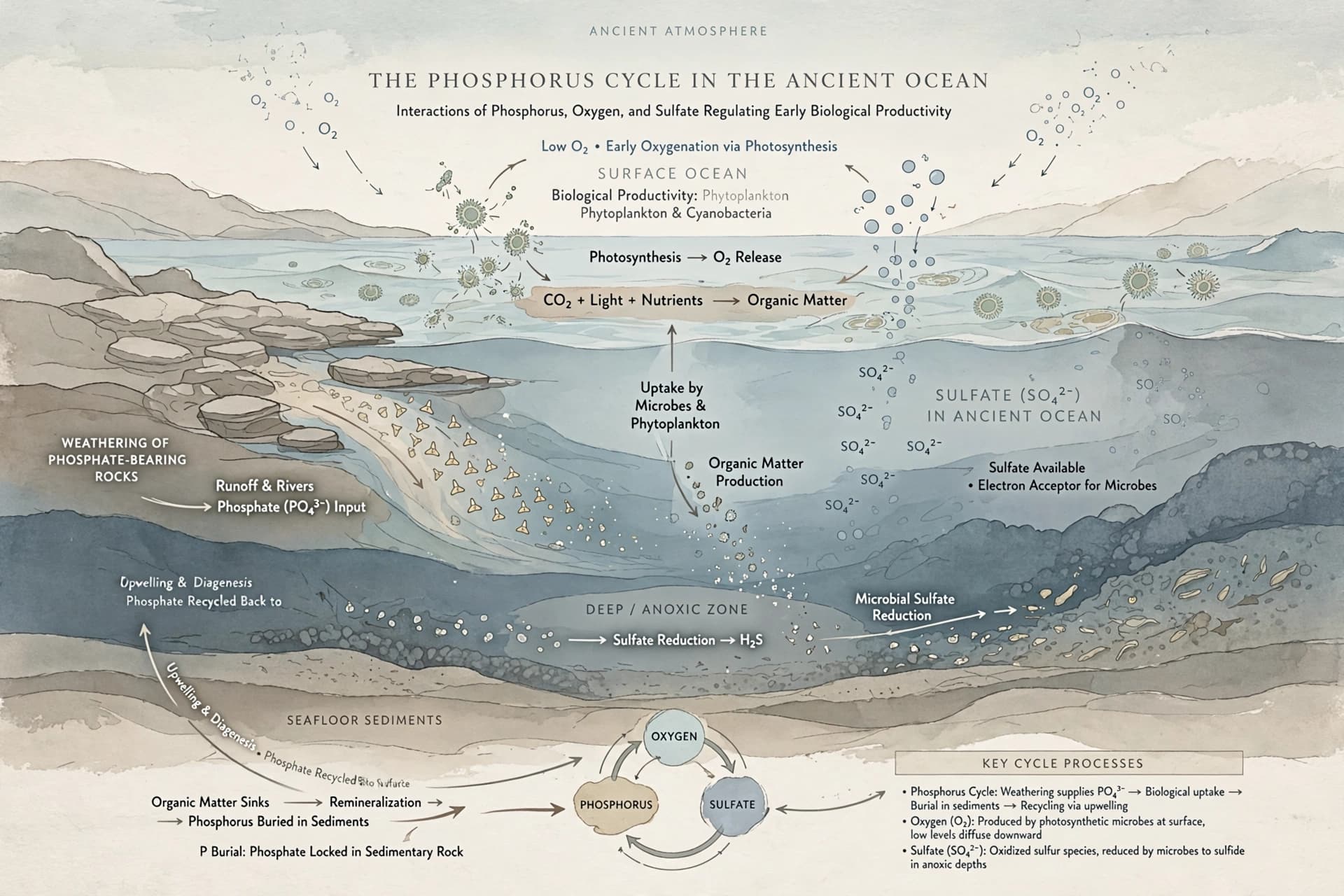
AI Image Disclaimer “Illustrations were produced with AI and serve as conceptual depictions.”
Sources eLife Sciences Cambridge Journal of Fluid Mechanics Bohrium preprint archive Science Cast (eLife peer review)
Published by Banx Network. This article is part of the Banx decentralized media programme, powered by the BXE token on the XRP Ledger.