Some questions in science are like locked rooms in a distant house. We know the house exists. We see its windows glow faintly in the night. Yet the doors remain closed, and whatever lies inside can only be guessed through careful listening. Neutron stars are such rooms in the universe — small, dense, and quietly mysterious.
These stellar remnants are born when massive stars collapse under their own gravity after a supernova. What remains is something extraordinary: an object barely twenty kilometers across yet heavier than the Sun. Within that tiny sphere, matter is squeezed so intensely that familiar atoms collapse, and physics begins to move into unfamiliar territory. For decades, astronomers have wondered what truly fills the interior of such stars.
The answer may not come from a telescope image or a direct measurement, but from something subtler — a ripple in space itself.
When two neutron stars spiral toward each other and eventually collide, they generate gravitational waves, faint distortions of space-time first predicted by the theory of general relativity. Instruments like the Laser Interferometer Gravitational-Wave Observatory have already detected several of these cosmic vibrations. Each signal carries clues about the mass and structure of the colliding stars, including a delicate phenomenon known as tidal deformation.
As the two neutron stars orbit each other in their final moments, their immense gravity pulls and stretches each star slightly, much like ocean tides on Earth caused by the Moon. This “tidal” distortion subtly alters the gravitational-wave signal produced during the merger. By measuring these changes, scientists can infer how compressible the stars are — and therefore what their interiors might be made of.
Until now, interpreting those tidal signals has been difficult because the theoretical models describing neutron star interiors remain uncertain. Matter inside a neutron star may exist in several exotic forms: tightly packed neutrons, mixtures of subatomic particles, or even a soup of free quarks. Each possibility predicts slightly different tidal behavior during a merger.
A new theoretical model aims to refine that picture.
Researchers have developed a more detailed framework describing how neutron star matter behaves under extreme pressure. By improving calculations of how the star’s internal layers respond to gravitational forces, the model sharpens predictions for tidal deformation during mergers. In simple terms, it acts like a clearer decoder for the gravitational-wave signals astronomers already detect.
This refinement could help scientists interpret future gravitational-wave observations with greater precision. When detectors record the next neutron star collision, astronomers may be able to match the tidal signature of the event more accurately to specific models of nuclear matter. The subtle stretching of those stars, encoded in the gravitational-wave signal, may reveal whether their interiors contain dense neutron fluids, exotic particle states, or other still-theoretical forms of matter.
The stakes are significant because neutron stars represent one of the most extreme laboratories in the universe. Pressures inside them exceed anything achievable on Earth, even in the most powerful particle accelerators. Understanding their internal structure would deepen our knowledge of nuclear physics, particle interactions, and the limits of matter itself.
The progress is gradual, almost patient. Each gravitational-wave detection adds another data point, another whisper from the cosmic house whose doors remain closed. The improved model does not yet unlock those doors entirely, but it offers a more precise way to interpret the sounds coming from within.
For astronomers listening to the universe through gravitational waves, that clarity matters. With more sensitive detectors coming online in the years ahead, neutron star mergers may become increasingly common observations.
And with every new ripple in space-time, scientists may move a little closer to answering the quiet question that has lingered for decades: what truly lies inside a neutron star?
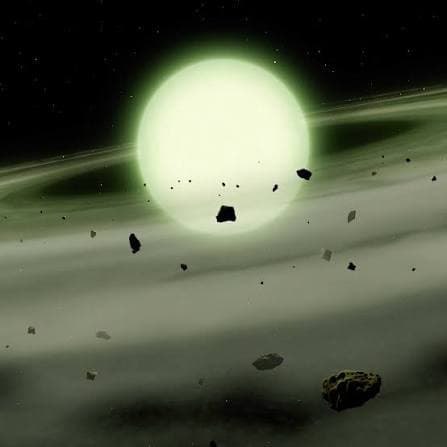
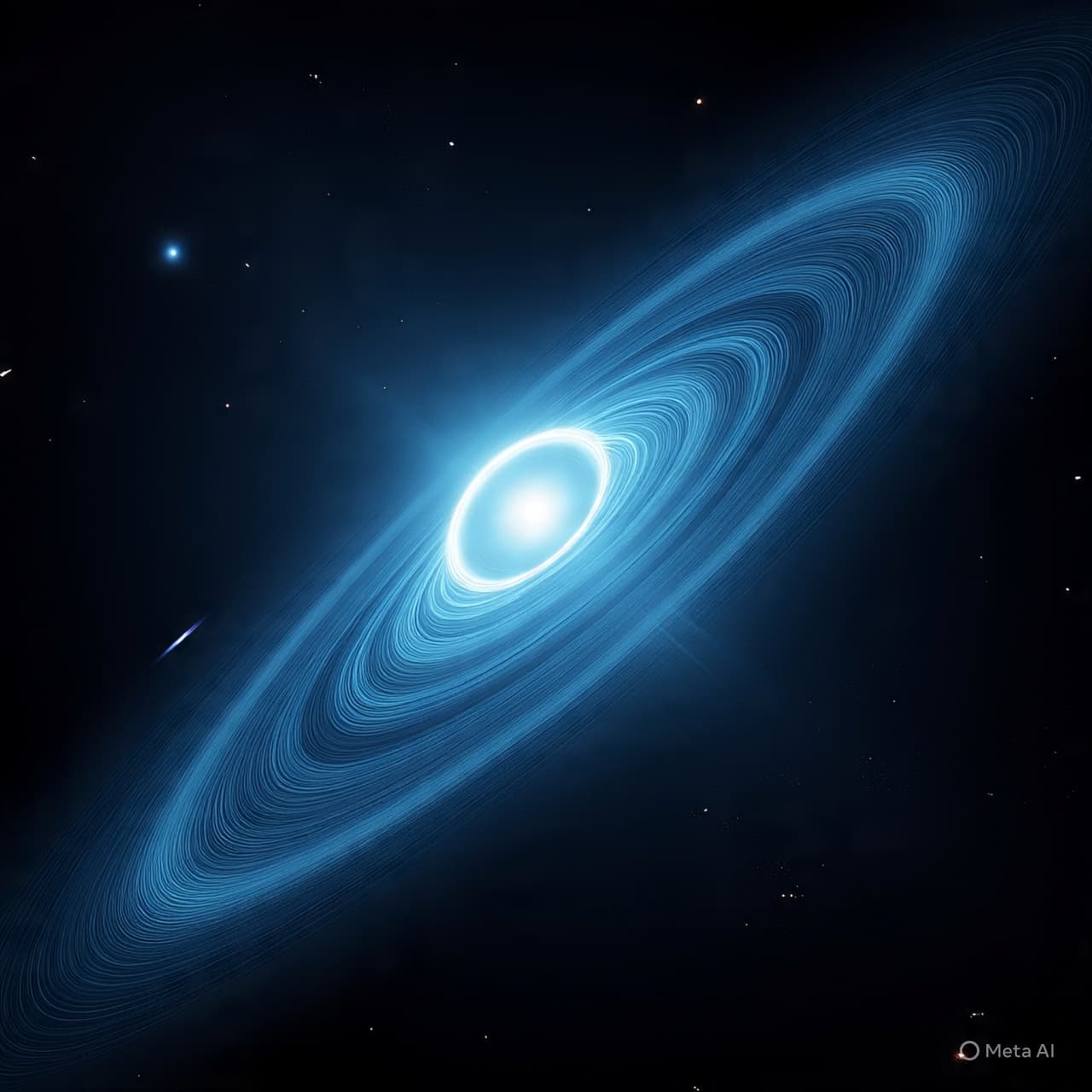
AI Image Disclaimer Graphics are AI-generated and intended for representation, not reality.
Source Check Credible sources covering this development exist.
Phys.org ScienceDaily Space.com Universe Today Nature
Published by Banx Network. This article is part of the Banx decentralized media programme, powered by the BXE token on the XRP Ledger.