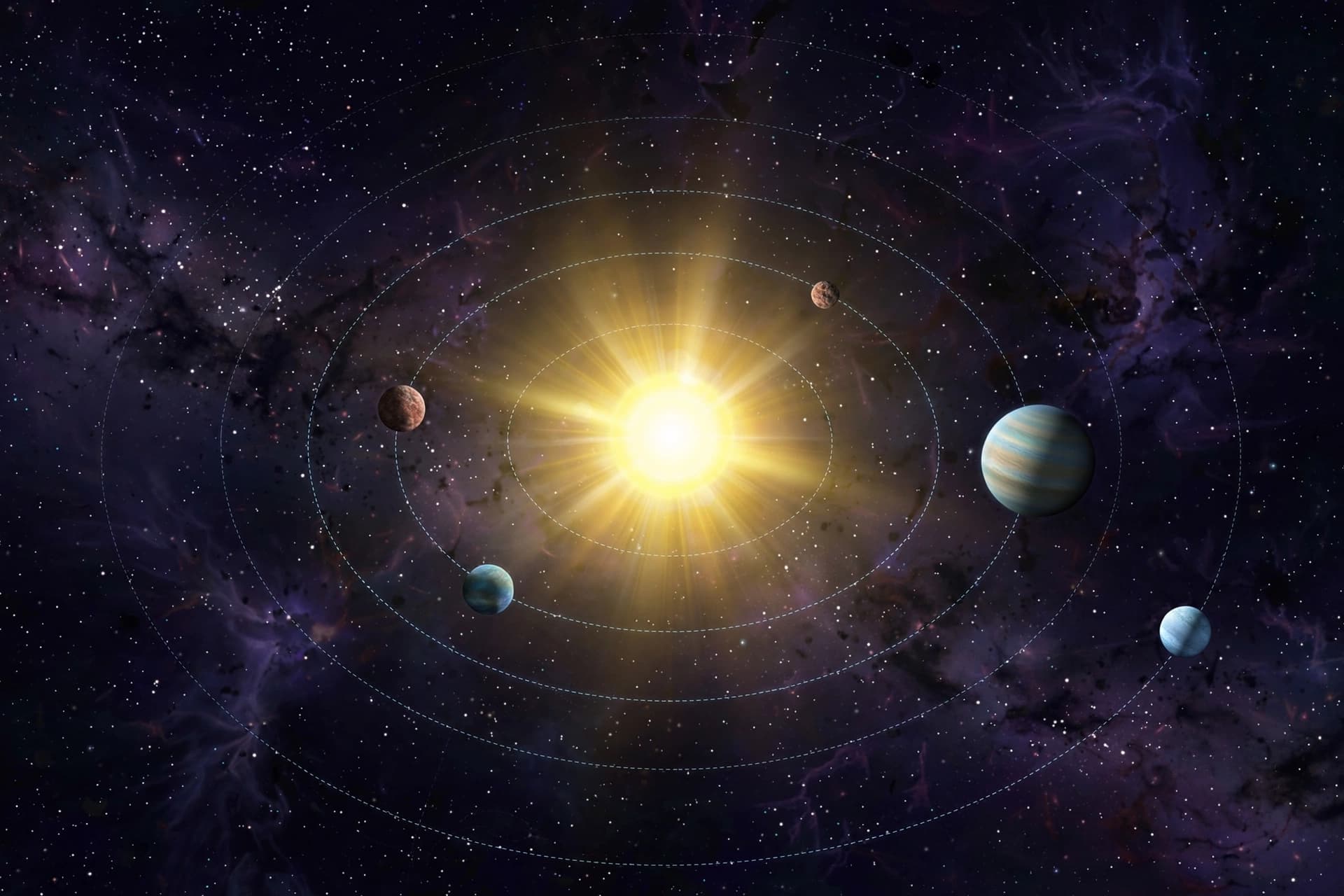
There’s a quiet wonder in seeing something familiar through a new lens — not a dramatic revolution, but a subtle unveiling that reshapes how we perceive the cosmos. For decades, astronomers have understood that our Sun is enveloped by a protective bubble called the heliosphere, carved out by the solar wind as it pushes against the interstellar medium. But until now, capturing a clear X‑ray portrait of a similar structure around another sun‑like star remained beyond reach. Thanks to the sharp vision of NASA’s Chandra X‑ray Observatory, that barrier has just been crossed, offering a glimpse of a distant star blowing its own cosmic bubble.
HD 61005 — a youthful star about 100 million years old and roughly 120 light‑years away — shares similar mass and temperature to our Sun but exists at a far earlier chapter of its life. In X‑ray light, astronomers detected a vast bubble of hot gas surrounding this star, known as an astrosphere. This structure forms when powerful stellar winds slam into the surrounding interstellar gas and dust, creating a protective cavity in much the same way our Sun’s wind sculpts the heliosphere. The faint extended emission captured by Chandra marks the first clear X‑ray image of an astrosphere around a sun‑like star, giving scientists an unprecedented look at this phenomenon beyond our own solar system.
What makes this observation especially compelling is not only its clarity, but the clues it offers about stellar evolution and cosmic environments. The stellar wind from HD 61005 is estimated to be three times faster and about 25‑times denser than that of our current Sun, creating an astrosphere that glows more brightly in X‑rays and is easier to detect at a distance. Those winds interact with a surrounding environment much denser than the Sun’s local neighborhood, amplifying the X‑ray signal Chandra can record. By studying these hot bubbles, astronomers can better infer what the early solar wind — and by extension, our own heliosphere — might have looked like in the first billion years of our Sun’s life.
This achievement also highlights how technological precision can unveil subtle cosmic structures that were once theoretical or only hinted at through indirect evidence. While astronomers have inferred the existence of astrospheres around other stars through indirect signatures, the direct X‑ray imaging of one around a sun‑like star is truly a milestone — a first that adds depth to our understanding of how stars influence their surroundings.
HD 61005 is nicknamed the “Moth” because of the dusty wings seen in infrared light — remnants of its formation that spread outward like cosmic scales. Now, the combined view in X‑ray and other wavelengths offers a richer, multi‑layered portrait of how stellar environments evolve, interact, and perhaps influence the potential habitability of planets around similar stars.
In the larger story of stellar astrophysics, this discovery underscores the value of patience, precision, and perspective. Rather than dramatic upheavals, it is these delicate revelations — faint bubbles of X‑ray light around distant suns — that often provide the most enduring insights into our cosmic neighborhood and our place within it.
AI Image Disclaimer Illustrations were produced with AI and serve as conceptual depictions.
Sources
Space.com NASA Chandra press release coverage Gadgets 360 science news Knowridge science reporting Phys.org astronomy summary
Published by Banx Network. This article is part of the Banx decentralized media programme, powered by the BXE token on the XRP Ledger.