Sometimes the smallest things carry the longest memories. Long before Earth learned how to breathe, before oceans settled into their basins, fine grains of cosmic dust drifted through space, carrying chemical whispers from distant stars. These particles, older than the planet itself, now sit at the center of a quiet scientific effort to understand how life may have first found its footing.
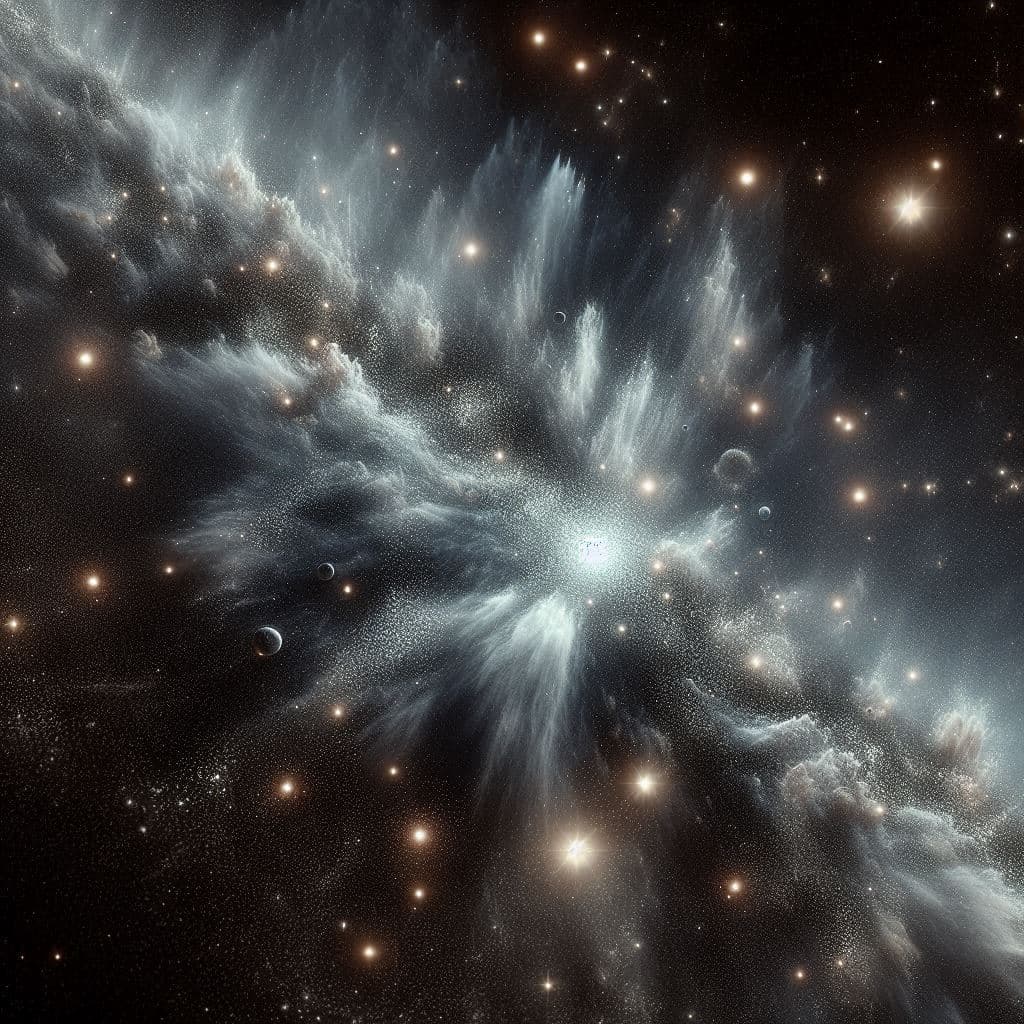
Cosmic dust arrives on Earth constantly, falling invisibly through the atmosphere like a gentle, unending snowfall. Within these grains are complex organic molecules formed in space, shaped by radiation, cold, and time. Scientists have long suspected that such materials helped seed early Earth with the building blocks of life, offering chemistry a head start before biology ever emerged.
In Sydney, researchers are attempting something both delicate and ambitious: recreating this cosmic dust in the laboratory. By simulating the harsh conditions of interstellar space—extreme cold, low pressure, and controlled radiation—they are producing artificial dust grains that closely resemble those formed between stars. This approach allows scientists to study, step by step, how simple molecules may assemble into more complex compounds relevant to life.
The work reflects a broader shift in astrobiology, one that moves beyond searching for life elsewhere and instead traces life’s origins back to the universe itself. Laboratory-made cosmic dust gives researchers the ability to test theories that once relied solely on meteorites and distant observations. It creates a controlled window into processes that usually unfold over millions of years and unimaginable distances.
What emerges from these experiments is not a definitive answer, but a clearer framework. Organic molecules appear capable of forming, transforming, and surviving in space more readily than once assumed. When delivered to young planets, they may have quietly enriched early environments, nudging chemistry toward biology rather than leaving it to chance alone.
There is a gentle humility in this research. It suggests that life on Earth may not be an isolated miracle, but part of a broader cosmic pattern—one written in dust long before planets were complete. The stars, in this sense, are not distant observers, but contributors.
Scientists involved in the Sydney research say the findings support the idea that space-made materials played a meaningful role in Earth’s earliest chemistry. Further experiments are planned to explore how these compounds behave in water-rich, early-Earth conditions.
AI Image Disclaimer Images in this article are AI-generated illustrations, meant for concept only.
Sources Nature Science NASA The Guardian ABC News Australia
Published by Banx Network. This article is part of the Banx decentralized media programme, powered by the BXE token on the XRP Ledger.