

Key Highlights
- Cosmic dust carries organic molecules that may have seeded life on Earth.
- Researchers in Sydney are recreating cosmic dust in the lab to study its properties.
- The findings suggest that space materials played a significant role in early Earth chemistry.
In the vast expanse of the universe, the tiniest particles can hold profound secrets. Long before Earth was capable of sustaining life, cosmic dust—tiny grains formed in the hearts of stars—drifted through space, carrying with it the chemical precursors necessary for life. These particles, older than our planet, are now at the forefront of scientific inquiry aimed at unraveling the mysteries of life's origins.
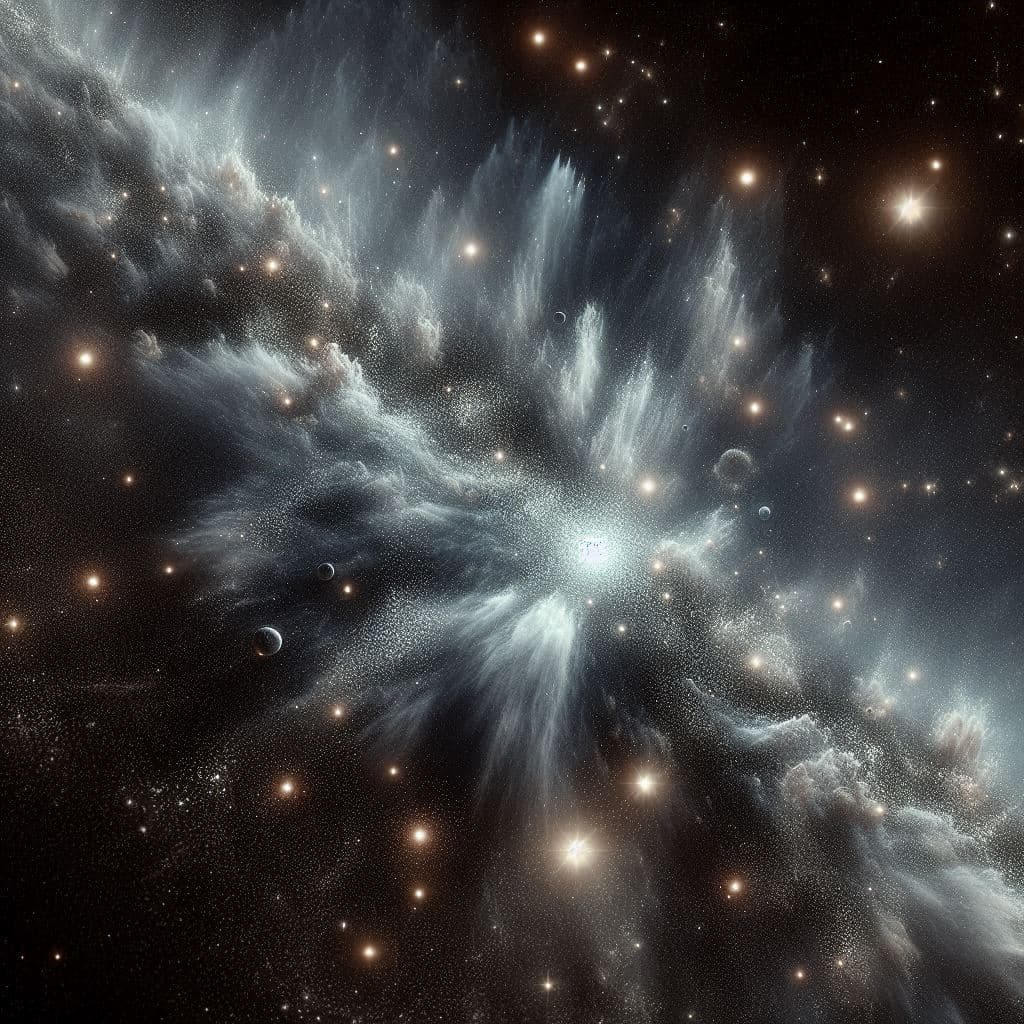
Cosmic dust continuously falls to Earth, often unnoticed, resembling a gentle, unending snowfall. Within these grains lie complex organic molecules that have been shaped by the harsh conditions of space, including radiation and extreme temperatures. Scientists have long theorized that these materials could have provided the essential building blocks for life, setting the stage for biological processes to emerge on our planet.
In Sydney, a team of researchers is embarking on an innovative project to recreate cosmic dust in a laboratory setting. By simulating the extreme conditions of interstellar space—such as low temperatures, reduced pressure, and controlled radiation—they are producing artificial dust grains that closely mimic those formed in the cosmos. This groundbreaking approach allows scientists to investigate how simple molecules can evolve into more complex compounds that are relevant to the emergence of life.
This research represents a significant shift in the field of astrobiology, moving away from merely searching for life beyond Earth to understanding how life may have originated from cosmic materials. The ability to create cosmic dust in the lab provides a controlled environment for testing hypotheses that previously relied on meteorite samples and distant astronomical observations. It offers a unique glimpse into processes that typically unfold over millions of years and vast distances.
The results of these experiments do not yield definitive answers but rather a clearer understanding of the potential pathways for life. The findings indicate that organic molecules can form, transform, and endure in the harsh conditions of space more readily than previously thought. When these molecules reach young planets, they may have enriched the primordial environments, steering the course of chemistry toward biology rather than leaving it to chance.
This research embodies a sense of humility, suggesting that life on Earth may not be an isolated phenomenon but part of a larger cosmic narrative—one that has been unfolding since the dawn of the universe. In this context, stars are not merely distant entities but active participants in the creation of life.
The scientists involved in the Sydney study assert that their findings bolster the hypothesis that materials formed in space played a crucial role in the early chemistry of Earth. Plans for further experiments are underway to investigate how these compounds behave under conditions similar to those found on early Earth, particularly in water-rich environments.
As this research progresses, it may reshape our understanding of life's origins and the interconnectedness of the universe, highlighting the significance of cosmic dust in the grand tapestry of existence.
Published by Banx Network. This article is part of the Banx decentralized media programme, powered by the BXE token on the XRP Ledger.




