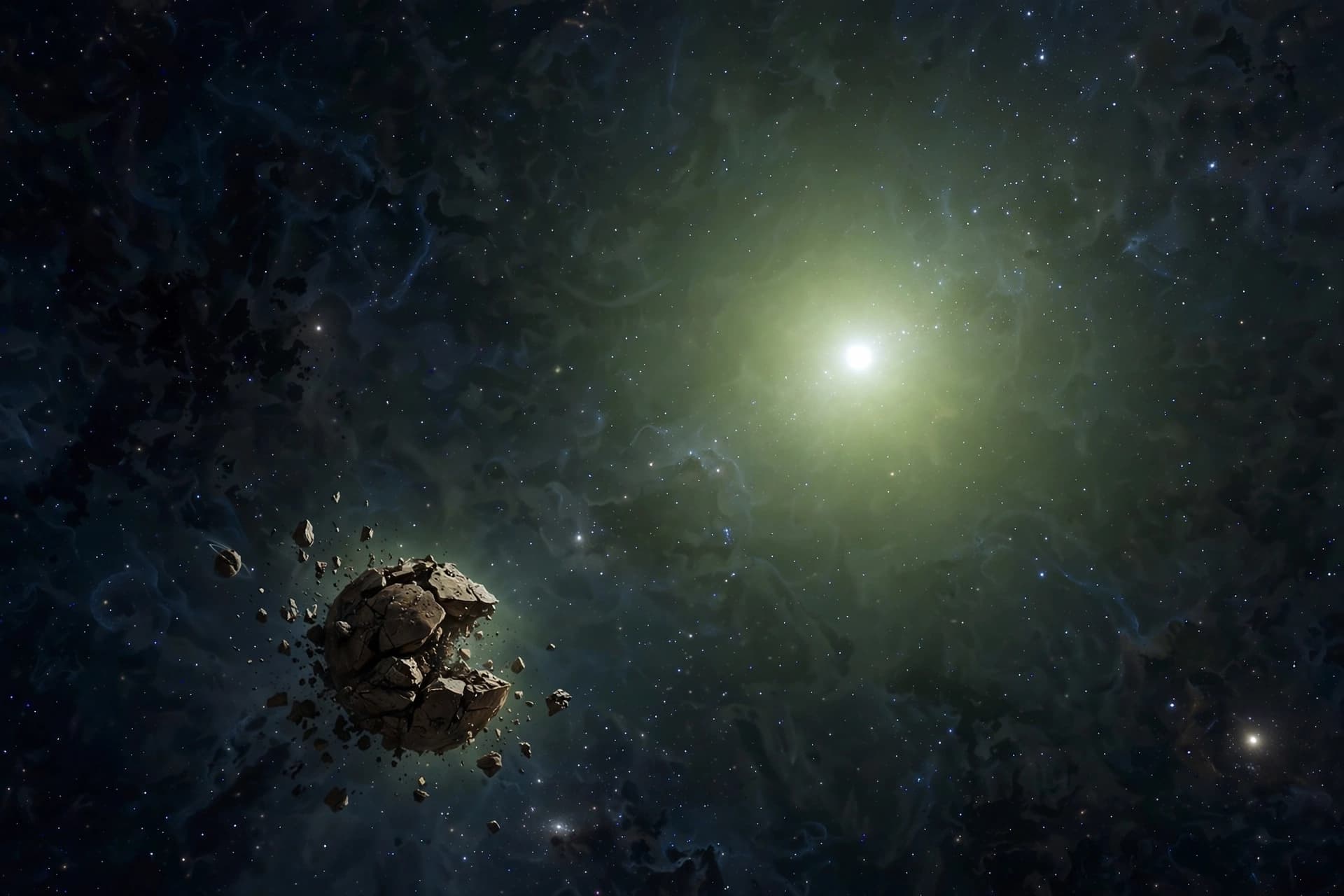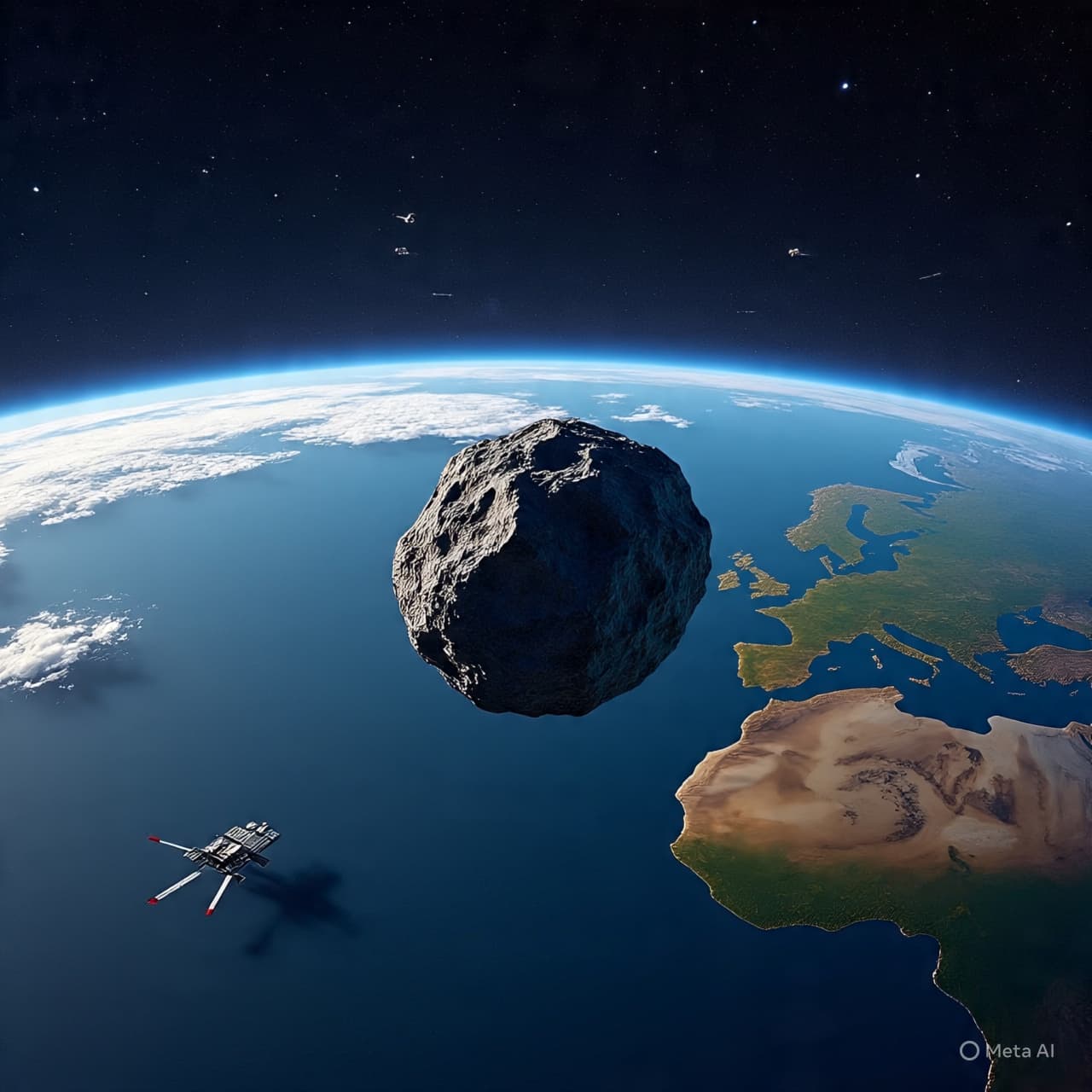
Above our heads, the vast dark of space is filled with quiet travelers, many unseen, many indifferent to human calendars or borders. Among them, small asteroids slip silently past, reminders of a universe that does not pause for our awareness. Recently, one such traveler, designated 2025 TF, passed a mere 428 kilometers above Earth — closer than many satellites orbiting our planet — and yet, for a brief moment, it moved entirely unnoticed. (boingboing.net)
The asteroid’s approach was neither threatening nor catastrophic; measuring only 1 to 3 meters across, it would have harmlessly burned up in the atmosphere had it entered. But the subtle drama lies not in destruction but in surprise. Despite advanced surveys and telescopes scanning the sky nightly, 2025 TF evaded detection until hours after its closest approach. In that quiet invisibility, it became a humbling symbol of both the vastness of space and the limitations of our gaze. (sciencealert.com)
Astronomers quickly tracked its path after the fact, confirming that this small rock had skated past Antarctica at astonishing proximity — closer than the International Space Station. While harmless, its passage is a vivid reminder that even tiny space rocks, when unanticipated, can skirt our planet unnoticed. The flyby also highlights the importance of ongoing efforts in planetary defense, where every telescope, survey, and satellite contributes to our vigilance. (independent.co.uk)
Moments like these invite reflection. The sky above, so vast and indifferent, carries objects that could, under different circumstances, remind us of Earth’s vulnerability. They also showcase human curiosity and persistence: within hours, we chart the asteroid’s course, analyze its trajectory, and consider the ways we might better detect future silent visitors. In that interplay of chance and diligence, the universe’s immensity and our smallness meet. (space.com)
For now, 2025 TF continues its journey beyond our reach, a fleeting, invisible messenger from the celestial expanse. Its quiet passage reminds us that the cosmos is a theater of both wonder and humility — one where even the smallest actors can momentarily eclipse our awareness. (moneycontrol.com)
AI Image Disclaimer (rotated wording) “Images in this article are AI-generated illustrations, meant for concept only.”
Sources
Boing Boing ScienceAlert Independent Space.com MoneyControl
Published by Banx Network. This article is part of the Banx decentralized media programme, powered by the BXE token on the XRP Ledger.