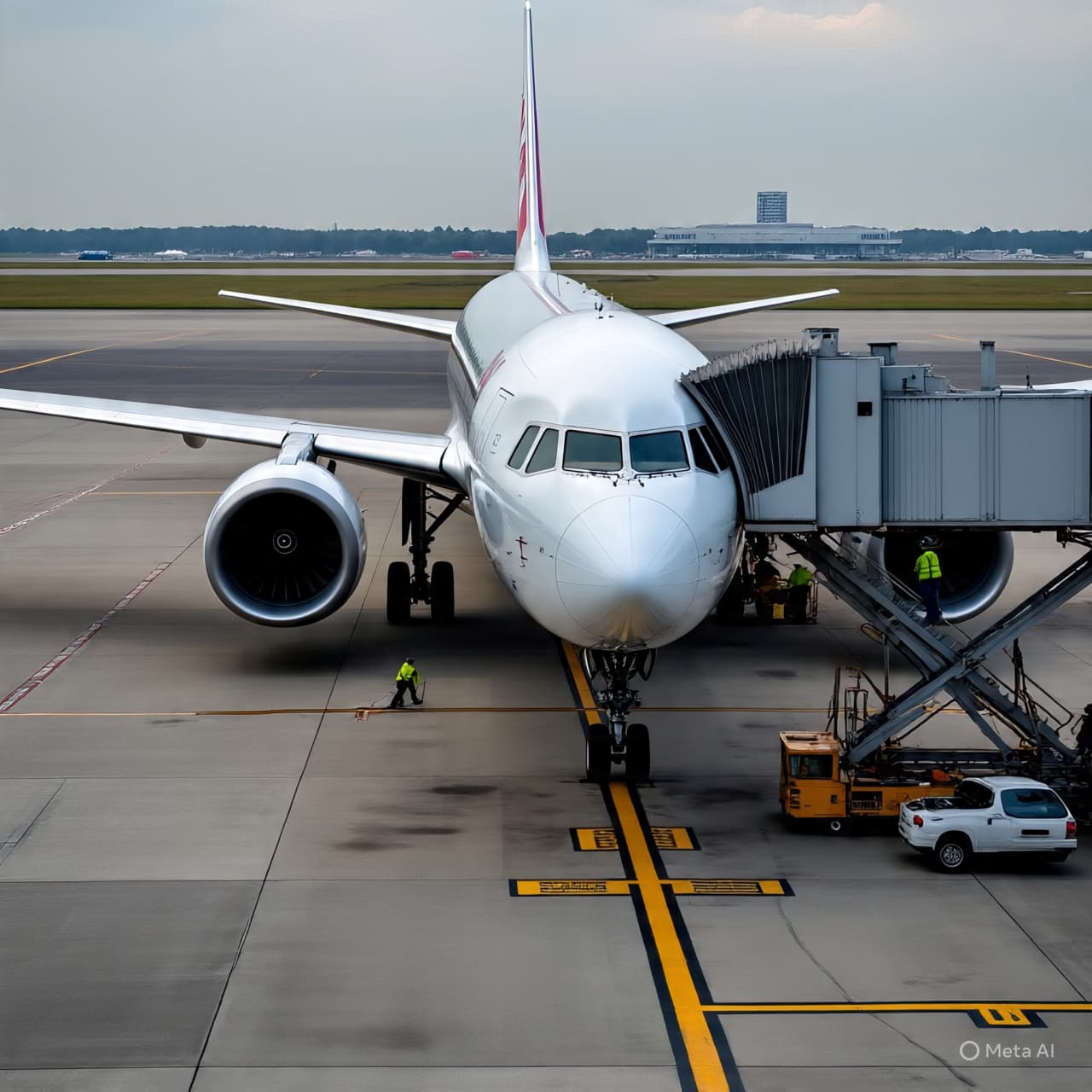
A strange hush seems to drift across airports worldwide — not the settled calm of a clear morning, but a quiet born of necessity. Planes that usually hum with departures are now parked, their wings still. There is a pause in the journey of millions, as what we assume to be routine — take-offs, landings, the banked turns through clouds — is held back by something invisible, something digital.
This week, Airbus revealed that around 6,000 jets from its A320 family — more than half the global fleet — need immediate intervention. What may seem like an arcane software issue, in fact, stares directly at the fragile intersection of modern engineering and the unpredictable forces of nature.
The problem surfaced after a serious mid-air incident. A flight operated by JetBlue reportedly suffered a sudden, uncommanded loss in altitude — jolting passengers and triggering alarms. Upon investigation, engineers found that intense solar radiation may corrupt critical flight-control data — a hidden flaw in the digital logic that guides a plane's wings and elevators.
For most of the affected aircraft, the remedy is relatively simple: revert to the older, stable software version. Airlines say the repair itself takes only a couple of hours per plane. Yet the timing could not be worse: the order comes at the cusp of one of the busiest travel periods globally, with hangars already stretched and maintenance crews under pressure.
Operators worldwide — from the largest, such as American Airlines, to smaller regional carriers — now face the delicate task of reconciling safety with logistics. Some have reportedly grounded portions of their fleets, delayed flights, or even suspended ticket sales until the fixes are done. The ripple effect is more than just schedule changes: for many travelers, it casts a shadow of uncertainty over holiday plans, business trips, or journeys long-awaited.
But beyond the disruptions, there is a deeper, subtler message: even in an age when aircraft are marvels of design, powered by sophisticated computers and guided by algorithms, they remain vulnerable to things as old as the sun itself. The recall serves as a quiet reminder that in aviation — as in life — sophistication does not guarantee invulnerability.
As airlines work through this massive recall, and as grounded A320s wait their turn for reboot and check-ups, our collective journey is also paused. It is a moment to reflect on how much we trust — sometimes perhaps too much — the invisible systems that carry us through skies. And to remember that behind every flight code and every seat row, there is human life, expectation, and fragile trust.
In the coming days, as repairs proceed and planes return to service, the skies will hum again. But the memory of this pause — a whole fleet grounded, mid-air warnings, global disruption — may linger a little longer.
AI Image Disclaimer “Illustrations were produced with AI and serve as conceptual depictions.”
Sources Reuters, The Guardian, South China Morning Post, Channel News Asia, IDN Times
Published by Banx Network. This article is part of the Banx decentralized media programme, powered by the BXE token on the XRP Ledger.