
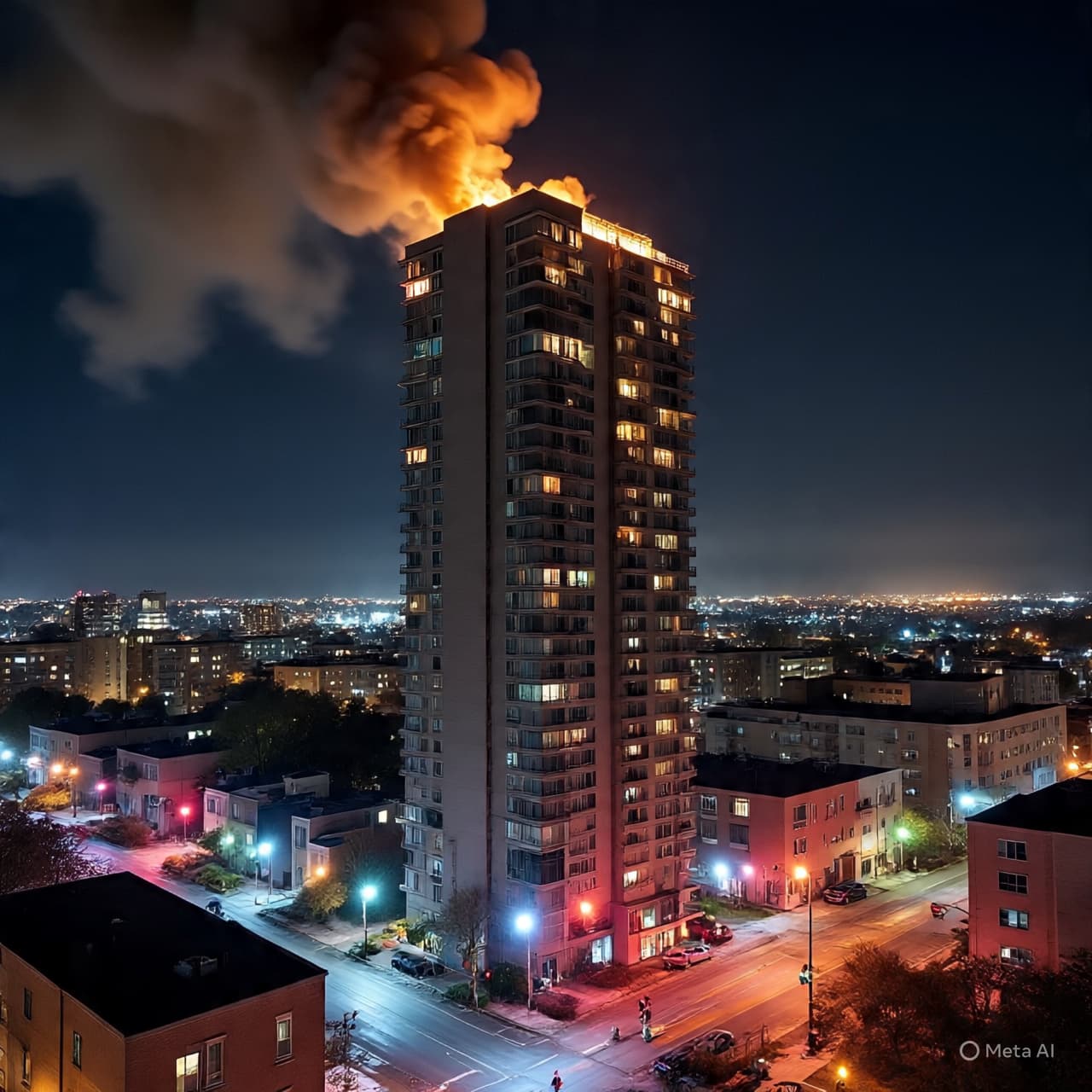
Disasters often feel distant until a single voice pulls the curtain back. In the case of the Hong Kong apartment complex that became an overnight inferno, that voice belongs to William Li. His recollection, shared quietly after the flames were contained, draws a line between panic and perseverance—between a hallway filled with smoke and the fragile thread of chance that allowed him and two neighbors to stay alive until help arrived.
Li described the moment the fire alarm pierced the early hours. At first, he thought it was a glitch; high-rise towers are filled with false signals and harmless noises. But the smell arrived before the understanding did—thick, chemical, unmistakable. Opening his door, he found the corridor already turning gray, the air shifting from breathable to sharp.
Two neighbors, both awake by circumstance rather than intuition, stepped into the hall almost simultaneously. They tried the stairwell, only to be met by a cloud of heat rising upward, proof that the lower floors were already engulfed. Retreating wasn’t strategy—just the only option left. They sealed the doorframes with damp towels, covered their mouths, and waited for something other than the sound of crackling walls.
Li admitted the worst part was the quiet. No shouting. No distant footsteps. Just the drone of fire and the slow realization that their entire plan depended on someone finding them before the oxygen thinned. Minutes stretched, blurred, and turned into a rhythm of coughing and conserving breath. They cracked a window but couldn’t open it fully; the suction from the rising heat made even the outside air feel uncertain.
When firefighters reached their floor, Li heard the clang of equipment long before he saw the beams of flashlights slicing through the smoke. The door opened to a gust of fresh air, and the three of them stepped into a hallway transformed by chaos. Yet in that moment, survival felt strangely quiet again—more relief than celebration.
Authorities continue to investigate the exact cause of the blaze, while questions grow about safety procedures and the speed of the fire’s spread. But Li’s account underscores a more human truth: survival in a high-rise fire often rests not on dramatic leaps or cinematic rescues, but on small, disciplined decisions made under pressure.
His story, told without embellishment, gives shape to an event that left many others injured and displaced. It offers a reminder that in dense urban towers, danger doesn’t always arrive with warning—and that sometimes, the most fragile shelters are the ones we build with strangers in the dark.
Published by Banx Network. This article is part of the Banx decentralized media programme, powered by the BXE token on the XRP Ledger.


