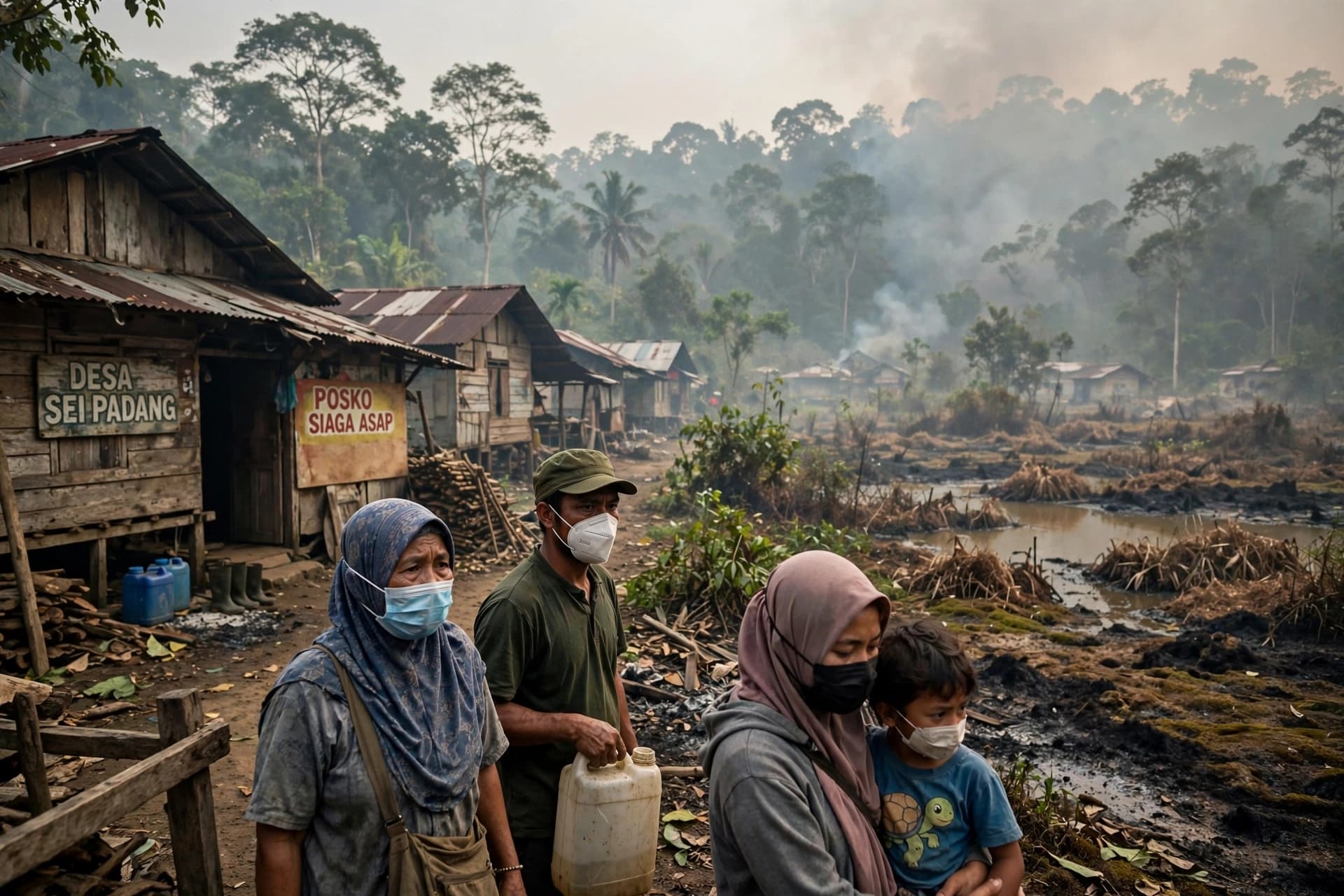
Smoke has a way of changing the shape of an ordinary day. A distant fire may begin beyond the edge of a city, yet its presence can eventually settle into the air breathed by families, workers, and children. Across parts of Indonesia, the forest and land fire season has once again become visible not only through flames and haze, but through the growing number of people seeking medical attention.
Indonesia’s Health Ministry recorded 174,694 cases of acute respiratory infections between Aug. 18 and Sept. 21 in areas affected by forest and land fires. Of that total, 40,363 cases involved children under five, a group authorities identify as particularly vulnerable to deteriorating air quality.
The latest ministry data also showed 4,533 active cases at the time of the Sept. 22 update, while many others had recovered. Health officials have been monitoring the situation across seven provinces: Riau, Jambi, South Sumatra, West Kalimantan, Central Kalimantan, South Kalimantan, and East Kalimantan.
Behind those numbers are health facilities preparing for conditions that can change with the wind. The ministry has strengthened health posts and hospitals in affected areas while distributing medical equipment and logistical supplies. Oxygen concentrators, oxygen cylinders, masks, and equipment for air-quality testing have been mobilized as part of the response.
The response had already expanded earlier in September. By Sept. 16, the Health Ministry said more than 151,000 respiratory infection cases had been recorded across 63 districts and cities. It had deployed 1,898 health workers and distributed more than 1.9 million masks, 280 oxygen concentrators, and 36 oxygen tanks to support areas facing heightened health risks.
The geography of the fires adds another layer to the challenge. Peatland areas can hold heat and fire beneath the surface, while dry conditions can allow smoke to remain a persistent presence. Authorities have therefore combined medical measures with firefighting, weather modification, aerial operations, and ground response to reduce both the fires and the exposure of surrounding communities.
Children remain a particular focus of the health response. Officials have recommended that local governments consider distance learning when air quality becomes poor, with the intention of reducing children's outdoor exposure during periods of heavy smoke. The recommendation reflects the way environmental conditions can reach directly into schools, homes, and daily routines.
The scale of the response can also be seen from the resources being deployed against the fires themselves. Since August, Indonesia has sent 64 aircraft and more than 54,000 personnel to support firefighting and mitigation operations across affected areas. Authorities have cited the size of the affected landscape and difficult peatland conditions as continuing challenges.
For now, the health figures remain closely tied to the changing fire situation. As authorities continue monitoring air quality, respiratory infections, hospital readiness, and medical supplies, the latest 174,694-case figure provides a snapshot of how environmental conditions are being reflected inside communities and health facilities across seven Indonesian provinces.
Published by Banx Network. This article is part of the Banx decentralized media programme, powered by the BXE token on the XRP Ledger.