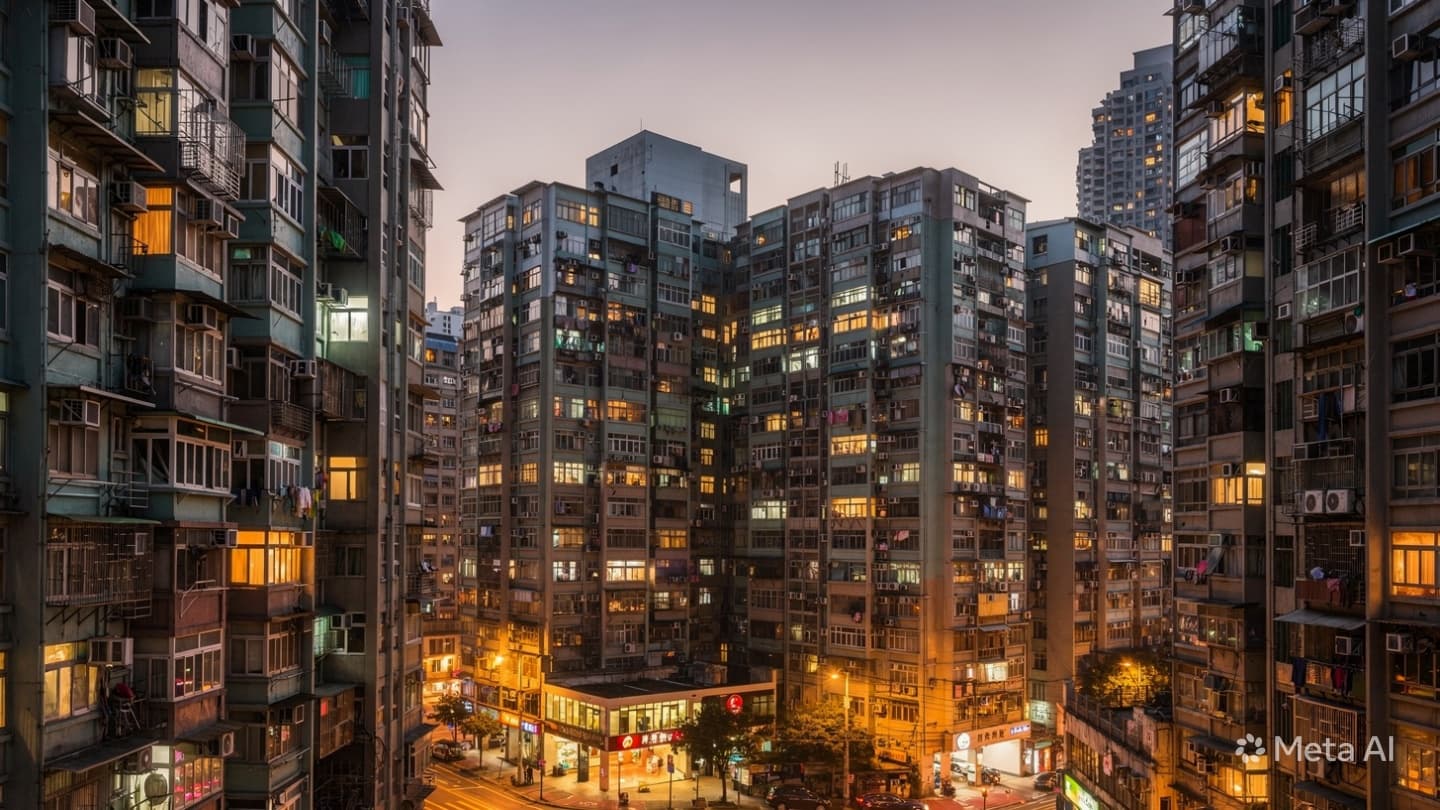
The city of Taipei, a sprawling network of neon and concrete, often feels as though it is in a state of perpetual motion, even when the clock strikes the deep hours of the night. Yet, there are moments when the city’s pulse seems to stutter, caught in the grip of an unexpected stillness. In one such instance, the quiet of a residential area was broken by the sharp, undeniable scent of smoke curling through the humid air. For the resident of an apartment building in the city’s dense urban center, the night transitioned from the ordinary cycle of rest into a sudden, irreversible transformation of space and time.
To look upon an apartment building is to see a microcosm of the wider city—a stack of private lives, each contained within walls that offer both shelter and secrecy. When fire claims one of these dwellings, the tragedy is not merely contained within the burnt timber or the charred remnants of a life, but ripples outward, touching the neighbors who walk the same hallways and share the same air. It is a sobering reminder that we live in proximity to one another, tethered by the structure of our homes and the shared fragility of our existence.
The flames, which ignited during the quiet shift from evening into the early morning, moved with a clinical efficiency. As emergency responders navigated the corridors, the scene became a study in the intersection of professional duty and the raw, human cost of disaster. There is a specific language to these moments: the rhythmic strobe of sirens, the heavy weight of equipment, and the hushed, urgent tones of those who work to preserve what little can be saved from the consuming heat.
Inside the unit, the items that once defined a person’s daily rhythm—a chair, a desk, a collection of letters—were subjected to a sudden, violent alchemy. The smoke, thick and pervasive, carries with it the history of the objects it touches, creating a shroud that settles over everything it reaches. Those who arrived to suppress the blaze walked through this history, their presence a necessary intrusion into a space that, only hours before, had been a quiet, personal sanctuary of rest and reflection.
The loss of life is the central, haunting note in this narrative. It is the point around which all other details—the cause of the ignition, the structural integrity of the floor, the timeline of the response—must orbit. In the aftermath, the question of 'why' is asked by the community, not as a challenge to authority, but as a way to process the sheer weight of what has been taken. We seek to understand the mechanics of the disaster in the hopes that we might, in some small way, fortify the walls of our own homes against such an intrusion.
As the morning sun began to filter through the smog of the city, the exterior of the building remained a silent witness to the night’s events. The neighbors, emerging into the gray light, carried with them the memory of the chaos, their faces etched with the fatigue of a night spent in uncertainty. They moved through their daily tasks with a new sense of awareness, glancing toward the affected floors, acknowledging the reality that, in the city, our lives are as interconnected as the wiring behind our walls.
This event is a quiet punctuation mark in the ongoing story of Taipei, a reminder of the hazards that hide in the unseen corners of our lives. We build our structures to reach toward the sky, to hold us close, and to protect us from the elements, yet we remain vulnerable to the smallest of sparks. The investigation into the fire will continue, tracing the source of the heat and examining the failures that led to such an outcome, but the true reflection lies in our collective response to the loss of a neighbor.
In the days to come, the air in the building will clear, the repairs will be made, and the rhythm of the city will reassert itself. But for those who felt the heat and witnessed the smoke, the memory will remain, a quiet anchor in the current of their lives. It is a call to look more closely at the spaces we inhabit, to cherish the quiet nights of peace, and to remember that in the dense landscape of the city, we are, fundamentally, keepers of one another’s safety.
According to reports from the Taipei City Fire Department, the blaze was reported late in the evening. Emergency crews arrived on the scene to find the apartment engulfed, necessitating a swift tactical entry to contain the spread to adjacent units. One resident was discovered within the residence and was pronounced deceased at the scene. Fire investigators are currently analyzing the debris to determine the exact origin of the blaze, while building management is cooperating with authorities to ensure the structural stability of the affected floors for returning residents.
Published by Banx Network. This article is part of the Banx decentralized media programme, powered by the BXE token on the XRP Ledger.