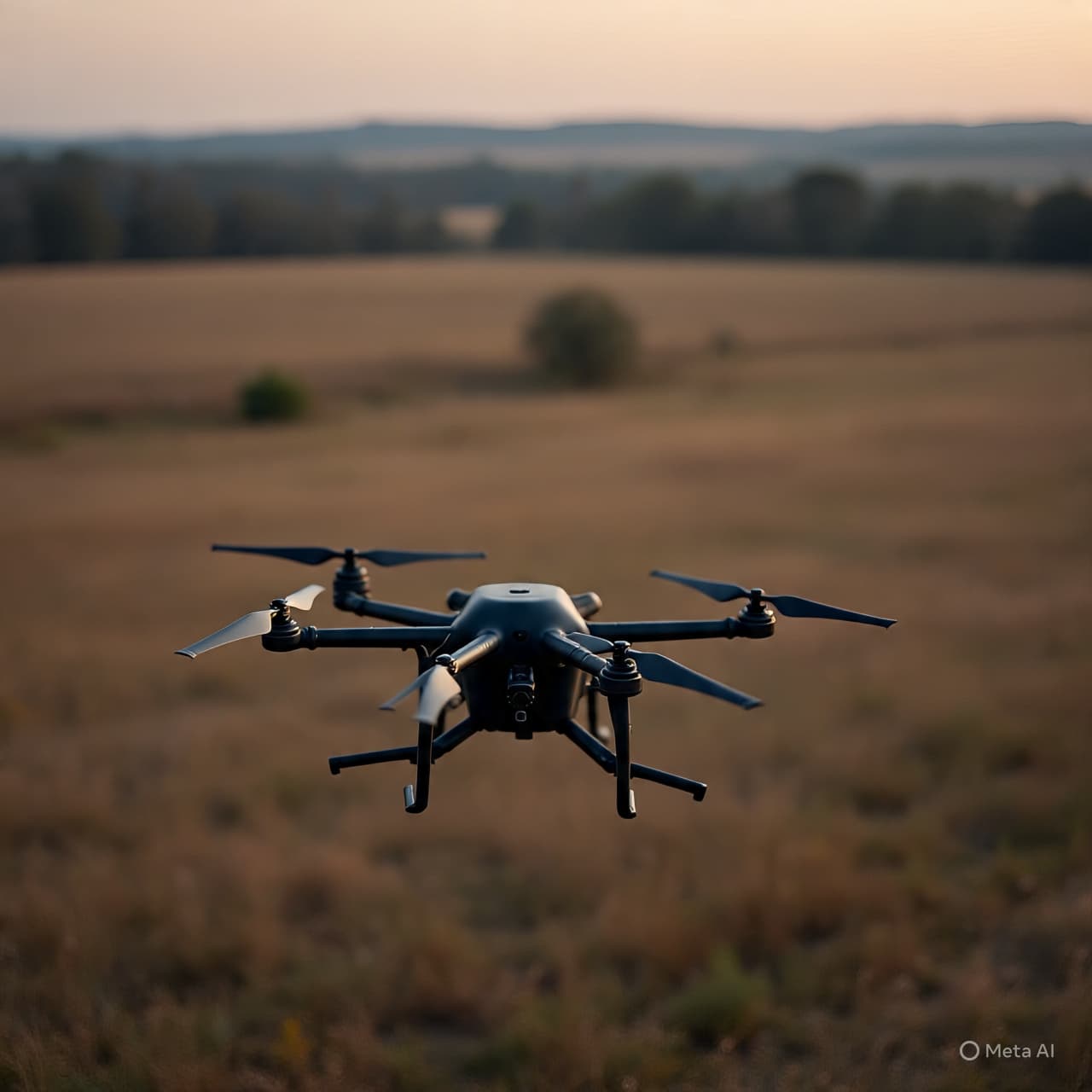
There is a certain irony in modern warfare: that some of its most consequential tools are small enough to fit inside a backpack. In open fields and over scarred front lines, the hum of quadcopter drones has become as familiar as the distant echo of artillery. What once seemed the province of hobbyists and photographers now plays a decisive role in the defense of a nation under siege.
According to a Ukrainian military commander, powerful quadcopters are now responsible for destroying nearly a third of the Russian aerial threats they engage. In a war defined by missiles, glide bombs, and long-range drone barrages, this statistic reflects more than tactical adaptation. It suggests a shift in how air defense itself is conceived — less centralized, more agile, and increasingly reliant on technology that is comparatively inexpensive and widely deployable.
Since the full-scale invasion launched by in 2022, Ukraine has faced relentless aerial attacks. Cruise missiles, Iranian-designed Shahed drones, and guided bombs have repeatedly targeted infrastructure and military positions. Traditional air defense systems — from Soviet-era platforms to Western-supplied batteries — remain critical. Yet they are costly, limited in number, and often reserved for high-priority threats.
Into this space have stepped advanced quadcopters. Modified and militarized, these four-rotor drones are equipped with explosive payloads or interception mechanisms. Some are used to ram incoming drones midair; others strike launch sites, radar systems, or logistics vehicles before threats can fully materialize. Their agility allows operators to respond quickly to low-flying targets that might otherwise evade larger systems.
A senior Ukrainian commander recently said that such quadcopters are now neutralizing close to one-third of the aerial threats they intercept. The figure, while difficult to independently verify in wartime conditions, underscores how frontline innovation has supplemented formal air defense networks. It also reflects the decentralization of Ukraine’s war effort, where small units often improvise solutions in real time.
President has repeatedly emphasized the importance of domestic drone production, describing it as a pillar of Ukraine’s evolving defense strategy. Kyiv has expanded partnerships with private tech firms and volunteer groups to accelerate drone development. Workshops that once assembled consumer devices now produce hardened systems capable of operating in contested electronic environments.
For Russia, aerial assaults remain a central component of its strategy — a means of stretching Ukraine’s defenses and testing its resilience. Moscow has increased production of attack drones and continued missile strikes aimed at military and energy infrastructure. Yet the proliferation of Ukrainian quadcopters complicates that calculus. Each relatively low-cost drone that intercepts or disables a more expensive incoming weapon alters the economics of the battlefield.
The broader implication is that air superiority is no longer determined solely by fighter jets or sophisticated missile batteries. Instead, it is shaped by layered defenses, rapid innovation, and the adaptability of operators on the ground. The sky over Ukraine has become a crowded and contested domain, where speed and ingenuity matter as much as scale.
As the war moves through its fourth year, the reliance on quadcopters illustrates how necessity accelerates change. What began as improvised tools have evolved into integral components of national defense. The commander’s claim — that nearly a third of intercepted air threats fall to these compact machines — may be read not only as a statistic, but as a sign of how warfare itself is being rewritten in real time.
Ukraine’s military says it will continue expanding drone production and refining interception tactics. Russian forces, meanwhile, maintain their aerial campaign. The contest in the skies shows no sign of abating, but it is increasingly clear that even the smallest aircraft can leave a significant mark.
AI Image Disclaimer Graphics are AI-generated and intended for representation, not reality.
Sources
Reuters Associated Press BBC News The Guardian Business Insider
Published by Banx Network. This article is part of the Banx decentralized media programme, powered by the BXE token on the XRP Ledger.