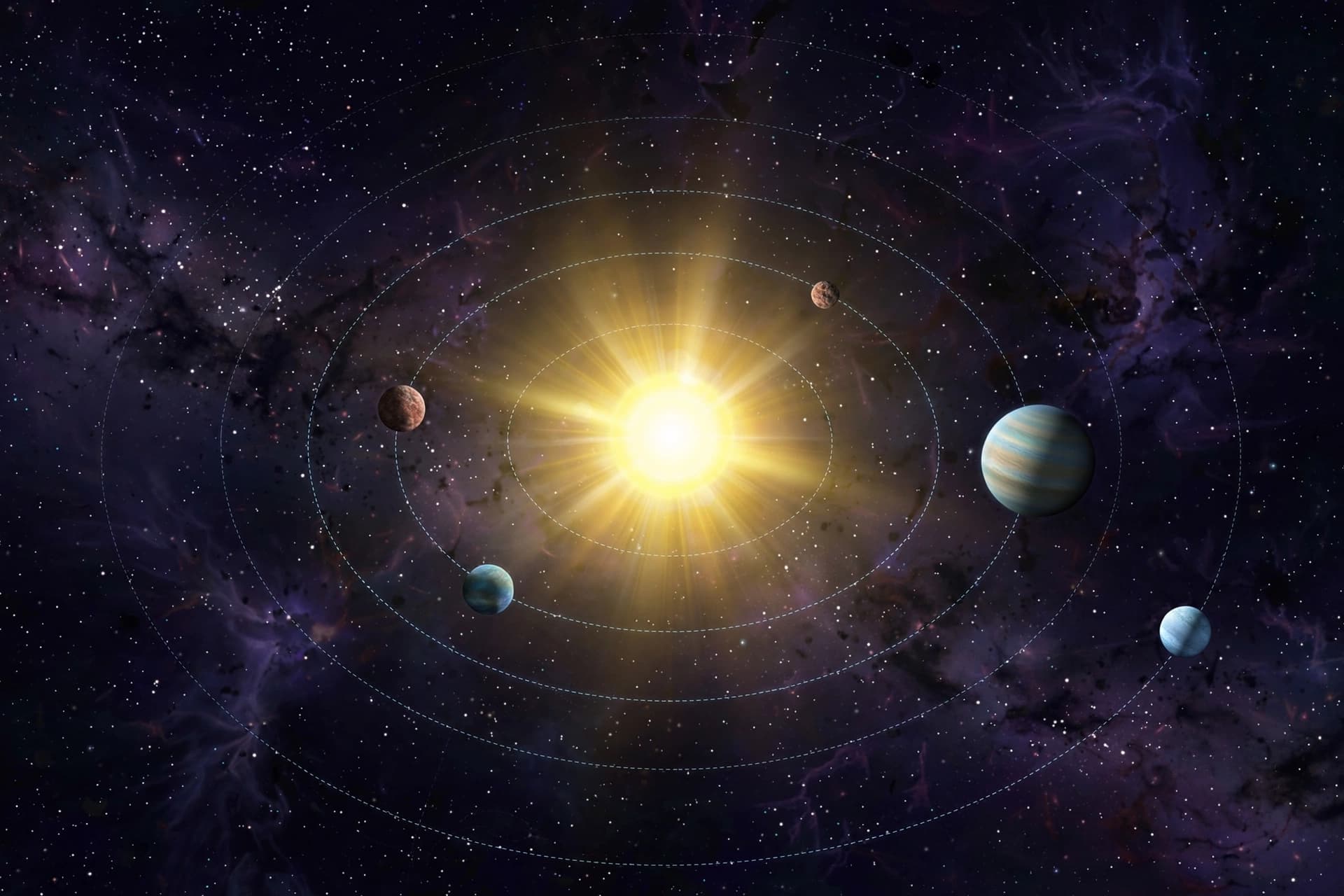
There are nights when the sky feels like a quiet archive, each star a footnote in a story billions of years old. Then there are evenings when the heavens seem to gather themselves for display, as if inviting us to look up and remember how small—and how curious—we are. A rare planetary alignment promises such a moment, when six worlds appear to line up across the darkness in a delicate celestial procession.
Astronomers report that six planets—, , , , , and —are set to appear in a broad arc across the night sky. While the term “planetary parade” is more poetic than technical, it captures the visual impression of multiple planets becoming visible at roughly the same time.
In reality, planetary alignments are a matter of perspective. The planets orbit the Sun on slightly different planes and at varying speeds. From Earth, however, their positions can occasionally cluster along the ecliptic—the apparent path the Sun traces through the sky. When several bright planets occupy that region simultaneously, observers experience what feels like a cosmic gathering.
Such events are not perfectly straight lines, nor are the planets physically close to one another in space. They remain separated by millions or even billions of miles. Yet their shared presence along a narrow band of sky creates a visual harmony that has inspired skywatchers for centuries.
According to astronomy guides, some of the planets in this lineup will be visible to the naked eye, particularly Venus, Jupiter, and Mars, which often shine brightly. Saturn may also be seen under dark conditions, while Uranus typically requires binoculars or a small telescope. Mercury, often elusive due to its proximity to the Sun, may appear low on the horizon shortly after sunset or before dawn, depending on local viewing conditions.
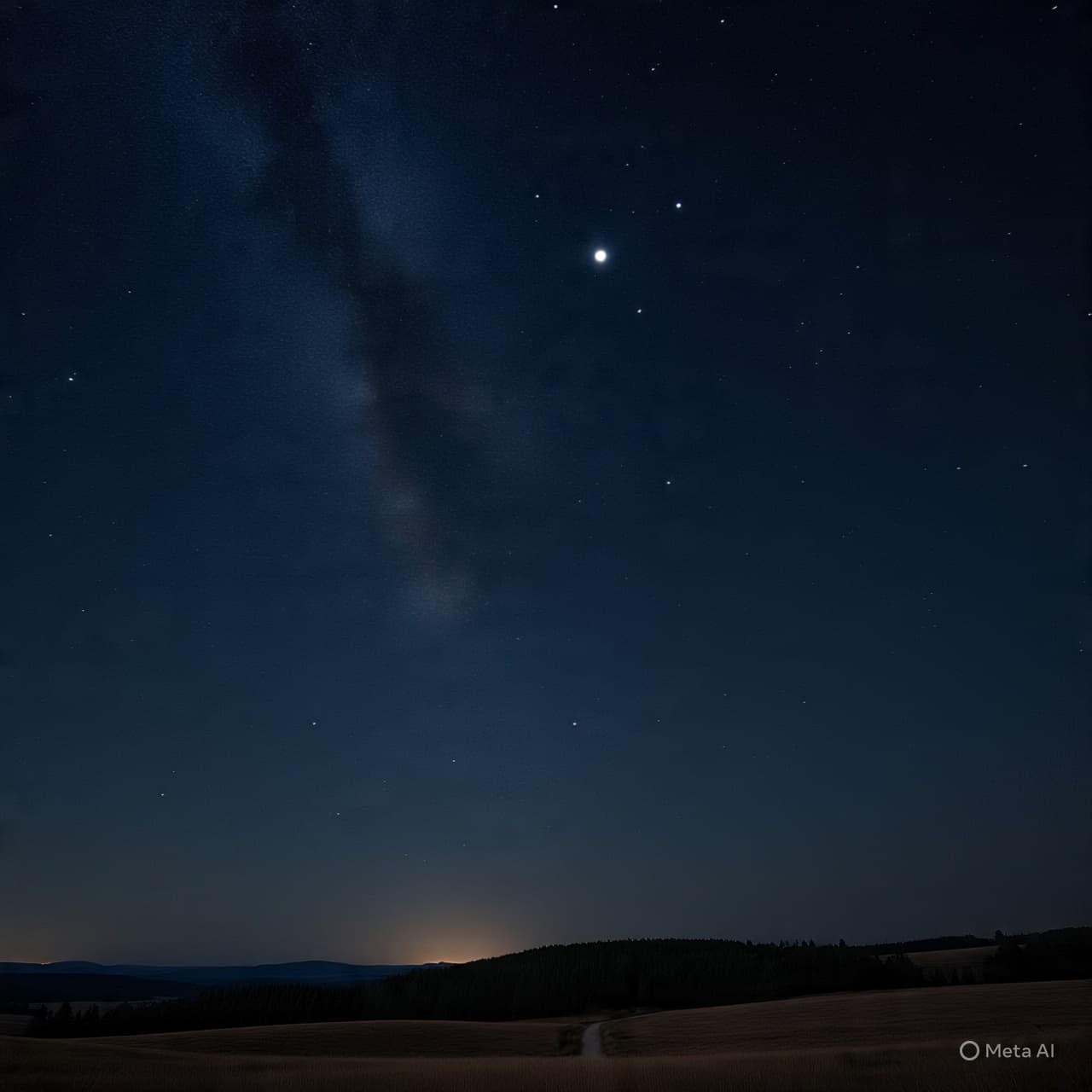
The timing and clarity of the spectacle depend on geography and weather. Observers are generally advised to seek areas with minimal light pollution and an unobstructed view of the horizon. Apps and star charts can help pinpoint each planet’s position relative to familiar constellations.
Astronomers emphasize that while alignments involving several planets occur from time to time, seeing six in a relatively compact arc is less common. The event offers not only aesthetic appeal but also an opportunity for public engagement with astronomy. Amateur skywatching groups and observatories often organize viewing sessions around such occasions.
Historically, planetary alignments have stirred both wonder and superstition. Ancient civilizations interpreted them as omens or messages. Modern science, grounded in orbital mechanics, understands them as predictable outcomes of gravitational choreography. Even so, the emotional effect remains remarkably similar: a sense of witnessing something rare and shared.
For educators, the parade presents a tangible way to explain planetary motion, orbital periods, and the structure of our solar system. For families stepping outside after dinner, it may simply be an invitation to pause.
As the appointed nights approach, astronomers encourage early preparation—checking local visibility times and allowing eyes to adjust to darkness. The spectacle will not last indefinitely; planetary positions continue to shift as each world follows its own path around the Sun.
In the quiet span between dusk and full night, six distant neighbors will appear to share the same stage. They are not marching in formation, but from our vantage point on Earth, they may seem to do just that—a reminder that even in vastness, there can be moments of alignment.
AI Image Disclaimer Illustrations were produced with AI and serve as conceptual depictions.
Sources Reuters Associated Press BBC News Sky & Telescope Space.com
Published by Banx Network. This article is part of the Banx decentralized media programme, powered by the BXE token on the XRP Ledger.