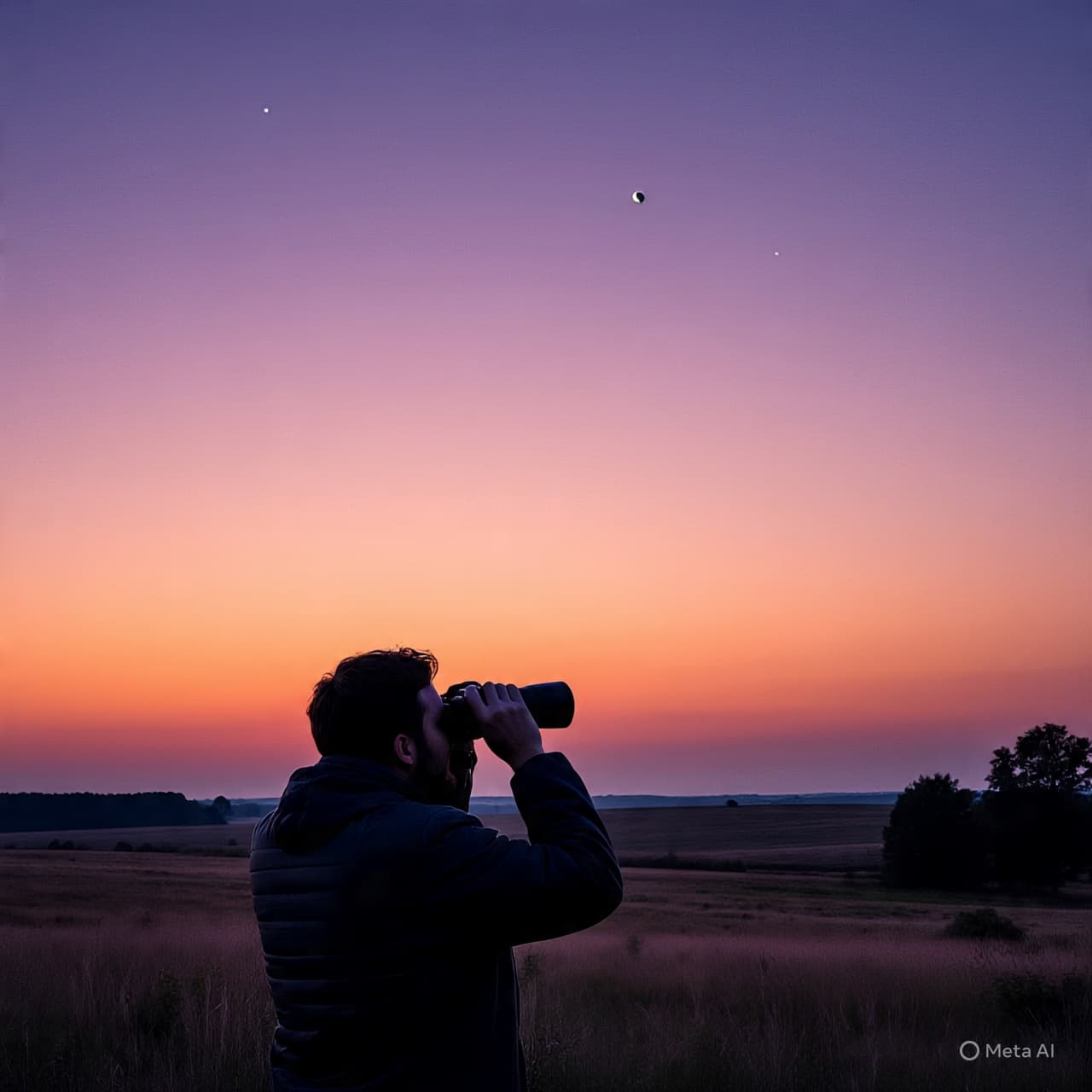
Sometimes the universe seems to pause for a quiet moment of beauty — an invitation for those of us on Earth to look up and remember our small but wondrous place in the cosmos. On the evening of this weekend’s skywatching event, six neighbors in our Solar System will gather in a gentle arc above the western horizon, almost like old friends lining up for a stroll. As daylight fades and stars begin to twinkle, this celestial get‑together is a reminder that even in vast darkness, order and pattern rise to meet us, if only we lift our eyes. The planets will be tracing the ancient path of the ecliptic, a soft river in the sky that once guided all human navigation.
Throughout the month of February, skywatchers have been treated to a series of planetary visits that emerge after sunset. This weekend, observers in many locations around the world will have a rare chance to see six planets — Mercury, Venus, Jupiter, Saturn, Uranus, and Neptune — arrayed in the night sky. The viewing window begins shortly after sunset when the light of day gives way to twilight, and the planets become silhouettes against deeper blue. Jupiter, luminous and regal, will rise higher and offer perhaps the easiest glimpse, while Mercury and Venus linger low toward the western horizon in the glow of fading sunbeams. Spots of cosmic stillness like this ask for nothing but calm attention and patience from those who seek them.
For the more subtle worlds, binoculars or a small telescope help bring Uranus and Neptune into view; without optical aid, they remain soft smudges against starlight. Saturn’s golden hue blends kindly with the onset of evening, while Venus shines with a warmth that almost feels like a whisper of sunlight at dusk. As you find a clear, unobstructed sightline to the horizon and give your eyes a few moments to adjust, the six planets slowly reveal themselves one by one. This isn’t a blazing show of fireworks in the sky, but a quiet parade — calm, patient, and reflective, like a poem written in stellar ink.
By night’s end, when the planets begin to slip back toward the Sun’s embrace or set low beneath the horizon, the moment will have passed as gently as it arrived. What remains is the memory of a night when six distant worlds shared the same dark canvas above us, a soft reminder that even in the silent sweep of cosmic time, there are events that invite us to pause, wonder, and simply watch.
AI Image Disclaimer “Visuals are created with AI tools and are not real photographs.”
Sources for article:
Space.com
People.com
Sky & Telescope (via Space.com summaries)
The Planetary Society
Timeanddate.com
Published by Banx Network. This article is part of the Banx decentralized media programme, powered by the BXE token on the XRP Ledger.