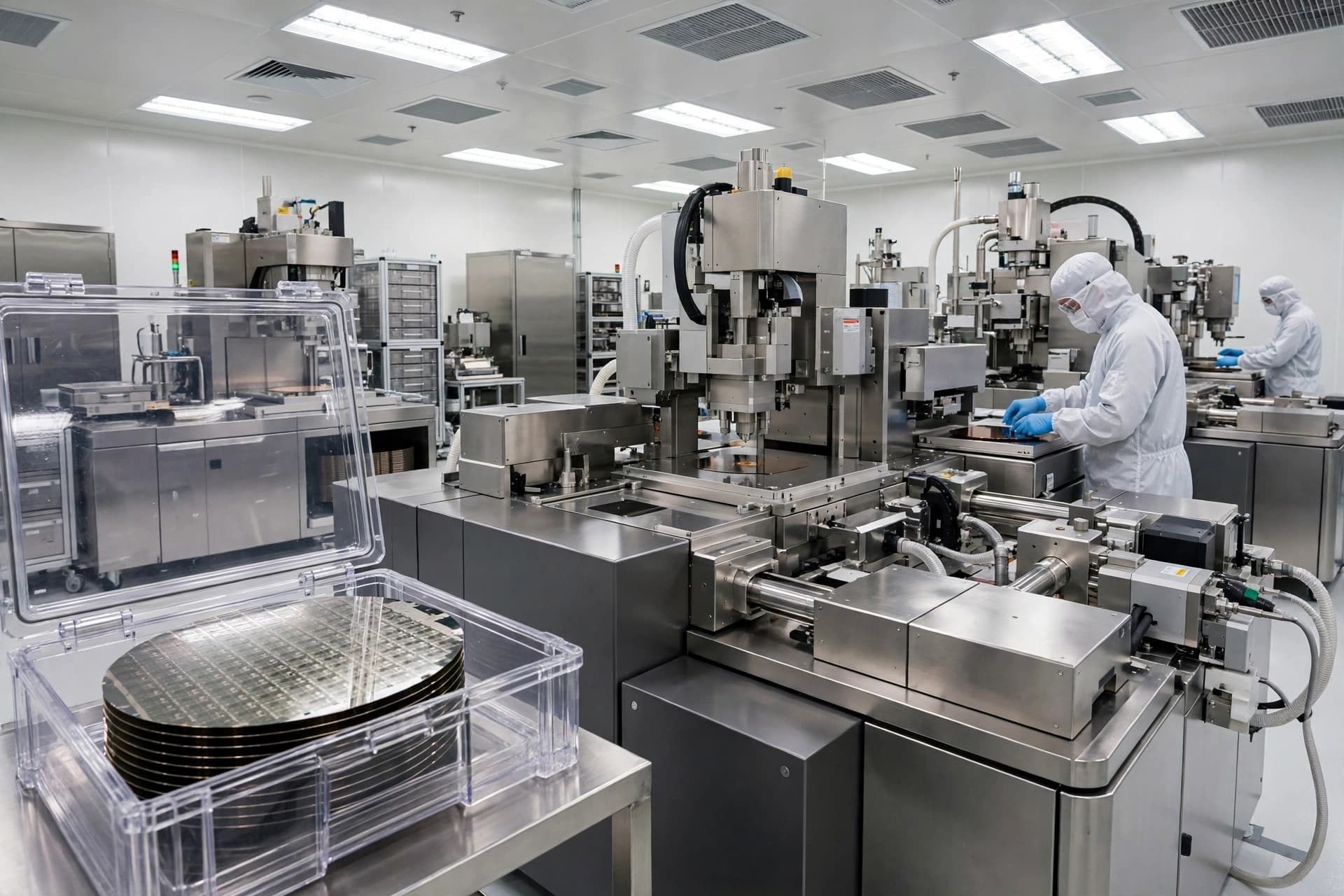
In the quiet pulse of a data center rack, where racks hum like distant tides and cooling fans whisper like wind through tall grass, a story of transformation unfolds. Not in headlines alone, but in the unseen dance of electrons and instructions that power the artificial minds of our time. In this era — where computation feels like breath to modern intelligence — an unassuming titan has once again revealed both its strength and its poetic framing of the age’s unfolding logic.
Nvidia’s latest quarterly chapter arrived with figures that shimmer like a horizon at dawn. In the fourth quarter of its fiscal year, the company reported revenue of approximately $68.1 billion, a remarkable 73% increase from the same period a year ago, alongside an inspiring 94% surge in net income. Much of this momentum is rooted in the company’s data center segment, where demand for accelerated computing has grown into an almost elemental force — a testament both to AI’s expanding reach and to the fact that computing is no longer a silent background actor but a leading protagonist in the digital economy.
What struck many listeners during Nvidia’s earnings call — and what has drawn the attention of market watchers across the world — was how CEO Jensen Huang chose to articulate this moment. With deliberate softness and an almost narrative cadence, he framed the transition not as a mere technical evolution, but as a fundamental shift in how value is created. In his words, “in this new world of AI, compute equals revenues.” Here, compute is likened to a seed dropped into fertile soil — without it, there can be no growth; with it, an entire ecosystem germinates.
This sentiment carries a quiet philosophical weight: to generate the tokens that underpin modern AI experiences — whether generative text, intelligent assistants, or real-time decisioning — machines must think faster, wider, deeper. And as these tokens are produced, so too does the possibility of economic return. The notion that tokens translate into revenues suggests a new economic language, one that links processing cycles and memory pathways to tangible gains.
Yet beneath this elegant metaphor lies real company strategy and market dynamics. Nvidia’s data center business accounted for more than 90% of its quarterly revenue, highlighting the degree to which the world’s transition toward cloud-based AI infrastructure shapes its financial heartbeat. And while investor sentiment has shown moments of pause, with some wary of how enduring this boom might be, the company’s guidance for the coming quarter — forecasted near $78 billion in revenue — continues to reflect optimism.
This confidence also stems from Nvidia’s platform ecosystem, where software compatibility across chip generations and deep partnerships across cloud providers have become part of a broader narrative of continuity amid fast-moving technological tides. In these confluences of hardware, software, and application, the promise of ever more powerful compute becomes not just a product line, but a rhythm of industrial change.
In the reflective lens of this moment, Nvidia’s announcement reads as more than a quarterly financial press release. It is also a quiet reflection on how technology weaves itself into the everyday mechanisms of business and creativity, labour and imagination. What once was abstract — the sheer scale of AI computation — now touches revenue lines and earnings reports, suggesting that what seems ephemeral often yields the most palpable results.
In this new chapter of digital industry, where computation dances with commerce, the story of Nvidia’s record quarter is a gentle affirmation that the age of AI continues to expand — not as a headline alone, but as a slow-turning current that shapes how organizations think, invest, and dream.
AI Image Disclaimer (Rotated Wording) “Visuals are created with AI tools and are not real photographs.”
Sources (Media Names Only) PYMNTS News, Business Insider, The Guardian, Wall Street Journal, Futunn News.
Published by Banx Network. This article is part of the Banx decentralized media programme, powered by the BXE token on the XRP Ledger.