

Key Highlights
- Rare Event:Gebang palms bloom synchronously in Darwin.
- Ecological Impact:The flowering influences local wildlife and ecosystems.
- Long Cycle:These palms flower only once in their lifetime, marking a significant moment.
In the quiet rhythm of tropical landscapes, nature sometimes turns a familiar page into something extraordinary. Across Darwin’s warm, humid environment, the sudden mass flowering of Gebang palms has unfolded like a rare collective breath from the land itself, drawing attention not through noise, but through subtle transformation.
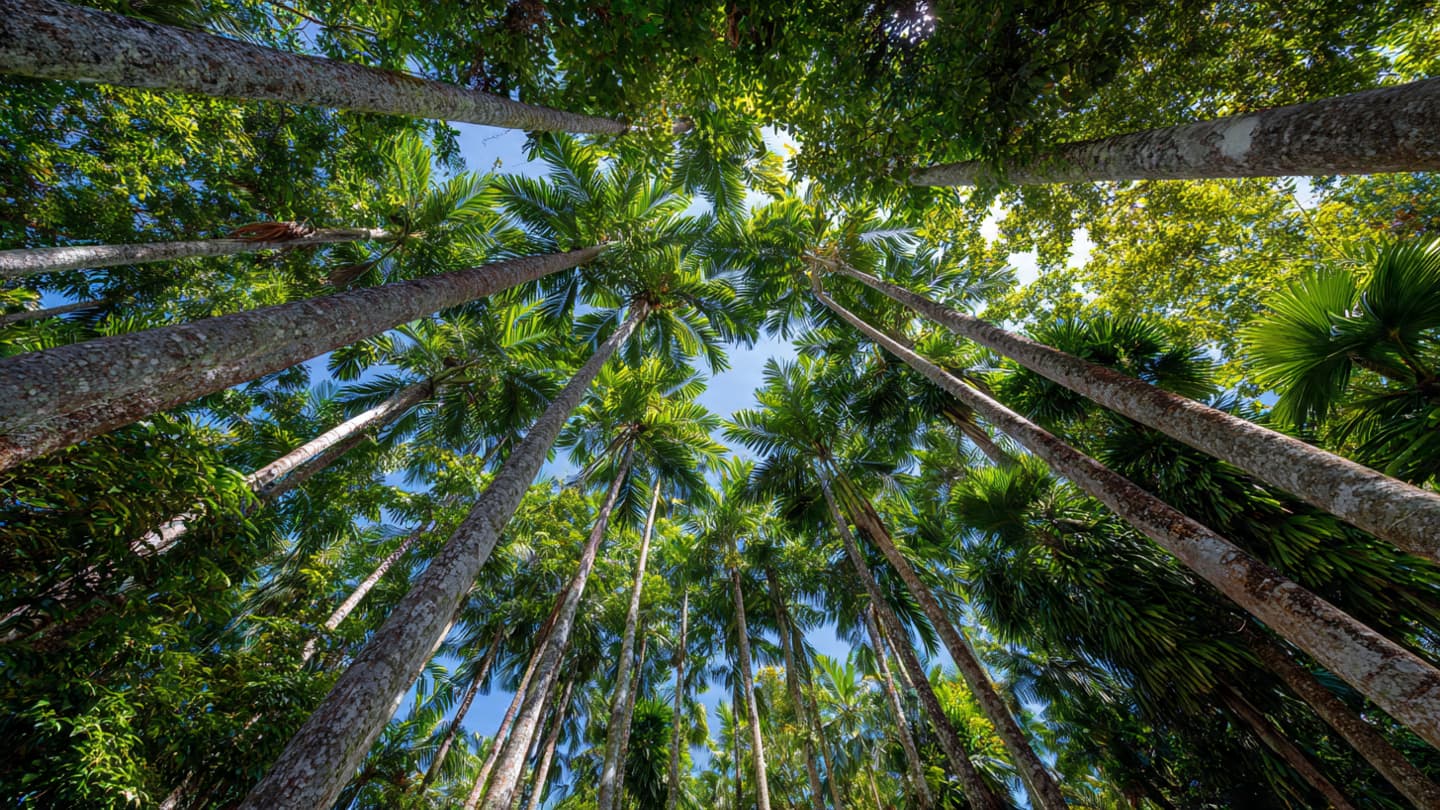
The Gebang palm, known scientifically as Corypha utan, is not a frequent bloomer. It spends decades growing in silence before producing a single, monumental flowering event near the end of its life cycle. In Darwin, this rare biological moment has appeared across multiple trees at once, creating what observers describe as an unusual synchrony in nature.
Local botanists and environmental observers have noted that such synchronized flowering is not common, making the current display especially noteworthy. The phenomenon is tied to the species’ semelparous life cycle, meaning the plant flowers once and then gradually completes its life cycle. This unique characteristic adds to the intrigue surrounding the event, as it highlights the long-term biological processes that govern plant life.
For residents and visitors, the event has reshaped ordinary park views into something almost ceremonial. Tall stalks rising into branching floral structures have become natural landmarks, briefly altering familiar green spaces into living exhibitions of ecological timing. The sight of these palms in full bloom serves as a reminder of the beauty and complexity of nature's cycles.
Scientists often interpret such events as reminders of long ecological rhythms that extend beyond human schedules. The flowering does not signal urgency or disruption, but rather the culmination of decades of slow biological preparation, invisible until the final stage becomes visible. This perspective encourages a deeper appreciation for the natural world and its intricate processes.
In broader ecological terms, mass flowering events can also influence local wildlife patterns, as insects and other pollinators respond to sudden food availability. While the full ecological effects are still being observed, such interactions highlight the interconnectedness of plant life cycles and surrounding ecosystems. The blooming of the Gebang palms not only captivates human observers but also plays a crucial role in sustaining local biodiversity.
Though the spectacle will eventually fade as the palms complete their lifecycle, the visual impact and scientific interest remain significant. It stands as a reminder that even the most familiar landscapes can occasionally reveal rare, time-bound transformations. As the Gebang palms complete their fleeting display, the moment settles into memory, leaving behind both scientific curiosity and quiet appreciation for nature’s long and patient timing.
AI Image Disclaimer: Some visuals associated with this story may be AI-generated for illustrative and editorial purposes.
Published by Banx Network. This article is part of the Banx decentralized media programme, powered by the BXE token on the XRP Ledger.




