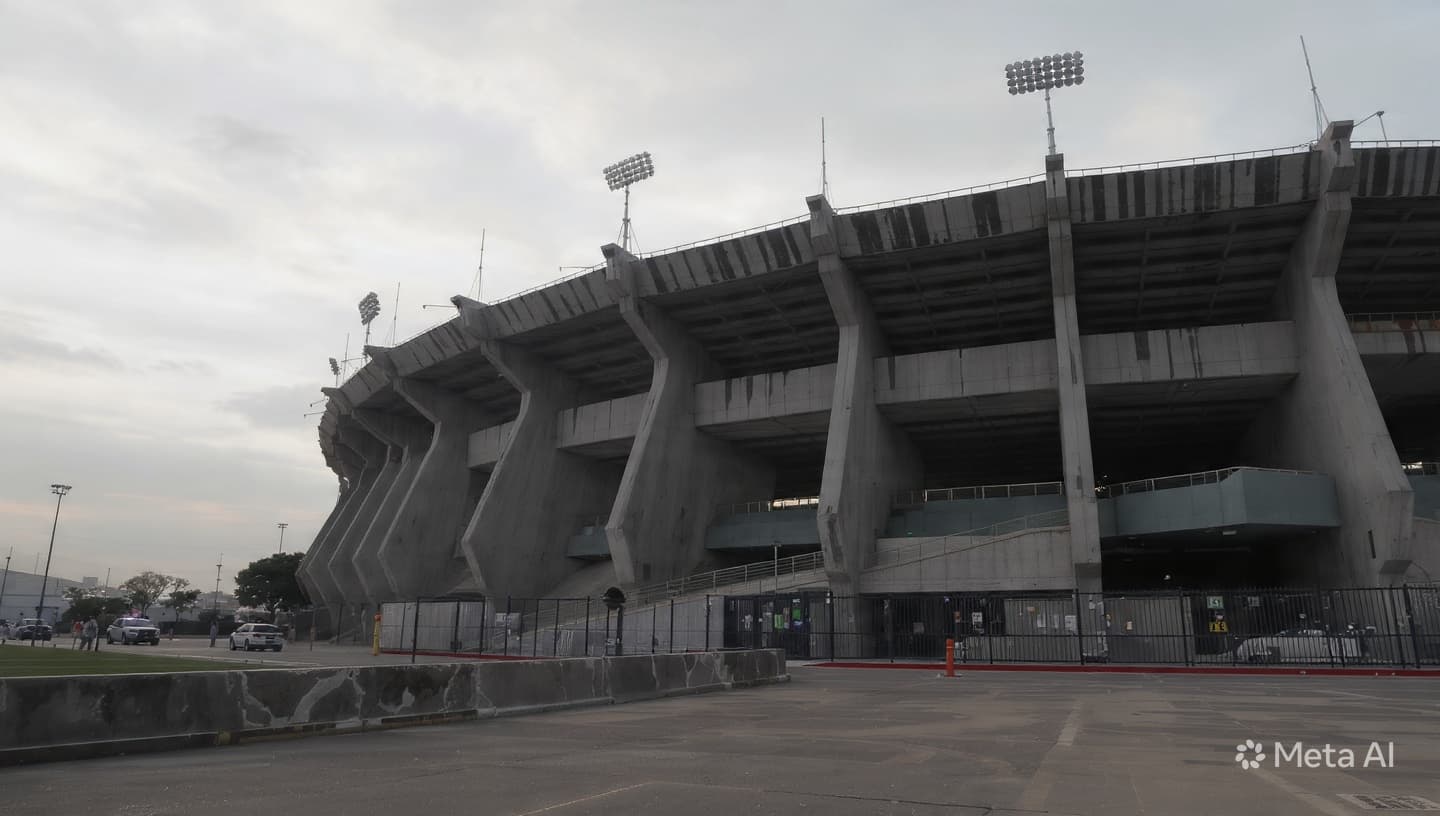
The stadium, usually a vessel for the collective breath of a city, a place where cheers rise and fall like the tide, held a different kind of silence this past Tuesday. It is a structure of immense scale, a landmark that defines the geography of its neighborhood in Tijuana, serving as a beacon for those who gather to witness the drama of sport. Yet, in the early hours of the morning, before the gates opened or the light had fully touched the bleachers, the periphery of this space became the site of a discovery that shifted the atmosphere from one of anticipation to one of profound, somber stillness.
The discovery of an unidentified body just outside the stadium’s perimeter is an event that forces a pause in the relentless rhythm of the city. For those passing by on their way to work, the presence of official vehicles and the stark visual of a cordoned-off area served as a reminder of the unseen borders that exist within our daily lives. It is a jarring intrusion of the definitive and the final into the routine landscape of the everyday, a moment where the anonymity of a major metropolitan area meets the undeniable weight of a human life ended in the shadows.
Tijuana is a city of constant motion, a corridor between worlds where the pace of life is often set by the urgency of trade, transit, and the perpetual hum of survival. To find such a grim marker outside a site of communal celebration is to witness the layering of realities that defines this region. The authorities, acting with the measured pace of investigation, moved to process the scene, their presence reflecting the difficult task of restoring order to a space where the unexpected has left its mark. The identity of the deceased remains an open question, one that adds a layer of quiet, haunting speculation to the morning’s events.
The forensic teams worked under the soft, gray light, their movements deliberate and practiced. It is a scene that has become all too common in the broader narrative of the city, yet each occurrence retains a singular, localized impact. For the surrounding neighborhood, the stadium is more than just a destination for events; it is a point of orientation. When that point is associated with a death of unknown origin, the disorientation felt by the community is palpable, rippling out into the nearby streets where residents go about their morning coffee and commute.
We observe these reports from a distance, recognizing the necessity of the investigative procedure while remaining acutely aware of the human, messy reality that necessitates such oversight. The stadium, designed to hold thousands and channel their collective focus, now stood as a silent witness to a solitary conclusion. The irony of the setting—a place for life and vigor now serving as the backdrop for a life extinguished—is not lost on those who pause to consider the geography of this tragedy.
The investigation is now in its early stages, with local law enforcement working to establish the circumstances that led to this discovery. As the forensic analysis moves forward, the city will likely return to its standard rhythm, the memory of the event fading into the background noise of urban life. Yet, for a time, the space outside the stadium remains marked, a place where the ordinary business of a city was halted by the reality of a life that has reached its end.
Ultimately, we are left to observe the aftermath with a measure of restrained reflection. The discovery serves as a somber waypoint in the history of this particular site, a detail in a sequence of events that disrupted the quiet of a Tijuana morning. While the legal and forensic processes will continue to unfold, the human element—the anonymity of the deceased and the sudden trauma introduced to the neighborhood—is what endures. It is a quiet, contemplative observation of the cost of living in a space where the unexpected can claim the foreground at any moment.
As the day continues and the sun rises higher over the city, the stadium will return to its function, and the streets will fill with the noise of the living. The memory of the early morning discovery will linger, a quiet reminder of the fragility of our shared peace. It is a reflection on the nature of our cities, where even the most prominent landmarks can become host to the most private and final of dramas, leaving us to contemplate the threads that connect our lives, however briefly, to the stories that occur in the shadows.
Published by Banx Network. This article is part of the Banx decentralized media programme, powered by the BXE token on the XRP Ledger.