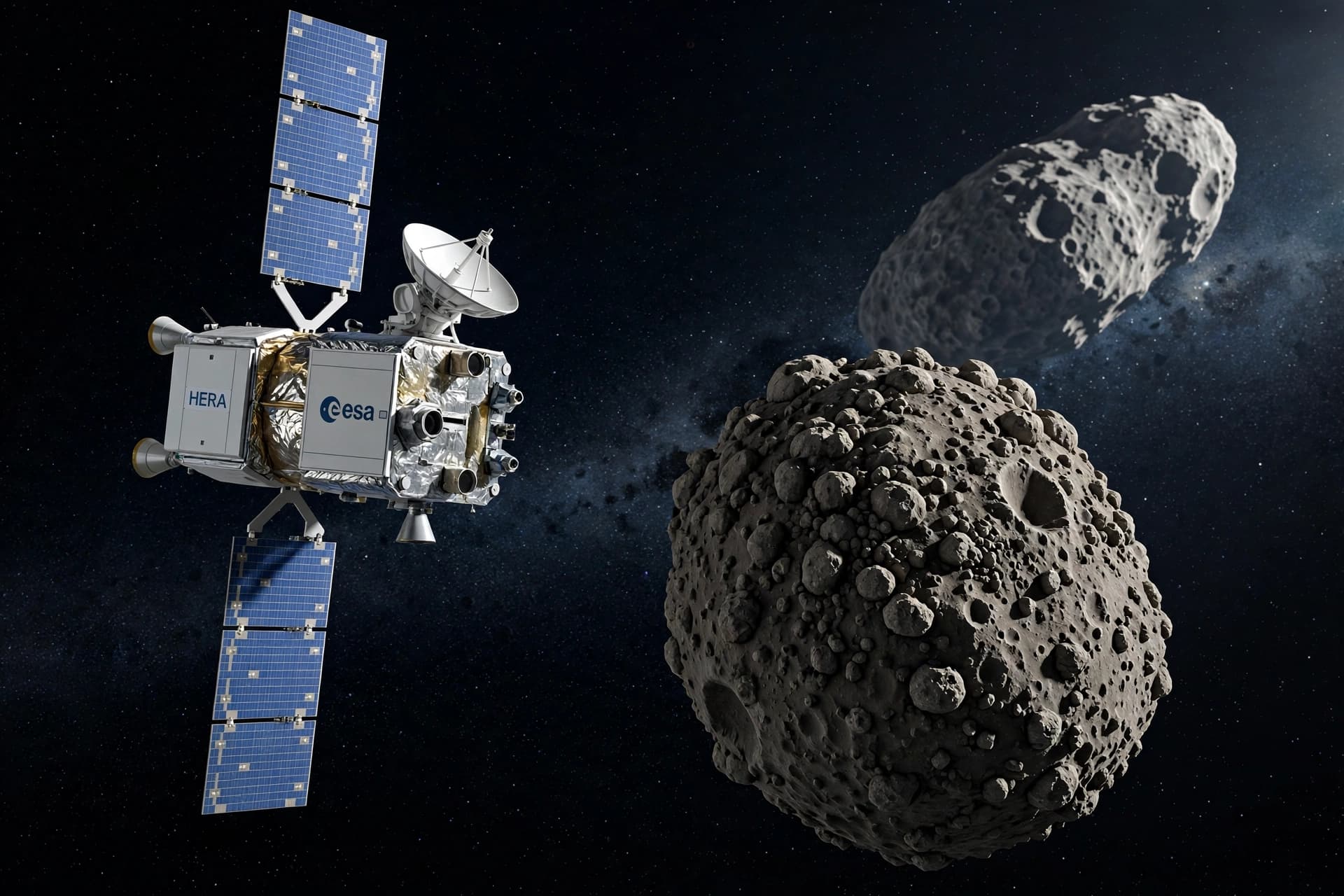
In the vast quiet beyond the planets, where sunlight fades into memory, a small machine continues its patient journey. Like an aging traveler conserving strength for one final stretch, Voyager 1 has begun to shed parts of itself—not out of failure, but out of careful design, guided by human hands across unimaginable distance.
Engineers at NASA recently made the deliberate decision to power down one of Voyager 1’s scientific instruments. The move, though modest in appearance, reflects a deeper challenge: how to extend the life of a spacecraft launched in 1977, now operating far beyond the edge of our solar system.
Voyager 1 relies on a limited power supply generated by radioactive decay, a resource that naturally diminishes over time. As this energy wanes, mission controllers must choose which systems remain active and which must rest, preserving enough functionality to continue sending valuable data back to Earth.
The instrument turned off was designed to study cosmic rays, high-energy particles that move through space. While its data has been essential in understanding interstellar conditions, the sacrifice allows engineers to keep other systems running longer, ensuring that the spacecraft’s core mission continues.
At the heart of this effort is a planned technical adjustment informally described as a “Big Bang” fix—a coordinated attempt to stabilize operations and extend the probe’s lifespan. It is not a single event, but rather a series of careful interventions aimed at managing aging hardware in an unforgiving environment.
Communication with Voyager 1 already takes more than 20 hours each way, making every command a patient act of trust. Engineers must anticipate outcomes long before confirmation arrives, turning spacecraft management into a kind of slow-motion dialogue across billions of miles.
Despite its age, Voyager 1 remains humanity’s most distant emissary, offering rare insight into interstellar space. Each byte of data it transmits carries not just scientific value, but a quiet testament to persistence—both human and machine.
The decision to power down instruments reflects a philosophy of stewardship rather than surrender. It is a recognition that longevity, in space as in life, often depends on knowing what to let go.
NASA officials say such adjustments could help extend Voyager 1’s mission by months or even years, allowing the spacecraft to continue contributing to science as long as its systems permit.
AI Image Disclaimer: Some images accompanying this article are AI-generated to illustrate deep-space concepts and may not reflect actual spacecraft visuals.
Sources: NASA, Jet Propulsion Laboratory, Space.com, Scientific American
Published by Banx Network. This article is part of the Banx decentralized media programme, powered by the BXE token on the XRP Ledger.