
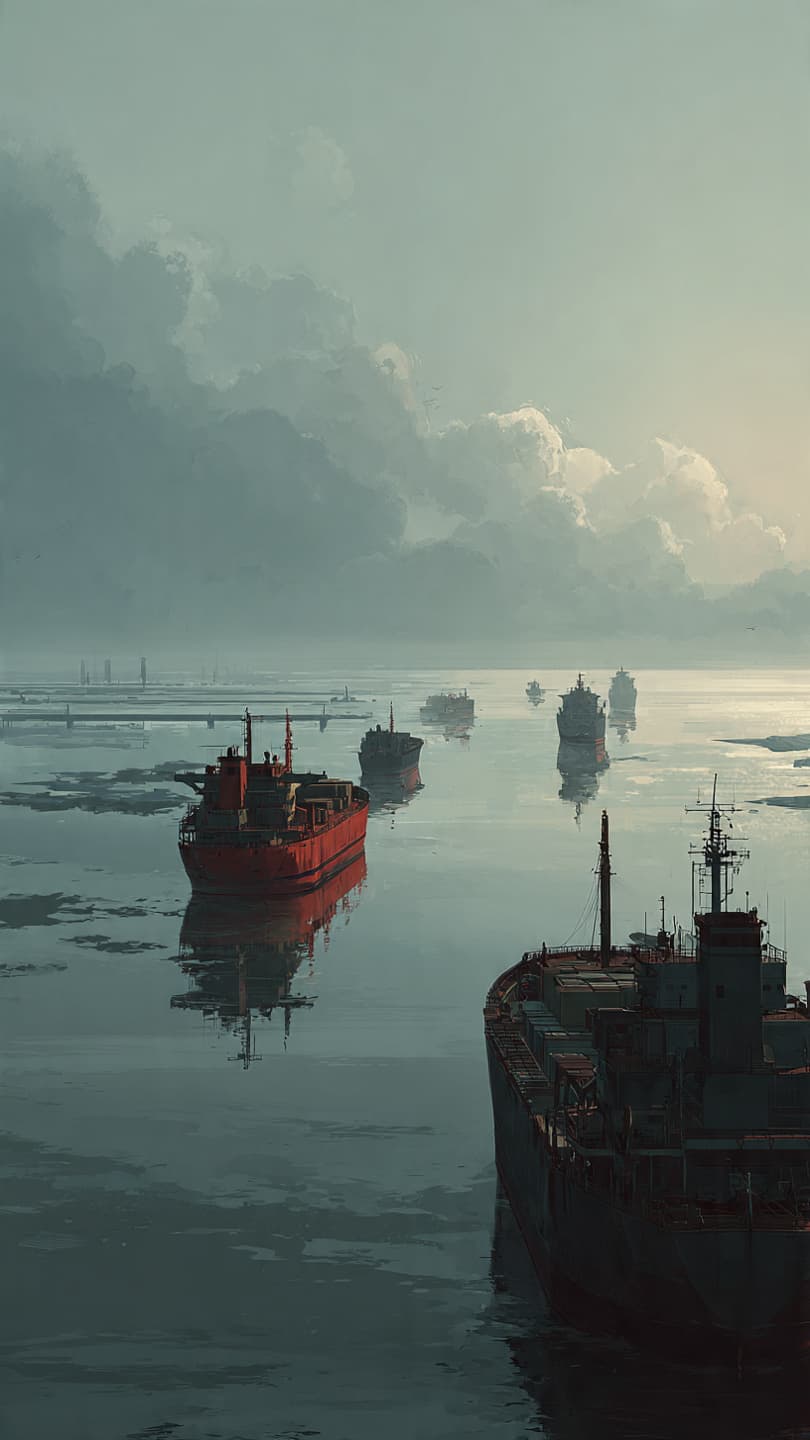
Key Highlights
- Iran seizes two commercial vessels in the Strait of Hormuz amid ceasefire tensions.
- U.S. signals an extension of the ceasefire, but Iran has not formally accepted it.
- Shipping traffic slows dramatically, impacting global oil supply and insurance costs.
The Strait of Hormuz, a critical maritime corridor for global oil transport, has become a focal point of escalating tensions between Iran and the United States. Following the announcement of a fragile ceasefire by former U.S. President Donald Trump, Iran's Islamic Revolutionary Guard Corps (IRGC) seized two commercial vessels, claiming they violated navigation regulations. This swift action raises questions about the interpretation of ceasefire agreements and the ongoing geopolitical struggle in the region.
Iranian officials assert that the seized ships were operating without the necessary authorization and had allegedly tampered with their navigation systems. While these claims are difficult to verify independently, they serve as a justification for redirecting the vessels toward Iranian waters. In a separate incident, a third ship was reportedly fired upon but managed to escape without significant damage. These actions highlight the precarious nature of maritime security in the region, where the stakes are high and the potential for conflict looms large.
The Strait of Hormuz is vital for global oil supply, with approximately one-fifth of the world's oil passing through its waters. The recent seizures have led to a noticeable slowdown in shipping traffic, prompting concerns over rising insurance costs and fuel prices. The ripple effects of any disruption in this crucial waterway extend far beyond the immediate region, impacting economies worldwide.
At the heart of the current situation is a fundamental disagreement between Washington and Tehran. While the U.S. has indicated a desire to extend the ceasefire, Iranian authorities have not formally accepted this extension. They argue that the ongoing U.S. naval blockades contradict the principles of de-escalation, framing them as acts of aggression rather than steps toward peace. This divergence complicates diplomatic efforts, with mediation attempts led by Pakistan currently stalled.
The diplomatic landscape, once filled with cautious optimism, now appears clouded by uncertainty. Each maritime incident further complicates the fragile path toward negotiation, leaving stakeholders in a state of limbo. The U.S. maintains its naval presence in the region, signaling its commitment to protecting shipping lanes, while Iran continues to assert its control over key waterways. Both sides seem unwilling to fully retreat, yet they are also cautious not to provoke a wider conflict.
The recent seizures of commercial vessels carry significant symbolic weight in this ongoing conflict. In a landscape increasingly defined by signals rather than formal declarations, controlling maritime movement becomes a powerful form of messaging. It speaks to issues of sovereignty, leverage, and resolve, as both nations navigate the treacherous waters of international relations.
As the situation continues to evolve, the waters of the Strait of Hormuz remain fraught with uncertainty. The ceasefire, while still nominally in place, is being tested by actions that blur the lines between restraint and confrontation. The international community watches closely, aware that any misstep could have far-reaching consequences for global stability and security.
Published by Banx Network. This article is part of the Banx decentralized media programme, powered by the BXE token on the XRP Ledger.



