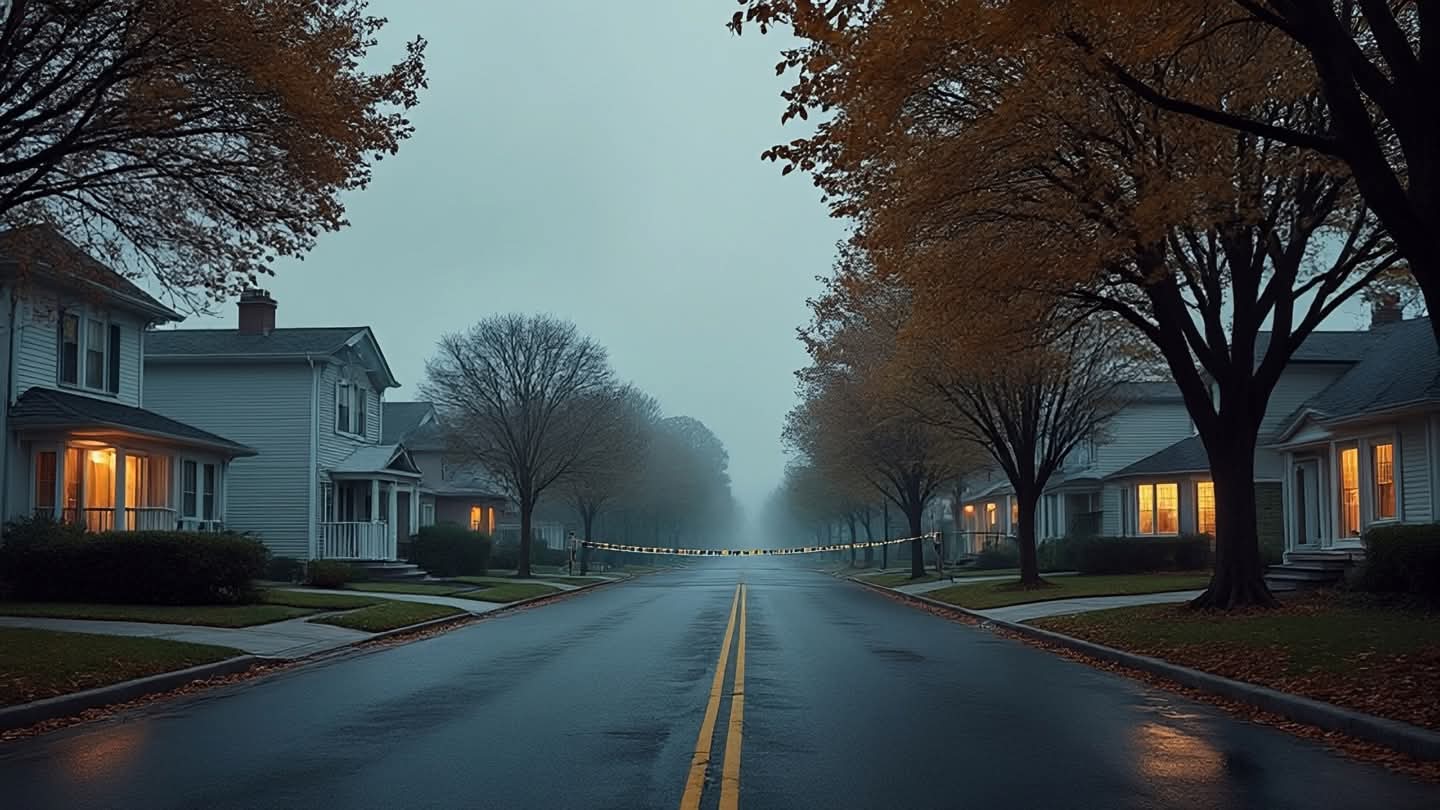
The role of the public order officer is defined by a heavy, anonymous restraint, a commitment to stand as a living barrier between the competing passions of a divided city. Inside the thick canvas of the protective gear and behind the transparent expanse of the shield, the individual becomes an instrument of the state, tasked with maintaining a line that cannot be allowed to bend. It is a position that requires an immense, unprompted vulnerability, a willingness to receive the anger of the street without returning it, absorbing the momentum of the crowd in the interest of a general peace.
The trial of this commitment occurred during a night of intense tactical friction, as police officers sustained numerous injuries when masked men hurled bricks and sledgehammers during nighttime riots. The confrontation moved through the narrow residential corridors with the unpredictable fluidness of a river, as groups utilizing the cover of the darkness launched coordinated assaults against the stationary lines of the enforcement units. There was no space for retreat; the line was held through hours of continuous impact, the sound of metal and stone hitting the shields acting as a rhythmic counterpoint to the shouting of the crowd.
The silence that settles over the tactical ranks after a wave of violence has spent itself is thick with physical exhaustion and the quiet evaluation of injuries. In the rear of the armored transport vehicles, officers remove their helmets to reveal faces lined with sweat and the pale strain of prolonged tension. The injuries sustained—fractures from flying masonry, contusions from the heavy swing of sledgehammers—are handled with a quiet, professional efficiency, as medical teams move through the ranks to patch the men before the next shift begins.
For the families who wait at home for the return of these officers, the night is a long vigil spent listening to the distant report of sirens and the brief, non-committal updates on the radio. A uniform does not insulate a person from the raw reality of a fractured limb or the psychological weight of standing in the path of a mob's fury. The vulnerability exposed by the injuries forces a collective pause within the service, a realization that the maintenance of order in Belfast continues to demand a high, physical price from those who wear the badge.
There is a distinct, analytical discipline required to navigate a line under assault, where the use of excessive force can instantly transform a localized riot into a city-wide conflagration. The officers are trained to move as a single organism, their shields interlocking to create a temporary wall against the bricks that rain down from the roofs of the terraces. It is a slow, exhausting exercise in discipline, where the success of the operation is measured not by ground gained, but by the integrity of the line maintained through the dark hours.
The work of investigating these targeted assaults relies on the careful analysis of digital footage captured by body cameras and helicopter surveillance, trying to identify the individuals behind the masks. Investigators spend long days in quiet rooms, freezing frames and tracking the movements of specific agitators who orchestrated the use of heavy tools against the police line. It is a patient, unhurried process of accumulation, designed to bring accountability to the chaos of the night long after the streets have returned to their normal routine.
As the morning light filters through the remaining mist, the officers stand down from their positions, their shields scarred and dented by the impact of the night's missiles. The neighborhood returns to its quiet, everyday movements, the residents passing the debris with lowered eyes, aware of the high stakes that were played out on their doorsteps while they slept. The line has held, but the memory of the force required to break it remains a quiet warning for the days ahead.
The Press Association Ireland has confirmed that multiple police officers required emergency medical intervention for structural injuries and trauma sustained during nighttime riots in the capital. The compiled incident logs indicate that organized groups utilized heavy construction tools, including sledgehammers and masonry fragments, to systematically target the defensive perimeters established by law enforcement. Civil security bureaus have implemented extended shift rotations to maintain a robust presence across the volatile sectors while tactical evaluations are completed. Official statements from the Chief Constable have reaffirmed that non-compliant violence directed against public safety personnel will be met with comprehensive forensic tracking and subsequent judicial processing.
Published by Banx Network. This article is part of the Banx decentralized media programme, powered by the BXE token on the XRP Ledger.