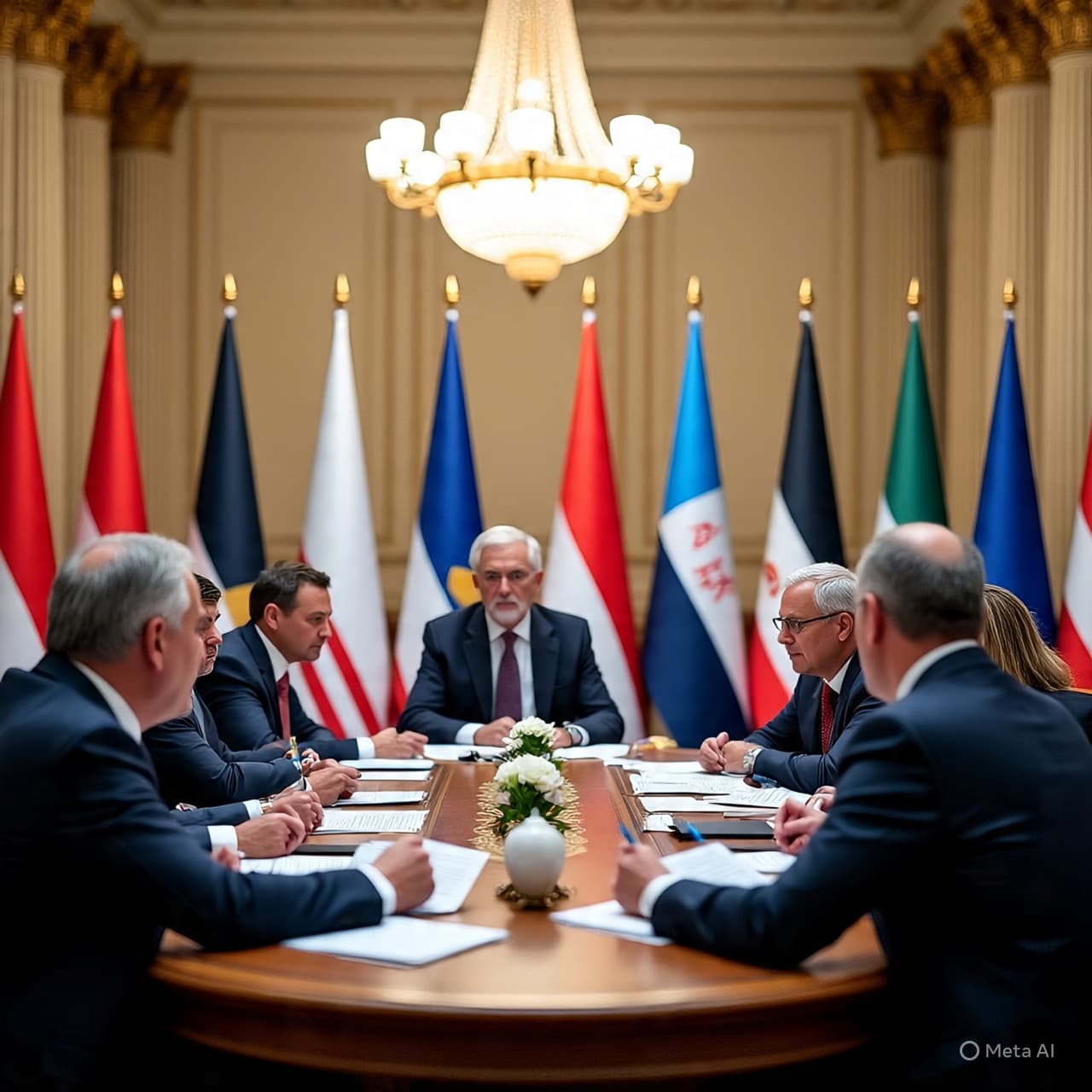
In capitals from Brussels to Ottawa, leaders are confronting a sobering thought: the world as they knew it — built on decades of relatively stable U.S. leadership, predictable trade relations, and cooperative security frameworks — may be unraveling in ways that carry tangible economic risk. What began as rhetoric around “America First” has, in recent weeks, rippled into policy actions that are reshaping alliances, tariffs and economic expectations across advanced economies. ([turn0news0][turn0news37][turn0news44][turn0news43]).
President Donald Trump’s assertive economic and geopolitical posture — encapsulated in controversial moves like threats of double‑digit tariffs on key NATO allies and an unprecedented push to acquire Greenland — has unsettled markets and partners alike. Longstanding assumptions about a U.S.‑led rules‑based order are being reassessed as allies ponder how to protect their own economic interests in the face of coercive tariff threats and diplomatic strains. ([turn0news0][turn0news44]).
The shock factor of these developments shows up not only in government corridors but in financial indicators. Investors have responded to political volatility with traditional “safe haven” strategies — pushing demand for gold and other assets that typically gain when confidence in global growth wavers. Central banks and financial institutions, from Tokyo to Frankfurt, are watching closely because trade disruptions and tariff escalation pose risks to growth forecasts and supply chains that have taken years to integrate. ([turn0news0][turn0news43]).
Canada, once one of the United States’ closest economic partners, found itself on the receiving end of aggressive tariff rhetoric this month, with the president threatening steep levies on all Canadian imports should Ottawa pursue closer ties with China. Such moves starkly illustrate the economic tension between historic alliance ties and transactional U.S. policy priorities — and have prompted business leaders and policymakers in Ottawa to prepare contingency plans that look beyond Washington. ([turn0news37]).
Across the Atlantic, European Union leaders have responded to tariff threats and perceived overreach with their own economic strategies, including considerations of counter‑tariffs and defense of sovereignty. The episode over Greenland — where punitive duties were proposed on nations supporting Danish control of the territory — sharpened criticism from Paris and Berlin, underscoring how economic tools are now being wielded in geopolitical disputes that once would have been resolved through diplomacy. ([turn0news44]).
The International Monetary Fund (IMF) has publicly warned that escalating trade tensions could trigger a “spiral of escalation,” slowing growth in both advanced and emerging markets. Higher tariffs mean higher costs for manufacturers, lower export demand, and potential disruptions to global supply chains that have become deeply interlinked over decades of globalization. These risks are not theoretical: they have real implications for jobs, prices and investment flows in economies that depend on cross‑border commerce. ([turn0news43]).
For many allies, the economic anxiety is not simply about lost market access, but about longer‑term strategic recalibration. Countries that once counted on the stability of U.S. leadership are exploring diversification of trade partnerships, strengthening intra‑regional ties, and even rethinking defense and investment strategies that once assumed American support as a constant. Whether this represents a temporary divergence or a deeper realignment of the global order is now a central question facing policymakers around the world.
AI Image Disclaimer “Visuals are created with AI tools and are not real photographs.”
Sources The Washington Post Reuters (tariff threat coverage) AP News (Greenland tariffs reaction) IMF warnings via The Guardian
Published by Banx Network. This article is part of the Banx decentralized media programme, powered by the BXE token on the XRP Ledger.