
In the quiet corridors of power, succession is rarely announced with trumpets. It moves instead like a shadow at dusk—lengthening gradually, almost imperceptibly, until it becomes part of the landscape. In Iran, where authority blends theology and statecraft, conversations about the future often drift beneath the surface, carried in whispers rather than proclamations. And within those whispers, one name has begun to echo with growing frequency: Mojtaba Khamenei. He is not a public orator commanding mass rallies. He does not occupy a formal executive office. Yet in the intricate architecture of the Islamic Republic, influence does not always travel through visible doors. Sometimes it moves along private corridors, through trusted networks and longstanding relationships. Mojtaba Khamenei, the second son of Supreme Leader Ali Khamenei, has long been described by observers as a figure of quiet proximity to power. Born in 1969 in Mashhad, Mojtaba grew up in the years when revolution reshaped Iran’s political horizon. His father rose from cleric to head of state, assuming the position of Supreme Leader in 1989 after the passing of Ruhollah Khomeini. As the Islamic Republic matured, so too did the generation that witnessed its formation from within the leader’s household. Over time, Mojtaba Khamenei pursued religious studies, positioning himself within the clerical tradition that underpins Iran’s political system. Analysts have often noted his reported connections with influential clerical circles and elements of the security establishment, including figures linked to the Islamic Revolutionary Guard Corps. While his exact role remains opaque, multiple international reports have suggested that he has played a part behind the scenes in political coordination and strategic decision-making, particularly during sensitive moments in Iran’s domestic politics. Speculation regarding succession intensified as discussions about the eventual transition of leadership became unavoidable. In Iran’s constitutional framework, the Assembly of Experts holds the formal authority to appoint a Supreme Leader. Yet history shows that political legitimacy in Tehran is shaped not only by procedure, but by consensus among powerful institutions—the clergy, the security apparatus, and the political elite. For some observers, the idea of Mojtaba Khamenei as a potential successor raises questions about continuity. Would his leadership represent a preservation of the current ideological compass? Or would it signal subtle recalibrations within the same framework? Others reflect on the symbolic dimension: Iran’s system was born from a revolution that opposed monarchy. The elevation of a leader’s son, if it were to occur, would inevitably invite delicate debates about perception, legacy, and principle. Still, nothing in Iran’s political theater unfolds in straight lines. Names emerge and recede. Alternatives are weighed quietly. Other senior clerics are frequently mentioned in succession conversations, underscoring that the future remains unwritten. In this sense, Mojtaba Khamenei’s position resembles a figure standing at the edge of a stage—visible, discussed, yet not formally announced. Beyond Iran’s borders, regional and global actors watch with careful attention. The Islamic Republic occupies a pivotal place in Middle Eastern geopolitics, and any leadership transition would ripple outward, touching diplomacy, security alignments, and economic calculations. Stability, continuity, and predictability often matter as much as personalities. For now, Mojtaba Khamenei remains an influential but officially understated presence. Whether history ultimately casts him as heir, contender, or simply confidant will depend on forces larger than any single biography. In political systems where symbolism and structure intertwine, succession is less a single event than a gradual unfolding. As Iran moves forward, the question of leadership is not merely about one individual. It is about the balance between revolution and institution, between legacy and adaptation. And like the evening shadow that lengthens before nightfall, the future approaches quietly—step by measured step.
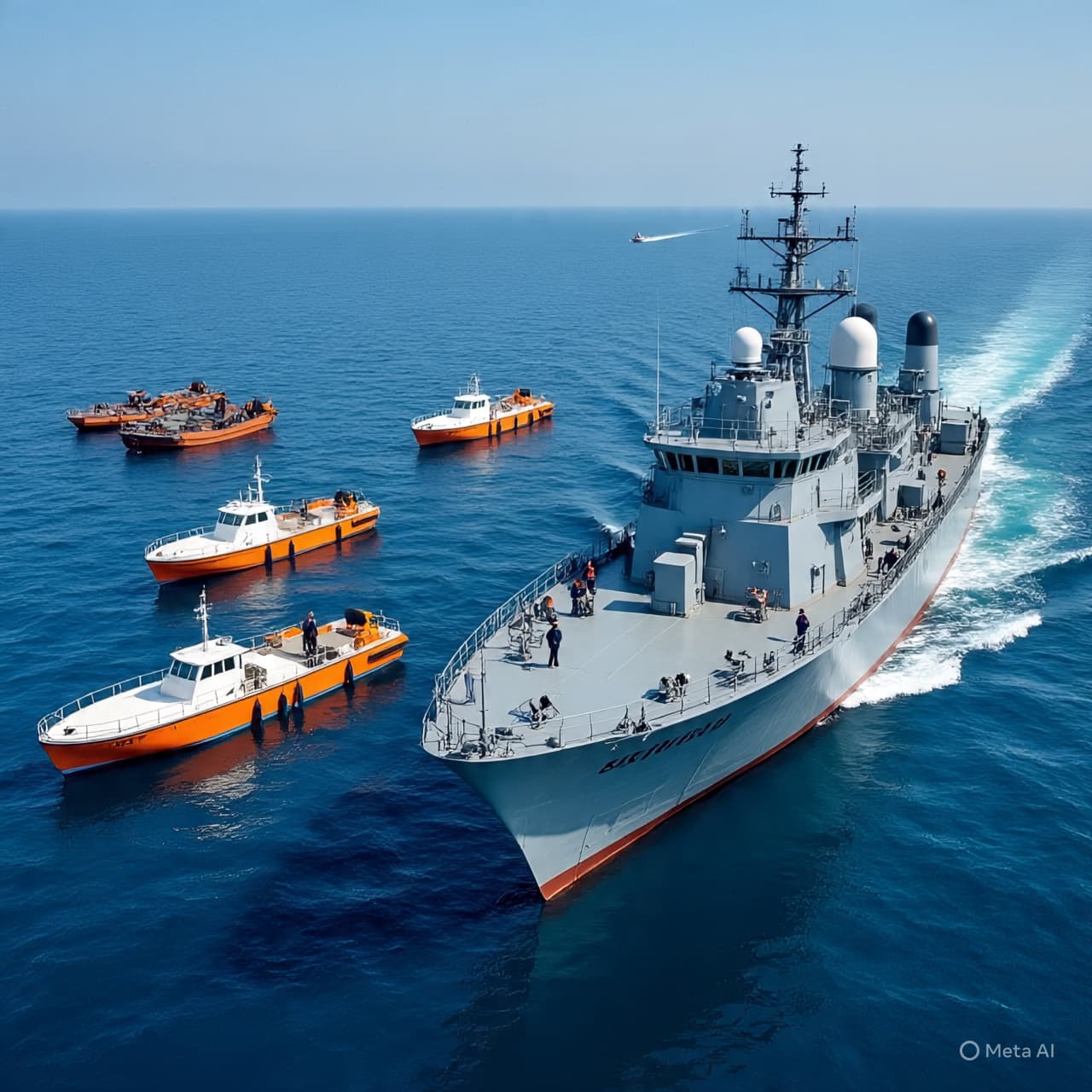
AI Image Disclaimers (rotated wording): Visuals are created with AI tools and are not real photographs.
---
Sources
Associated Press, Reuters, The Washington Post, AP News, and international mainstream outlets covering the sinking of the Iranian warship IRIS Dena off Sri Lanka’s coast.
Published by Banx Network. This article is part of the Banx decentralized media programme, powered by the BXE token on the XRP Ledger.


.jpg&w=3840&q=75 "Blake Lively Awarded $400,000 in Legal Fees After Justin Baldoni Lawsuit Dismissed")