
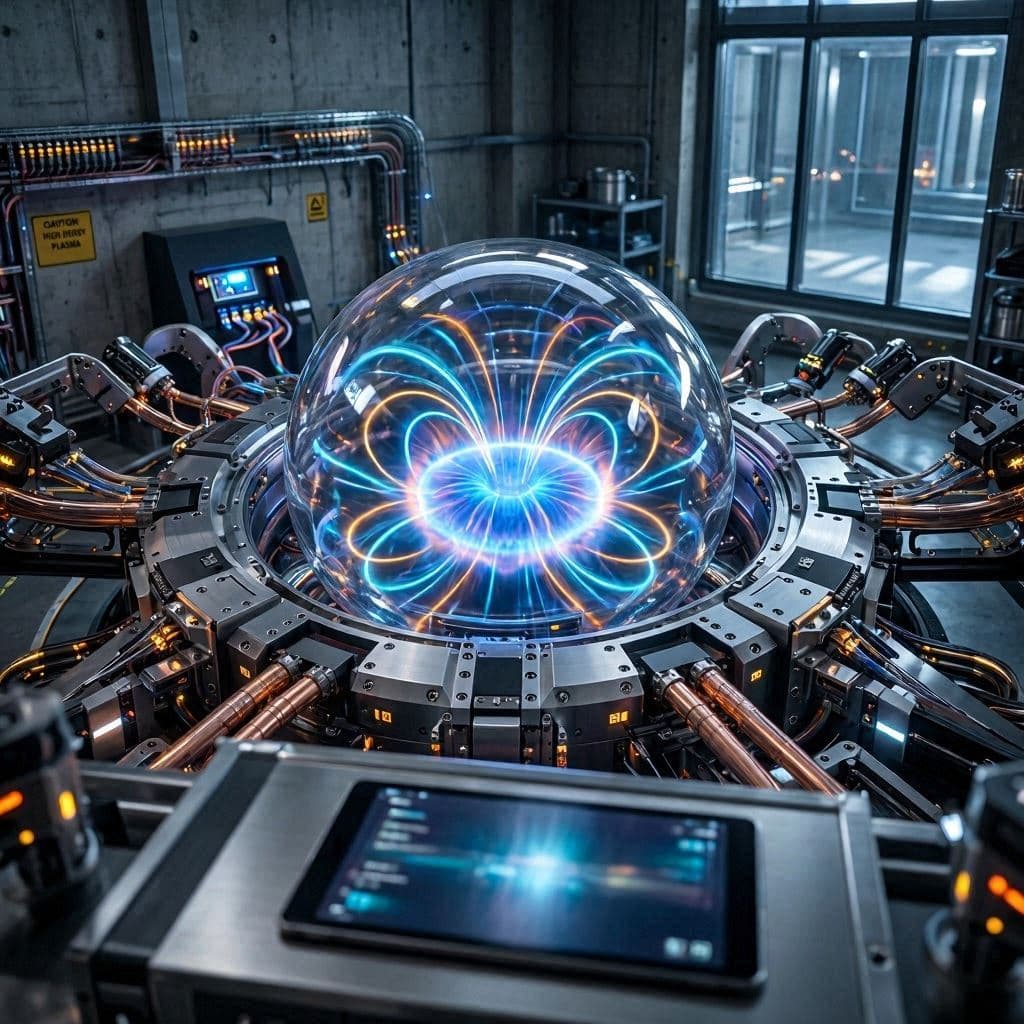
In the quiet precision of advanced laboratories in France, researchers are working on one of the most ambitious scientific goals of the modern era. The pursuit of nuclear fusion energy continues to represent both hope and complexity in equal measure.
Body: France is advancing next-generation nuclear fusion prototype systems aimed at improving plasma stability and energy efficiency. These systems build on decades of international research in controlled fusion experiments.
Fusion energy relies on replicating the same process that powers the Sun, where atomic nuclei merge under extreme temperature and pressure to release large amounts of energy.
Researchers use magnetic confinement devices to удерж plasma at temperatures far exceeding those found in the core of stars. Maintaining stability remains one of the greatest technical challenges.
France plays a central role in global fusion efforts, contributing infrastructure, engineering expertise, and scientific coordination through international partnerships.
Scientists emphasize that fusion energy has the potential to provide large-scale, low-carbon electricity with minimal long-term waste compared to conventional nuclear fission.
However, achieving sustained net energy gain remains an ongoing scientific hurdle that requires further innovation in materials and reactor design.
Global collaboration continues to be essential, as fusion research depends on shared technological progress across multiple countries.
Closing: As research advances, nuclear fusion remains one of the most closely watched scientific frontiers in the search for sustainable energy.
AI Image Disclaimer: Some visuals may be AI-generated for editorial illustration purposes.
Source Verification Check: ITER Organization, CNRS France, Nature Physics, Reuters Science Desk, BBC Science
Published by Banx Network. This article is part of the Banx decentralized media programme, powered by the BXE token on the XRP Ledger.



