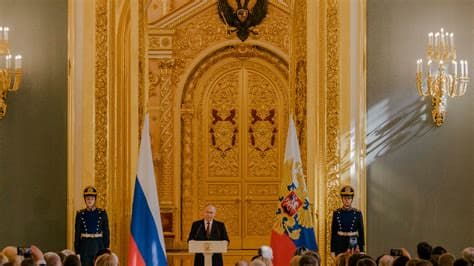
There is a particular irony that arrives when sanctions imposed to constrain a nation's war machine are lifted to ease the burdens of one's own. On Friday, President Donald Trump announced an agreement with Russian President Vladimir Putin to release hundreds of thousands of tons of diesel fuel onto the global market, a decision that suspended a key element of the sanctions regime the United States had maintained since Russia's invasion of Ukraine in 2022.
Trump wrote on Truth Social that Putin had agreed to "immediately release" 300,000 tons of diesel, followed by 500,000 tons in November and another million after that. He added that a further three million tons would be delivered "within a short period," depending on the condition of Russia's refineries. "Diesel Prices for Americans and, indeed, the World, will be COMING DOWN, IN RECORD NUMBERS, AND FAST!" Trump wrote .
Minutes after the announcement, the Treasury Department formally issued a temporary license allowing Russian diesel exports until April 2027. The Kremlin confirmed Putin had expressed willingness to supply oil and petroleum products to the U.S. and global markets, though its statement did not specify amounts .
The move represents a remarkable about-face. The United States had placed sanctions on Russian energy exports after the invasion of Ukraine, and Congress had recently enacted legislation authorizing new sanctions on nations that import Russian oil and gas. The easing of sanctions gave Russian energy producers a general license to sell diesel until April .
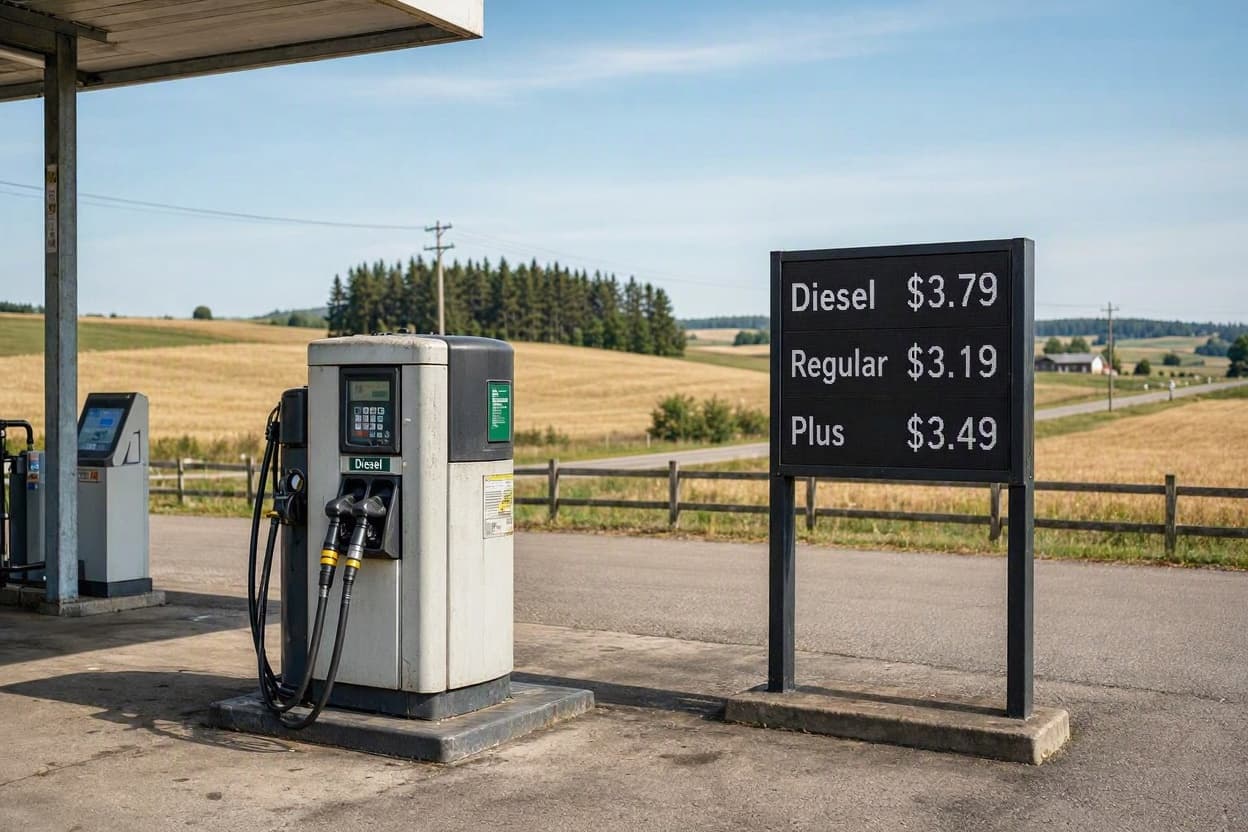
The context is one of political pressure. Diesel prices in the U.S. had reached record highs this fall, driven by escalations in the Russia-Ukraine war and the ongoing conflict with Iran. The average price stood at $6.28 per gallon on Friday, up from $3.68 a year earlier, according to AAA. The jump has become a liability for Republican candidates ahead of next month's midterm elections, particularly in rural states where farmers depend heavily on diesel .
Ukrainian President Volodymyr Zelensky criticized the deal sharply, saying "gifts to Putin will not work for peace" and that Russia would repay the diesel with "further terror." He argued that allowing Russia to sell petroleum products is "an investment in a war that must be ended, not prolonged" .
Analysts questioned whether the amounts would materially affect global prices. Even if Russia delivered as promised, the initial tranches would be small relative to global demand. Edward Fishman of the Council on Foreign Relations noted that Russia had imposed its own export ban because Ukrainian strikes had degraded its refining output, suggesting Putin's promise may be difficult to fulfill .
The agreement's full consequences—for energy markets, for the war in Ukraine, and for the political landscape in Washington—remain to be seen. What is clear is that the sanctions architecture built over years to pressure Moscow has now been adjusted, at least temporarily, in service of a different priority: the price at the pump.
AI Image Disclaimer: The imagery accompanying this report was created using AI generation tools and is illustrative in nature.
Sources: Associated Press, The New York Times, Bloomberg, BBC
Published by Banx Network. This article is part of the Banx decentralized media programme, powered by the BXE token on the XRP Ledger.