

Key Highlights
- Tribute to Lula:A samba school honors the Brazilian president at Carnival.
- Political Sensitivity:The float reflects Brazil's divided political landscape.
- Artistic Freedom:Organizers defend the tribute as a form of creative expression.
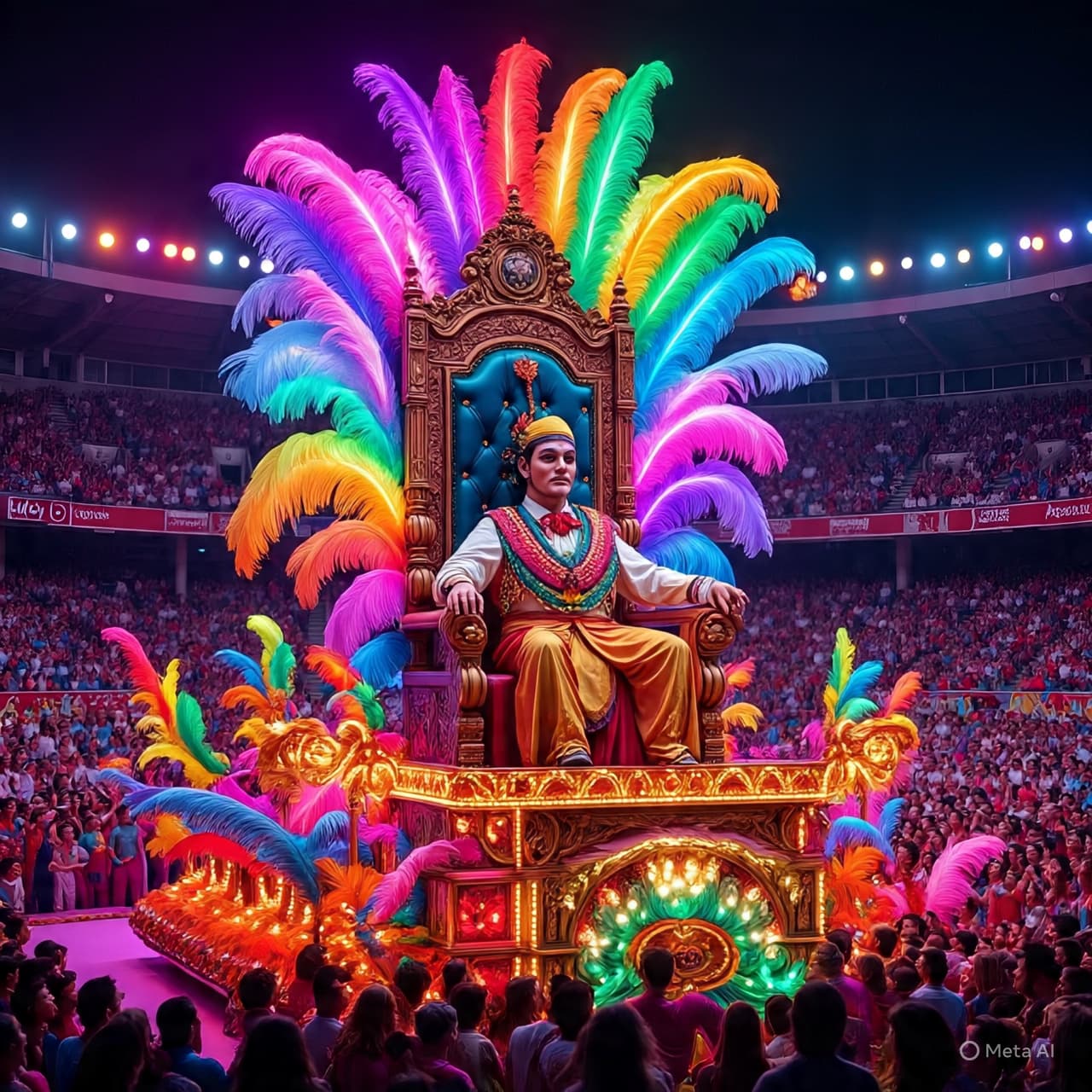
This year’s Rio Carnival has become a focal point for political discourse, as a samba school unveiled a float dedicated to Brazilian President Luiz Inácio Lula da Silva. The float, designed as a tribute to Lula’s political journey and social contributions, has sparked a lively debate about the role of art in political commentary. While supporters view it as a celebration of Brazil’s democratic resilience, critics argue it risks blurring the lines between cultural festivity and political endorsement.
Carnival in Rio de Janeiro has a rich history of intertwining art and politics. Samba schools have long utilized allegorical floats to address pressing social issues, from colonial history to environmental concerns. This year, the homage to Lula comes at a time of heightened political sensitivity, following his return to the presidency after a contentious election. Lula remains a polarizing figure, admired by many for his advocacy for the working class, yet criticized by others due to past corruption allegations.
The float honoring Lula did not merely glide through the Sambadrome; it traversed a landscape marked by differing political views. Organizers of the samba school defended the tribute, asserting that it reflects contemporary Brazil rather than serving as a campaign gesture. They emphasized that Carnival’s essence lies in its ability to transform public discourse into artistic expression, turning complex realities into vibrant displays of color and rhythm.
However, some political commentators and members of the public expressed concern that honoring a sitting president during a nationally televised event could exacerbate political divides. They argued that Carnival, while historically a platform for expression, should maintain a degree of neutrality in a polarized environment. Social media has amplified these concerns, illustrating how quickly festive imagery can become part of a broader national conversation.
Despite the criticisms, Brazil’s cultural institutions have consistently upheld Carnival as a space for artistic autonomy. The parade is judged primarily on creativity and performance, rather than political alignment. In this context, the float becomes one element in a larger narrative, where allegory and exaggeration are as integral as music and dance.
This episode highlights how public art can carry multiple meanings. For some, the tribute symbolizes recognition of political resilience and social advocacy. For others, it raises questions about the role of current leaders in cultural celebrations. In both cases, the float has succeeded in sparking dialogue, a hallmark of Carnival’s rich tradition.
As the Carnival season progresses, attention shifts back to the competition among samba schools and the celebration of Brazilian creativity. The float honoring Lula remains a significant part of this year’s narrative, discussed for both its artistic merit and its political implications. Officials have not indicated any formal action regarding the display, and the parade’s results will follow established judging criteria.
As the Sambadrome returns to its familiar rhythm, with drums echoing and dancers moving in sync, Carnival continues to embody both joy and reflection, reminding Brazil that celebration and debate can coexist on the same stage.
Published by Banx Network. This article is part of the Banx decentralized media programme, powered by the BXE token on the XRP Ledger.




